School Board Fit Finder
Answer these questions to find the board that aligns best with your child's personality and your family's lifestyle.
Top Recommendation:
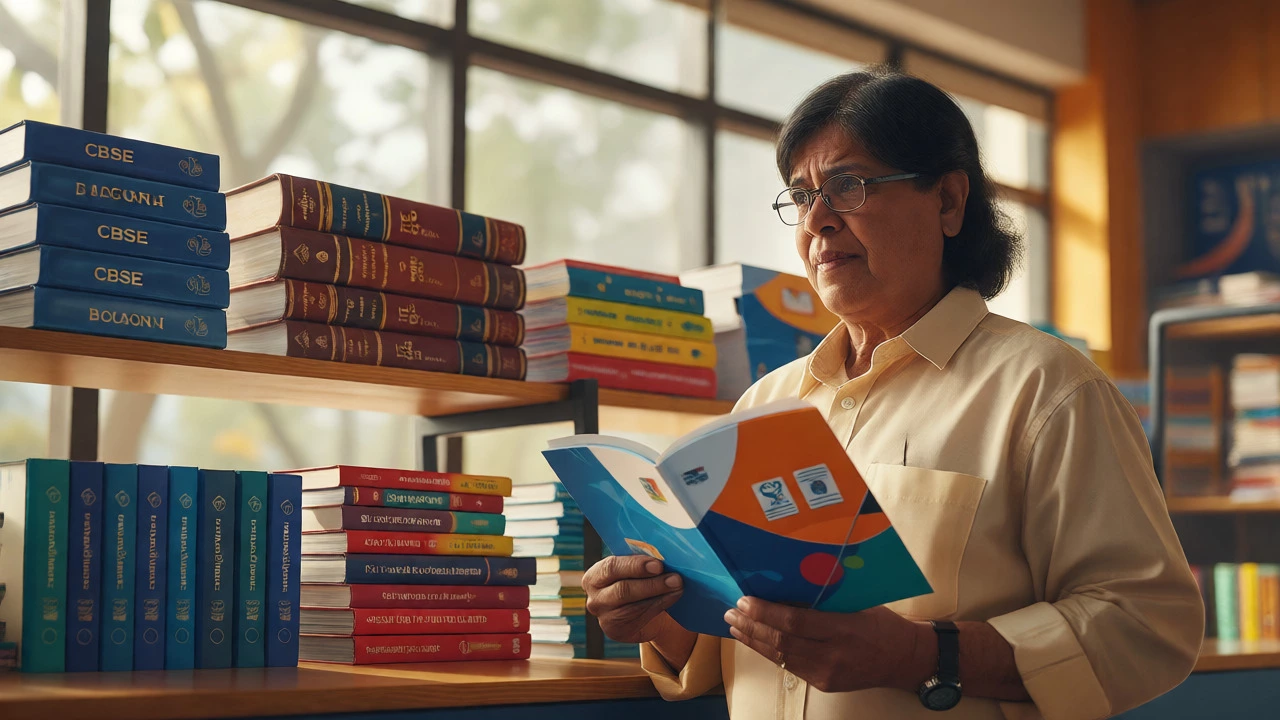
You are standing in front of a school admission office, holding a brochure that promises "holistic development" and "global readiness." But underneath the glossy photos lies a question that keeps many parents awake at night: Which syllabus is best for my child? It’s not just about picking a board; it’s about choosing the lens through which your child will view the world for the next decade.
In India, the education landscape is dominated by three major players: the Central Board of Secondary Education (CBSE), the Council for the Indian School Certificate Examinations (ICSE), and various State Boards. Each has its own philosophy, teaching style, and long-term implications for university admissions and career paths. Let’s break down what these systems actually do to a student’s brain and future prospects, so you can make a choice based on facts, not fear.
Understanding the Core Philosophies
To choose the right path, you first need to understand the DNA of each board. They aren’t just different sets of textbooks; they represent different educational ideologies.
ICSE is an examination board run by CISCE, renowned for its comprehensive, literature-heavy curriculum that emphasizes English proficiency and detailed subject knowledge. Unlike CBSE, ICSE does not shy away from depth. In history, you don’t just learn dates; you analyze primary sources. In science, you memorize specific biological processes with intricate detail. It is often considered more rigorous but also more demanding on young minds.
State Boards are education boards managed by individual state governments, offering curricula tailored to local languages, culture, and regional employment needs. These vary wildly. The Kerala State Board might focus heavily on literacy rates and social sciences, while Maharashtra’s SSC board might have a strong vocational component. They are deeply rooted in local context, which can be an advantage if you plan to stay in one region forever.
The Real-World Impact: A Comparison
Parents often ask, "Is ICSE harder than CBSE?" The answer depends on how your child learns. Some kids thrive on structure; others need creative freedom. Here is how the two main contenders stack up against each other in practical terms.
| Feature | CBSE | ICSE |
|---|---|---|
| Focus Area | Science, Math, Logical Reasoning | English, Literature, Comprehensive Knowledge |
| Teaching Style | Structured, exam-oriented, concise | Detailed, analytical, project-based |
| Exam Pattern | Objective + Subjective, NCERT-focused | Subjective, application-based, extensive reading required |
| Best For | Students targeting Engineering/Medicine (JEE/NEET) | Students targeting Law, Humanities, or Abroad studies |
| Mobility | High (Uniform across India) | Moderate (Varies slightly by school implementation) |
Notice the clear divide. If your child dreams of becoming an engineer or doctor, the CBSE syllabus aligns almost perfectly with entrance exams like JEE and NEET. The questions asked in these competitive exams mirror the NCERT textbooks used in CBSE schools. Switching to ICSE means your child will have to study extra material specifically for these entrance tests, adding pressure during their teenage years.
On the flip side, if your child loves reading, writing, and debating, ICSE offers a richer environment. The English language component in ICSE is significantly stronger. Students graduate with better vocabulary and writing skills, which gives them an edge in fields like law, journalism, management, and international relations. Many ICSE students find the transition to universities abroad smoother because their critical thinking and essay-writing skills are already honed.
Where Do State Boards Fit In?
Don’t dismiss State Boards as "second-rate." In many regions, they offer excellent value and cultural grounding. For instance, the Tamil Nadu State Board integrates local heritage into its science and social studies curriculum, fostering a sense of identity that CBSE sometimes lacks due to its pan-Indian generic approach.
However, State Boards face challenges with standardization. If you move from Bangalore to Hyderabad, the difficulty level and content coverage might shift dramatically. This lack of consistency can be stressful for students who change schools mid-stream. Furthermore, some State Boards have been slower to adopt modern pedagogical tools compared to CBSE, which frequently updates its curriculum to include coding, artificial intelligence basics, and environmental studies earlier in schooling.
Yet, there is a growing trend of "State Board Plus" models, where states introduce competency-based assessments similar to CBSE’s new guidelines. If you live in a state with a strong public education initiative, such as Kerala or Gujarat, the local board might actually provide a more balanced childhood with less rote learning pressure than private CBSE franchises.
Matching Syllabus to Child’s Personality
There is no "best" syllabus in a vacuum. There is only the best fit for your specific child. Consider these personality traits when making your decision:
- The Analytical Thinker: If your child enjoys puzzles, logic games, and solving problems step-by-step, CBSE’s structured approach will feel like home. They will appreciate the clear boundaries of what is expected in exams.
- The Creative Storyteller: If your child spends hours reading novels, writing stories, or arguing points in debates, ICSE’s emphasis on language and interpretation will keep them engaged. CBSE might feel too dry or restrictive for them.
- The Mobile Family: If your job requires frequent relocation within India, stick with CBSE. The continuity of NCERT books ensures your child won’t miss crucial concepts when switching schools.
- The Regional Root: If you plan to stay in your hometown forever and want your child to connect deeply with local culture, history, and language, a State Board might offer a more grounded upbringing.

The Long-Term View: University and Career Implications
Many parents worry that choosing the "wrong" board will close doors later. Let’s look at the data. Top universities in India, including IITs and AIIMS, accept students from all boards. However, the preparation strategy differs. CBSE students often enter coaching centers for JEE/NEET with a head start because their school syllabus overlaps with the entrance exam syllabus. ICSE students usually need a bridge course to cover the specific technical details required for these exams.
For higher education abroad, the narrative changes. Universities in the US, UK, Canada, and Australia often value the holistic profile that ICSE encourages. They look for extracurricular activities, essays, and critical analysis-skills nurtured in ICSE environments. CBSE students can certainly compete, but they may need to actively seek out opportunities to demonstrate soft skills and leadership, as the CBSE framework is heavily academic.
It is also worth noting that both CBSE and ICSE are recognized globally. The difference isn’t in acceptance, but in preparedness. An ICSE student might walk into a university interview confident in their ability to articulate complex ideas. A CBSE student might walk in with superior technical problem-solving speed. Both are valuable assets, depending on the career track.
Practical Tips for Parents
Before you sign the admission form, take these steps to ensure you’re making an informed choice:
- Talk to Current Students: Don’t just listen to teachers. Ask older students how much homework they get daily. CBSE homework is often shorter but conceptually dense. ICSE homework can be lengthy, involving research projects and extensive reading.
- Check the School’s Implementation: A great CBSE curriculum taught poorly is worse than a decent State Board taught passionately. Visit classrooms. See if teachers encourage questions or just dictate answers.
- Consider the Transition Points: Class 10 and Class 12 are high-pressure years. If your child struggles with stress, the lighter load of CBSE (in terms of volume) might be kinder. If they thrive under challenge, ICSE’s rigor can build resilience.
- Look Beyond the Board Name: Some schools offer hybrid models or integrate elements of IB (International Baccalaureate) into CBSE/ICSE frameworks. Ask about their pedagogy, not just their affiliation.
Ultimately, the syllabus is just the map. The teacher is the guide. Your support is the fuel. Choose the board that aligns with your family’s lifestyle and your child’s natural strengths, then trust them to navigate the journey.
Is CBSE easier than ICSE?
Generally, yes. CBSE is often perceived as less voluminous than ICSE. CBSE focuses on core concepts and logical application, primarily using NCERT textbooks. ICSE covers a wider range of topics in greater detail, particularly in English and Social Sciences, requiring more reading and memorization. However, "easier" is subjective; some students find CBSE's trickier objective questions harder than ICSE's straightforward descriptive ones.
Can a child switch from ICSE to CBSE in Class 11?
Yes, switching is common and accepted by most schools. Since CBSE is widely adopted, many schools accommodate ICSE students moving to CBSE for senior secondary. However, students may need to catch up on specific science and math topics that are covered differently or more extensively in ICSE. Schools often provide bridging classes to help with this transition.
Which board is better for studying abroad?
Both boards are recognized internationally. ICSE is often favored for humanities, law, and business degrees because of its strong emphasis on English proficiency and critical writing. CBSE is highly respected for STEM fields due to its rigorous mathematical and scientific foundation. Ultimately, grades, extracurriculars, and personal statements matter more than the board name itself.
Do State Boards limit career options?
No, State Boards do not limit career options. Students from State Boards successfully pursue engineering, medicine, civil services, and arts degrees. The main limitation is mobility; if you plan to move between states frequently, the varying curricula can create gaps in learning. Additionally, some top-tier private colleges may prefer CBSE/ICSE profiles for their standardized grading, but merit remains the primary criterion.
How does the new National Education Policy (NEP) affect syllabus choices?
The NEP 2020 aims to harmonize learning outcomes across boards. CBSE has already started integrating competency-based assessments and reducing rote learning. State Boards are gradually adopting these changes, though at different paces. When choosing a school, ask how they implement NEP guidelines, as this matters more than the board label in the coming years.