
Learning Strategy Selector
Answer a few questions about your goals to find the perfect learning delivery method for your needs.
Does the learner need real-time interaction with a mentor or peers to succeed?
I need feedback, mentorship, or community support.
I just need the facts and efficient information transfer.
Why this fits:
Key Features:
Wait, Aren't They the Same Thing?
If you've ever felt confused while browsing course catalogs or corporate training manuals, you aren't alone. Most people use the terms interchangeably, but they aren't the same. Think of it like the difference between "transportation" and "driving a car." One is a broad umbrella, and the other is a specific way to get where you're going. If you're trying to decide how to train your team or where to take your next certification, mixing these up might lead you to pick a tool that doesn't actually do what you need.
The Quick Breakdown
- eLearning: The broad concept of using electronic technology to deliver education. It can be offline, online, self-paced, or guided.
- Online Learning: A specific subset of eLearning that requires an active internet connection and usually involves a virtual community or instructor.
To put it simply: all online learning is eLearning, but not all eLearning is online learning. You can have a pre-loaded training module on a tablet in a remote mine site with zero Wi-Fi-that's eLearning, but it definitely isn't online learning.
Decoding the World of eLearning
When we talk about eLearning is electronic learning, an umbrella term for any learning that uses digital technology to deliver content, we're talking about a massive ecosystem. It's not just about Zoom calls. It includes everything from those annoying mandatory corporate compliance videos you watch once a year to high-end VR simulations used by surgeons.
The core of eLearning is the delivery method. It often relies on a LMS (Learning Management System), which is the software that tracks who finished which lesson and what their score was. For example, if a company like Walmart trains thousands of employees using a proprietary app that allows them to download modules to their phones and complete them without internet, they are utilizing eLearning. The eLearning experience is often designed to be "asynchronous," meaning you do it on your own time, without needing a teacher to be present in real-time.
Why does this matter? Because eLearning allows for massive scalability. You can create one high-quality module and deploy it to 10,000 people across different time zones without hiring 10,000 teachers. It focuses on the *content* and the *technology* rather than the *location*.
The Specifics of Online Learning
Now, let's pivot to Online Learning. Unlike the broad nature of eLearning, online learning is the specific act of education delivered over the internet. The key word here is *connectivity*. If the internet goes down, online learning stops. If the internet goes down during an eLearning session (like a downloaded PDF or a local video file), the learning continues.
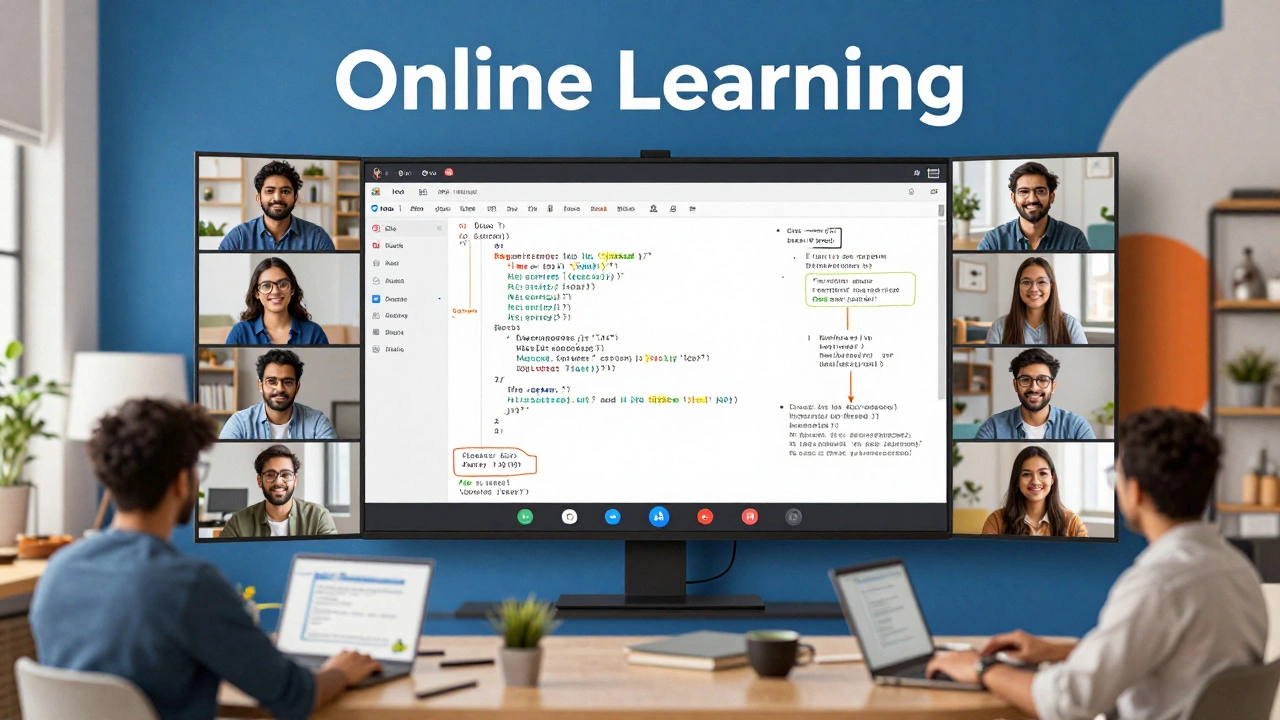
Online learning is often more social. It frequently involves "synchronous" elements, such as live webinars, discussion forums, and virtual classrooms. When you join a degree program through a university's digital portal, you aren't just consuming content; you're interacting with peers and professors. This is where Virtual Classrooms come into play, providing a digital space that mimics a physical room through video conferencing and real-time whiteboards.
Think of a bootcamp for coding. You might have pre-recorded videos (eLearning), but the heart of the program is the live 8 PM call with a mentor and the real-time feedback on your code. That interaction is what defines the online learning experience. It's about the community and the live exchange of ideas.
Comparing the Two: Side-by-Side
To make this easier to digest, let's look at how these two differ across the most important categories. If you're choosing a platform for your business or your own education, these are the trade-offs you're actually making.
| Feature | eLearning (Broad) | Online Learning (Specific) | ||||
|---|---|---|---|---|---|---|
| Internet Required? | Not always (can be offline) | Always | Pace | Usually self-paced | Often scheduled/cohort-based | |
| Social Interaction | Low (usually solo) | High (peers, instructors) | ||||
| Primary Goal | Content delivery & compliance | Education & skill mastery | ||||
| Example Tool | Downloaded SCORM package | Live Zoom University Course | ||||
| Flexibility | Maximum (anytime, anywhere) | Moderate (tied to connectivity) |
Jobs-to-be-Done: Which One Should You Choose?
Depending on what you're trying to achieve, one of these approaches will be far more effective than the other. Let's look at three common scenarios.
Scenario A: You're a manager training a global sales team
You have employees in Tokyo, New York, and London. You need them to learn a new product specification by Friday. You don't have time to coordinate a live call across three time zones. In this case, you want eLearning. Create a series of short, interactive modules that they can access on their own. Use an LMS to track completion. You aren't looking for a "classroom experience"; you're looking for an efficient transfer of information.
Scenario B: You want to transition careers into Data Science
You've tried watching YouTube videos, but you're stuck and don't know why your code isn't working. You need a mentor to tell you exactly where you're going wrong. This is a job for online learning. Look for a program with a cohort, live Q&A sessions, and a community forum. The value isn't just the videos (which are just eLearning); the value is the live support and the networking with other students.
Scenario C: You're building a certification for a regulated industry
If you're in healthcare or aviation, the rules are strict. You need a digital trail that proves every employee has seen the safety protocols and passed a test. You need eLearning. Specifically, you need content that follows standards like SCORM (Sharable Content Object Reference Model) so it can be tracked accurately across different systems regardless of whether the user is online or offline.
The Technology Behind the Scenes
To understand how these work, we have to talk about the tools. For eLearning, the heavy lifting is done by Authoring Tools. These are programs like Articulate Storyline or Adobe Captivate that let creators build quizzes and interactive slides without needing to be a master coder. These tools export files that can be uploaded to an LMS.
For online learning, the focus shifts to Communication Platforms and MOOCs (Massive Open Online Courses). Platforms like Coursera or Udemy blend both worlds. They give you the eLearning content (videos) but wrap it in an online learning environment (peer reviews, forums, and certificates).
One major pitfall to avoid is "The Content Dump." This happens when a company buys a fancy online learning platform but just uploads 50 boring PDFs. That's not effective learning; that's just a digital filing cabinet. Whether you choose eLearning or online learning, the pedagogy-how the information is taught-is more important than the software you use.
Common Pitfalls and How to Avoid Them
If you're implementing one of these, keep these rules of thumb in mind:
- Don't mistake "Digital" for "Interactive": A 60-minute video is just a digital lecture. True eLearning uses interactions-drag-and-drop exercises, branching scenarios, and simulations-to keep the brain engaged.
- Avoid the "Isolation Trap": Pure eLearning can feel lonely. If you're using it for a long-term project, inject some online learning elements. Add a monthly live check-in or a Slack channel for students to chat.
- Check your bandwidth: If your target audience is in rural areas or developing countries, don't build a high-bandwidth online learning course. Build a lightweight eLearning experience that allows for offline downloads.
Frequently Asked Questions
Is online learning more expensive than eLearning?
Not necessarily. The cost depends on the delivery. A self-paced eLearning course is often cheaper because there's no live instructor. However, a high-end online degree can be expensive due to the faculty's time and the university's infrastructure. Generally, the "online learning" side is more expensive because it involves human interaction in real-time.
Can I combine both in one program?
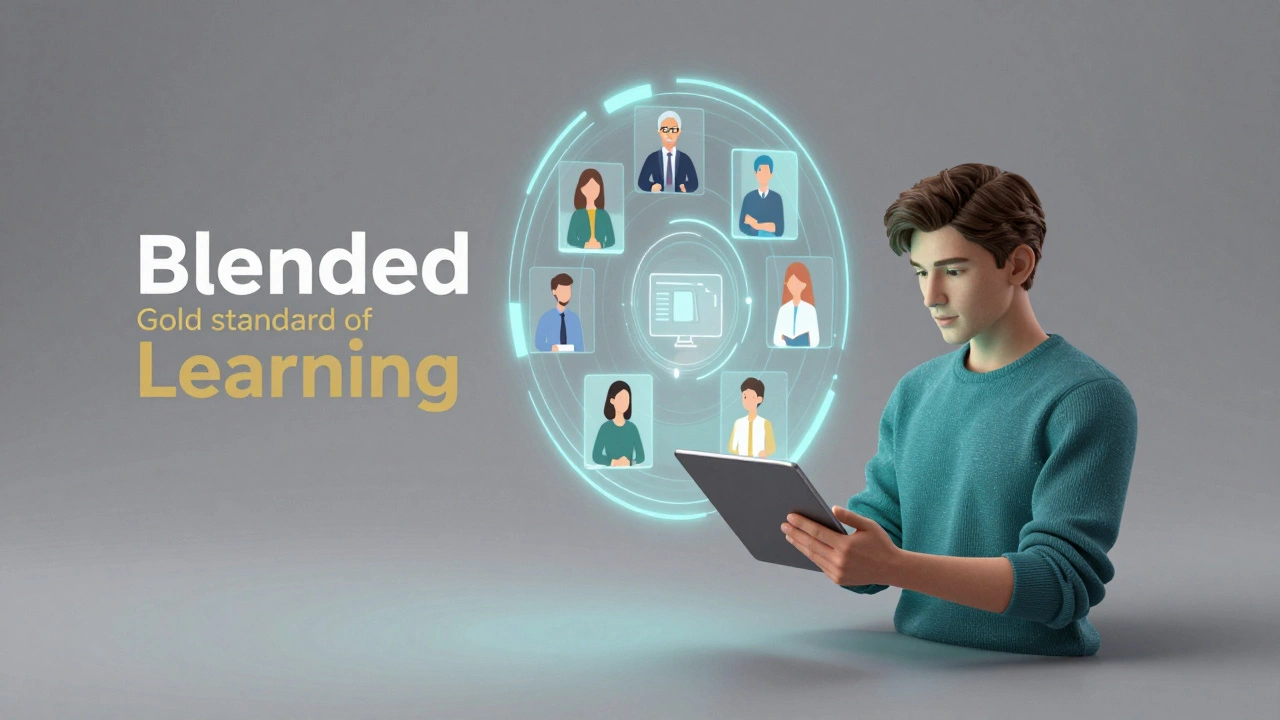
Yes, and this is actually the gold standard. This is called "Blended Learning." You provide the foundational knowledge via self-paced eLearning modules (videos, readings) and then hold a live online learning session to apply that knowledge through discussion, case studies, or live coaching.
Which one is better for corporate training?
It depends on the goal. For compliance, safety, and basic onboarding, eLearning is the winner because it's scalable and trackable. For leadership development, soft skills, or complex strategy, online learning is better because these topics require nuance and conversation that a pre-recorded video can't provide.
Do I need a specific degree to create eLearning content?
No, but it helps to understand Instructional Design. This is the practice of creating learning experiences that actually work. You don't need a PhD, but knowing how to structure a lesson and use authoring tools is key to making sure your students don't fall asleep at their desks.
What is a SCORM file in eLearning?
SCORM stands for Sharable Content Object Reference Model. Think of it as the "USB plug" of the eLearning world. It's a technical standard that ensures a course created in one tool will work and be trackable in any LMS, regardless of the brand of software.
Next Steps: Choosing Your Path
If you're still on the fence, ask yourself one question: Does the learner need to talk to someone else to succeed?
If the answer is "No," and they just need the facts, go with eLearning. Focus on great authoring tools, a solid LMS, and clear, concise modules. Your goal is efficiency and accessibility.
If the answer is "Yes," and they need feedback, mentorship, or peer support, go with online learning. Invest in a platform that supports live video, real-time collaboration, and community building. Your goal is transformation and mastery.