
Daily English Speaking Challenge
Your Daily Challenge
Start small. Just 5 minutes a day makes a difference.
Your Progress
Practice consistently for 7 days to earn the "Speaking Habit" badge
Want to speak English but feel stuck? You’re not alone. Millions of people around the world know grammar rules, can write essays, and even pass tests-but freeze when someone asks, "How was your weekend?" The problem isn’t intelligence. It’s practice. Speaking English isn’t about memorizing lists. It’s about building habits that make your mouth and brain work together. Here’s how to start, step by step, without spending a dime.
Stop waiting for perfect grammar
Most beginners think they need to know every tense, every irregular verb, and every rule before they open their mouth. That’s why they never speak. The truth? Native speakers make mistakes all the time. They say "I seen it" instead of "I saw it." They drop articles. They use the wrong word. And you know what? People still understand them. Your goal isn’t perfection. It’s communication.Start by saying simple things out loud-even if you’re alone. "I’m drinking coffee." "The bus is late." "My dog likes to bark." Say them in the shower. Say them while walking. Say them to your pet. Don’t worry about sounding silly. The more you say it, the less weird it feels. Your brain learns patterns through repetition, not textbooks.
Listen like you’re learning a song
You didn’t learn your first language by reading grammar books. You heard it over and over. You mimicked sounds. You copied intonation. That’s how you need to learn English now. Find short audio clips-under five minutes-that match your life. Not news. Not documentaries. Real talk.Try YouTube channels like "Easy English" or "Learn English with Emma." Watch them with subtitles on. Then watch again without. Then close your eyes and just listen. Pay attention to how words run together. "I want to" becomes "I wanna." "Do you" becomes "D’you?" These shortcuts are the heartbeat of real English. Write down phrases you hear. Not words. Phrases. "Can I get a coffee?" "It’s been a long day." "Let’s grab a bite."
Speak with real people-even if it’s awkward
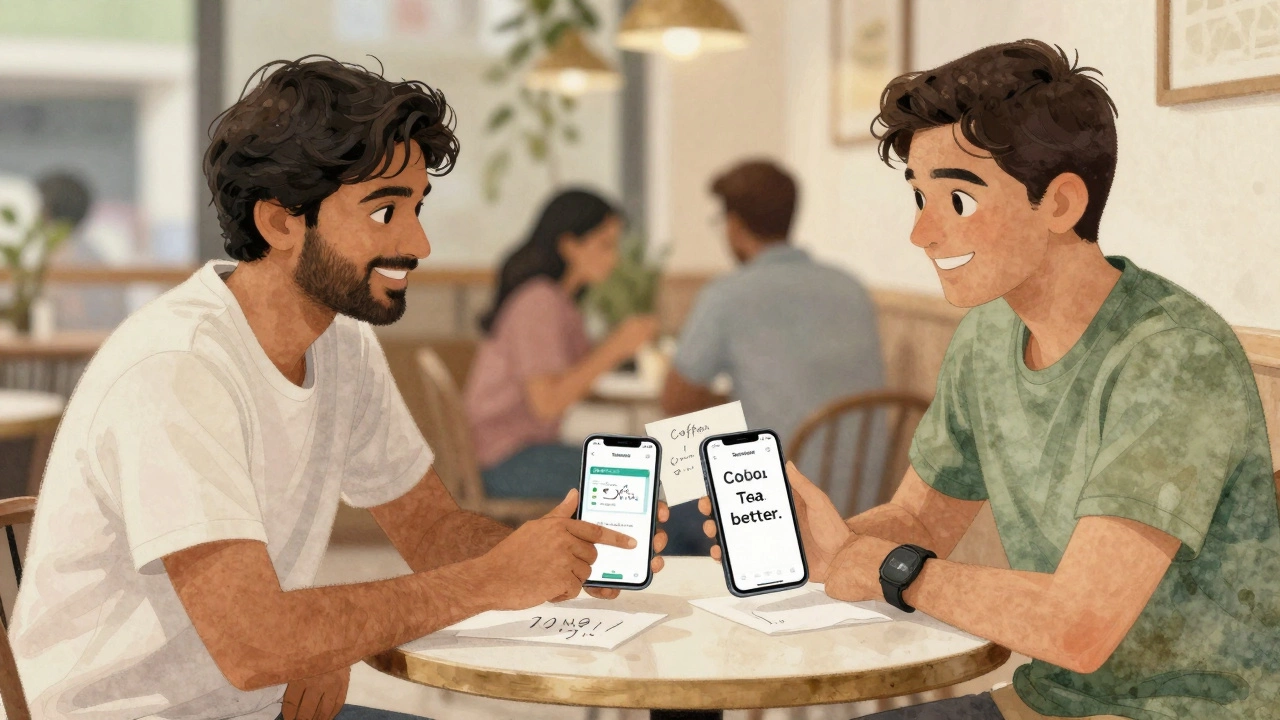
You can’t learn to swim by watching videos. You have to get wet. The same goes for speaking. Start small. Use free apps like Tandem or HelloTalk. Filter for people who want to learn your language. You teach them your language. They teach you English. No pressure. No grades. Just two people helping each other.Don’t look for fluent speakers at first. Look for other beginners. They’re less intimidating. Your first conversation might go like this:
- You: "Hi. My name is Maria. I like tea."
- Them: "Hi Maria. I like coffee."
- You: "Coffee good. Tea better."
It’s clunky. It’s okay. You just had a real conversation. That’s progress. Keep doing it. Three times a week. Ten minutes each. After a month, you’ll notice you’re not thinking in your native language anymore. You’re thinking in English.

Use your phone like a language coach
Your phone isn’t just for scrolling. It’s your personal English lab. Change your phone’s language to English. Set your calendar alerts in English. Name your contacts in English. "Mom" becomes "Mother." "Bus stop" becomes "Stop 15."Record yourself speaking. Say: "Today I went to the market and bought apples." Play it back. Don’t cringe. Listen. Where did you pause? Where did you stumble? That’s your weak spot. Practice that sentence ten times. Then change the word. "Bought oranges." "Walked to the park." Small changes. Big gains.
Build a speaking routine-no exceptions
You don’t need hours. You need consistency. Pick one time every day to speak English. Five minutes. Same time. Same place. Same routine.Here’s what a daily routine looks like:
- 7:00 AM: Listen to a 3-minute English podcast while brushing your teeth.
- 7:05 AM: Say three sentences out loud about your day.
- 7:10 AM: Repeat one phrase from the podcast three times.
That’s it. No apps. No classes. Just you and your voice. After 30 days, you’ll notice your tongue moves differently. You’ll catch yourself thinking in English before you even open your mouth.
Think in English, not in translation
The biggest barrier to speaking? Translating. You hear a question in English. You mentally translate it to your native language. You think of the answer. You translate it back. By then, the moment is gone.Break that habit. Start labeling things around you in English. Your coffee cup: "mug." Your chair: "seat." Your phone: "device." When you feel hungry, don’t think "I’m hungry" in your language. Think it in English. When you’re tired, say "I need rest" in your head. Don’t wait to speak. Start thinking out loud inside your mind.
Use mistakes as feedback, not failure
You will say things wrong. You’ll say "I goed" instead of "I went." You’ll say "I have 25 years" instead of "I’m 25." People might laugh. Or correct you. Don’t shut down. Say thank you. Then repeat the right version out loud.Keep a notebook. Not for grammar. For mistakes. Write down:
- What you said
- What you meant to say
- What they said back
Review it once a week. You’ll see patterns. You’ll stop repeating the same errors. Mistakes aren’t signs you’re bad. They’re signs you’re trying.
Speak before you’re ready
You’ll never feel ready. That’s the myth. There’s no magic moment when you suddenly "get it." You get it by doing. By failing. By trying again.Join a free online English conversation group. Find one on Meetup or Facebook. Show up. Say hello. Say something simple. Sit there. Listen. Try again next week. After four weeks, you’ll realize you’ve been speaking more than you thought.
Speaking English isn’t about talent. It’s about showing up. Every day. Even when it’s hard. Even when you’re embarrassed. Even when you think you’re wasting time. You’re not. You’re building a new way to think. A new way to connect. And that changes everything.