
JEE Success Strategy Planner
Your Preparation Profile
Quick Tips
-
Master NCERT: Don't just read it. Dissect every example and in-text question. It's the foundation for JEE Main.
-
Time Blocking: Study in 90-minute focused blocks with 15-minute breaks to maximize retention.
-
Error Log: Maintain a notebook of mistakes from mock tests. Review weekly to fix patterns.
-
Sleep is Key: 7-8 hours of sleep is non-negotiable for memory consolidation and cognitive function.
Your Personalized Strategy Report
Current Readiness Estimate
Overall Assessment
Time Management
Resource Focus
Mock Test Strategy
Mental Health
Imagine walking into the exam hall with zero panic. You see a question on JEE Advanced, and instead of your heart racing, you recognize the pattern instantly. You solve it, move on, and repeat. This is not magic; it is the result of a specific, disciplined approach that separates those who crack IIT JEE in their first attempt from those who don't.
The dream of joining an Indian Institute of Technology (IIT) is powerful, but the path is brutal. Every year, millions of students register for JEE Main, yet only a fraction qualify for the next stage. Even fewer secure a seat in the top institutes like IIT Bombay or IIT Delhi. The difference isn't just intelligence; it's strategy. Most students fail because they study hard, not smart. They collect books, join multiple coaching centers, and burn out before the exam even begins.
Understanding the Battlefield: JEE Main vs. JEE Advanced
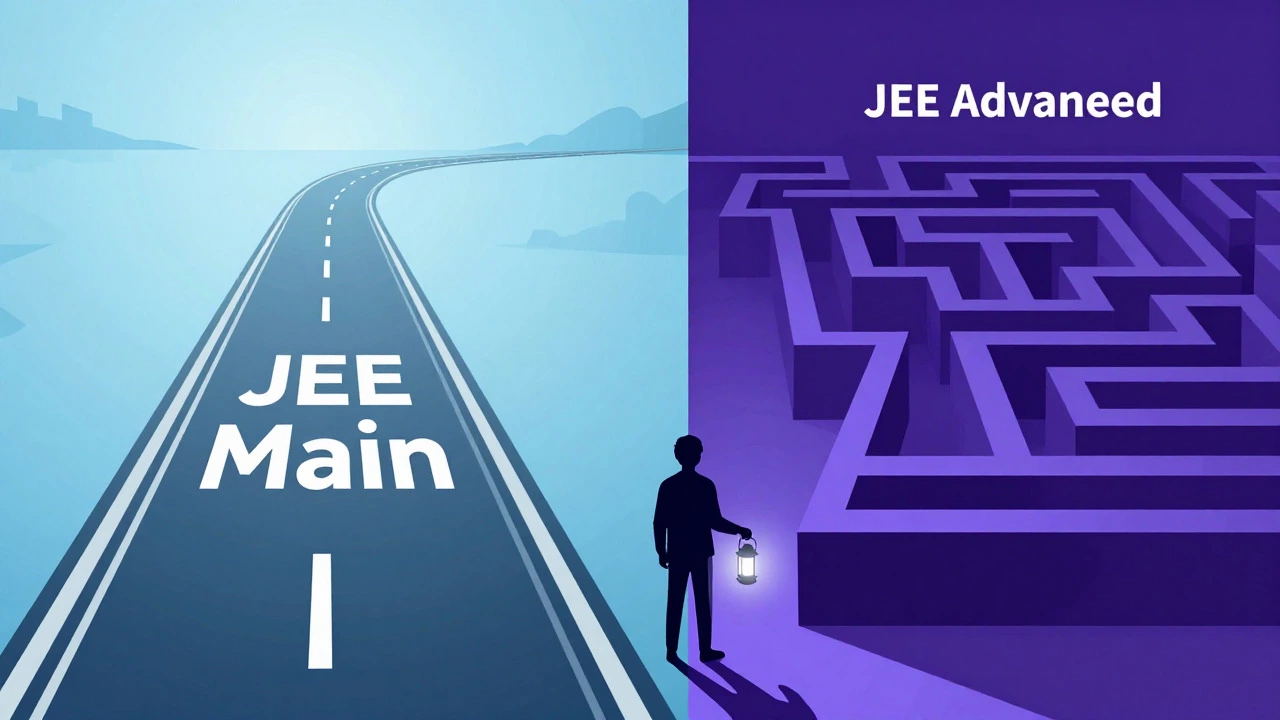
Before you open a single textbook, you need to understand what you are fighting against. The journey has two distinct phases, and they require different mindsets.
JEE Main is a screening test. It is designed to be broad and fast. The questions are generally direct, testing your speed and accuracy across the entire NCERT syllabus. If you miss this, the rest doesn't matter. Think of it as a sprint where consistency wins. You don't need to be a genius here; you need to be thorough.
JEE Advanced, however, is a marathon of complexity. Here, questions are twisted, multi-conceptual, and often have multiple correct options. It tests your depth of understanding and your ability to apply concepts under pressure. Many students clear JEE Main with flying colors but choke in Advanced because they relied on rote memorization rather than conceptual clarity.
| Feature | JEE Main | JEE Advanced |
|---|---|---|
| Focus | Breadth & Speed | Depth & Complexity |
| Syllabus Source | Strictly NCERT based | Conceptual extensions beyond NCERT |
| Question Type | Direct application | Multi-step reasoning |
| Strategy | Accuracy is king | Problem-solving agility |
The Foundation: Mastering NCERT Without Compromise
If there is one secret weapon that most aspirants underestimate, it is the NCERT textbooks. For Physics, Chemistry, and Mathematics, these books are not just reference material; they are the bible for JEE Main. In Chemistry especially, almost every question can be traced back to a line in the NCERT text.
Don't just read them. Dissect them. Solve every example problem. Answer every in-text question. When you understand why a concept is explained a certain way in NCERT, you build a foundation that won't shake when you encounter harder problems later. Skipping NCERT to jump straight into advanced problem sets like HC Verma or RD Sharma is like building a skyscraper on sand. It might look impressive initially, but it will collapse under pressure.
Building a Study Plan That Actually Works
A schedule without flexibility is a recipe for failure. Life happens. You get sick. You have family events. Your plan must account for this. Here is how to structure your days for maximum retention:
- Time Blocking: Divide your day into focused blocks of 90 minutes. After each block, take a 15-minute break. This aligns with the brain's natural attention span.
- Subject Rotation: Don't study Physics for 8 hours straight. Rotate between Physics, Chemistry, and Math every 2-3 hours. This keeps your brain engaged and prevents fatigue.
- Active Recall: Instead of re-reading notes, close the book and try to recall the concepts. Write down what you remember. Then check what you missed. This active effort strengthens neural pathways far better than passive reading.
- Weekly Reviews: Dedicate Sunday morning to reviewing everything you learned that week. Identify weak spots immediately so they don't become permanent gaps.
Consistency beats intensity. Studying 6 hours every day for a year is infinitely better than studying 14 hours for a month and then burning out.
The Power of Mock Tests and Analysis
You cannot learn to swim by reading about hydrodynamics. Similarly, you cannot master JEE by only solving problems in silence. You need the chaos of an exam environment. Start taking full-length mock tests early. Not in the last month, but at least six months before the exam.
But here is the catch: taking the test is only 20% of the work. The other 80% is analysis. After every mock test, spend more time analyzing your performance than you did taking the test. Ask yourself:
- Why did I make this mistake? Was it a calculation error, a conceptual gap, or misreading the question?
- Which topics cost me the most time?
- Did I skip questions that I should have attempted?
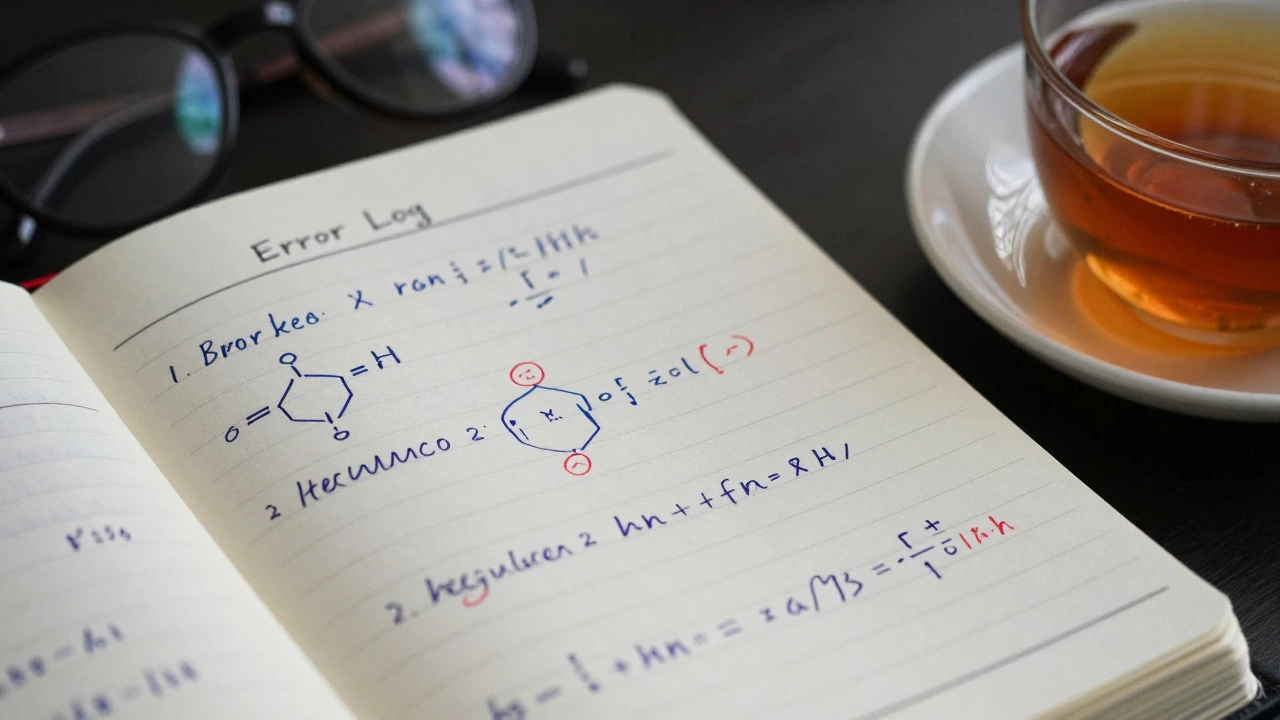
Maintain an "Error Log." This is a notebook where you write down every mistake you make in practice tests. Review this log weekly. Patterns will emerge. You might realize you always mess up integration limits or forget specific chemical reactions. Fixing these patterns is how you gain ranks.
Managing Stress and Avoiding Burnout
The mental toll of JEE preparation is immense. Peer pressure, parental expectations, and self-doubt can crush even the brightest minds. Recognize that stress is normal, but unmanaged stress is toxic.
Prioritize sleep. Seven to eight hours of sleep is non-negotiable. Sleep is when your brain consolidates memory. Pulling all-nighters destroys your cognitive function the next day, making your study hours less effective. Exercise regularly. Even a 20-minute walk can reset your mood and improve focus. And please, disconnect from social media comparisons. Seeing someone else's "perfect" study routine online will only fuel anxiety. Focus on your own progress.
Resource Selection: Less Is More
One of the biggest mistakes students make is hoarding resources. Having ten different books for Physics is worse than having one. It creates confusion and false confidence. Stick to a curated list:
- Physics: NCERT for basics, followed by HC Verma for conceptual problems, and Irodov for advanced challenges if you have time.
- Chemistry: NCERT is paramount. For Organic Chemistry, Morrison & Boyd or Solomons can help deepen understanding. For Physical Chemistry, Numerical Problems by P Bahadur is excellent.
- Mathematics: NCERT for fundamentals, followed by RD Sharma for practice, and Cengage series for comprehensive coverage.
Master these books completely. Solving one book three times is better than solving three books once.
The Final Lap: Exam Day Strategy
Your preparation culminates in those few hours in the exam hall. How you approach the paper matters as much as what you know. Develop a strategy for attempting questions. Usually, starting with your strongest subject builds confidence and secures easy marks. However, some prefer starting with Chemistry because it requires less calculation time and allows you to warm up mentally.
Learn to let go. If a question takes more than 3-4 minutes, mark it for review and move on. Getting stuck on one hard problem can cost you five easy ones. Time management is a skill that must be practiced during mock tests. Aim for accuracy over volume. Negative marking in JEE means that guessing blindly can hurt your score more than skipping a question.
FAQ
Is it possible to crack IIT JEE in first attempt without coaching?
Yes, absolutely. While coaching provides structure and peer support, many successful candidates are self-taught. The key is discipline. You must create your own schedule, find quality resources (like NCERT and standard reference books), and consistently take mock tests. Online platforms and YouTube channels also offer high-quality free content that can replace classroom teaching if used effectively.
How many hours should I study daily for JEE?
Quality matters more than quantity. Generally, 6 to 8 hours of focused, distraction-free study is sufficient. If you are in school, aim for 4-5 hours after classes. If you have taken a drop year, you can increase this to 8-10 hours, but ensure you include breaks and exercise to avoid burnout. Consistency over 12 months is more valuable than cramming 14 hours a day for a month.
Which subjects should I prioritize?
All three subjects-Physics, Chemistry, and Mathematics-are equally important for the total score. However, Chemistry is often considered the "scoring" subject because it relies heavily on factual knowledge from NCERT and requires less time per question. Mathematics demands the most practice due to its vast syllabus and calculation-intensive nature. Physics requires strong conceptual understanding. Balance your time based on your personal strengths and weaknesses, but do not neglect any subject entirely.
When should I start preparing for JEE Advanced?
Ideally, you should start building a strong foundation in Class 11. JEE Advanced tests deep conceptual understanding that takes time to develop. By Class 12, you should be revising Class 11 topics while learning new ones. If you are starting late, focus on mastering the NCERT syllabus first for JEE Main, then gradually introduce advanced problems. Starting early reduces the pressure and allows for a more relaxed, thorough preparation.
What is the role of previous year questions (PYQs)?
Previous Year Questions are gold. They reveal the exam pattern, difficulty level, and recurring themes. Solving PYQs from the last 10-15 years helps you understand what the examiners value. It also helps you gauge your readiness. Aim to solve PYQs topic-wise during your preparation and as full papers in the final months. Analyze the solutions to learn alternative methods and shortcuts.