Language Learning Progress Estimator
Based on the article's research: "One focused 15-minute session every day beats three hours once a week."
Consistency > duration. Your brain builds connections through repeated, low-pressure exposure.
Your Estimated Progress
Notice familiar sounds, less anxiety speaking
Think in the language without translation
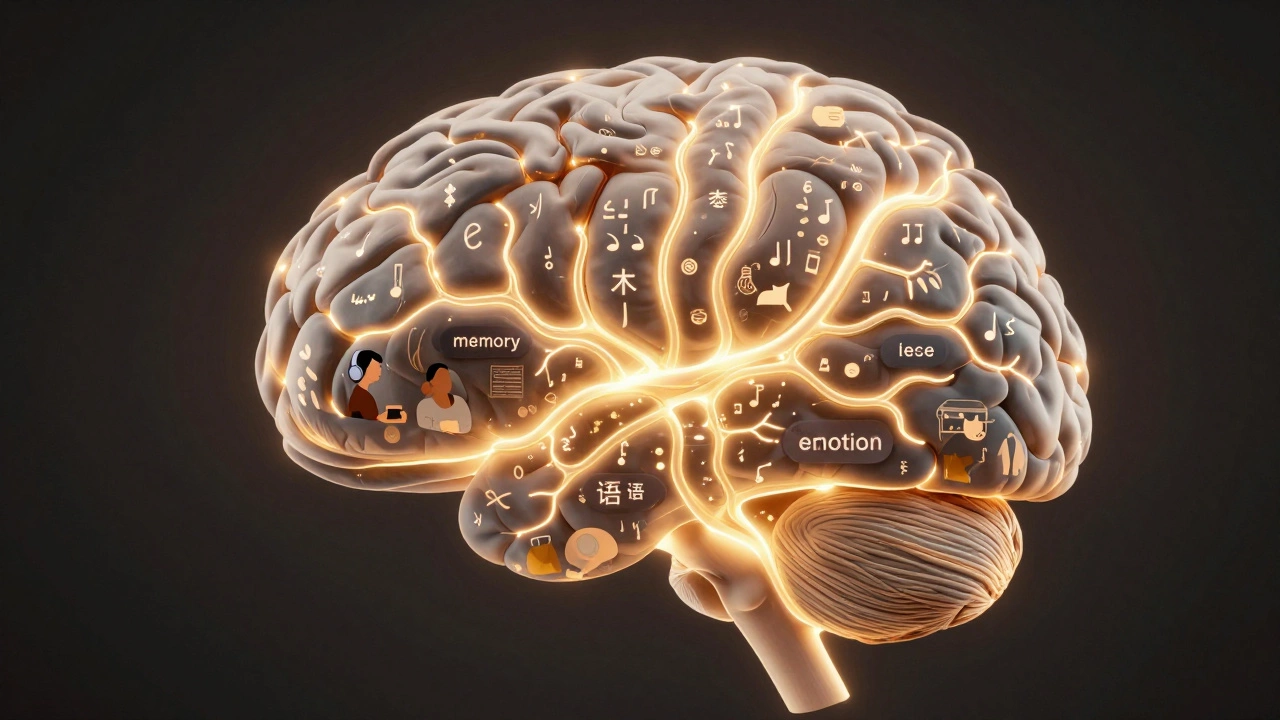
Most people think learning a new language is about memorizing vocabulary and drilling grammar rules. But that’s not how your brain works. Your brain isn’t a filing cabinet. It’s a living network of connections that changes based on what you do - and when you’re trying to learn a language, you’re not just studying. You’re rewiring it.
Think about how babies learn. They don’t open textbooks. They hear sounds, mimic tones, and slowly build meaning from context. That’s your brain’s natural language-learning system. And guess what? It’s still inside you. The problem isn’t your age. It’s the habits you’ve built that block it.
Why your brain resists language learning
You’ve been trained to fear mistakes. Every time you fumble a word in a conversation, your brain flinches. It remembers the embarrassment, not the progress. That fear triggers the amygdala - the part of your brain that handles stress. And when that part is active, your prefrontal cortex - the one responsible for learning - shuts down. You can’t absorb new sounds if you’re stuck in panic mode.
That’s why classroom learning often fails. Sitting in a room, repeating after a teacher, memorizing lists - it’s not real communication. It’s performance. And your brain knows the difference. Real language learning happens when you’re engaged, curious, and safe to mess up.
Neuroplasticity: Your brain’s superpower
Neuroplasticity isn’t a buzzword. It’s science. Your brain physically changes when you learn. New pathways form. Old ones strengthen. Gray matter increases in areas linked to language, memory, and attention. Studies from the University of Edinburgh found that people who learned a language for just three months showed measurable growth in the hippocampus - the memory center - and the cerebral cortex.
But neuroplasticity doesn’t work on command. You can’t just say, “I want to learn Spanish,” and expect your brain to rewire overnight. You need to give it the right signals. And that starts with exposure - not just input, but meaningful input.
Step 1: Flood your brain with real language
Forget flashcards for now. Start with listening. Find podcasts, YouTube channels, or TikTok creators who speak the language naturally. Don’t worry about understanding every word. Just listen. Your brain is building patterns. It’s like hearing a song you don’t know - at first, it’s noise. Then you start humming the chorus. Then you remember the melody.
Try this: pick one 5-minute audio clip per day. Listen to it while walking, cooking, or commuting. Don’t pause. Don’t translate. Just let it wash over you. After a week, you’ll notice you recognize sounds you didn’t before. That’s your brain rewiring.
Step 2: Speak before you’re ready
The biggest myth? “I need to be fluent before I speak.” No. You need to speak to become fluent. Start with one sentence. Every day. Say it out loud. Even if you’re alone. “I like coffee.” “The weather is nice today.”
Then find a language partner - not a tutor, not a class. Just someone who speaks the language and wants to chat. Use apps like Tandem or HelloTalk. You don’t need to be perfect. You need to be consistent. The goal isn’t accuracy. It’s connection. Every time you speak, you’re strengthening the neural pathways between your thoughts and your mouth.

Step 3: Use emotion to lock in memory
Your brain remembers what matters. Not what’s on a list. What makes you feel something.
Instead of memorizing “apple,” think about the first apple you ever ate. The crunch. The sweetness. The way it felt in your hand. Now say “pomme” (French) or “manzana” (Spanish) while picturing that moment. Your brain links the word to a sensory memory - and that stickiness lasts.
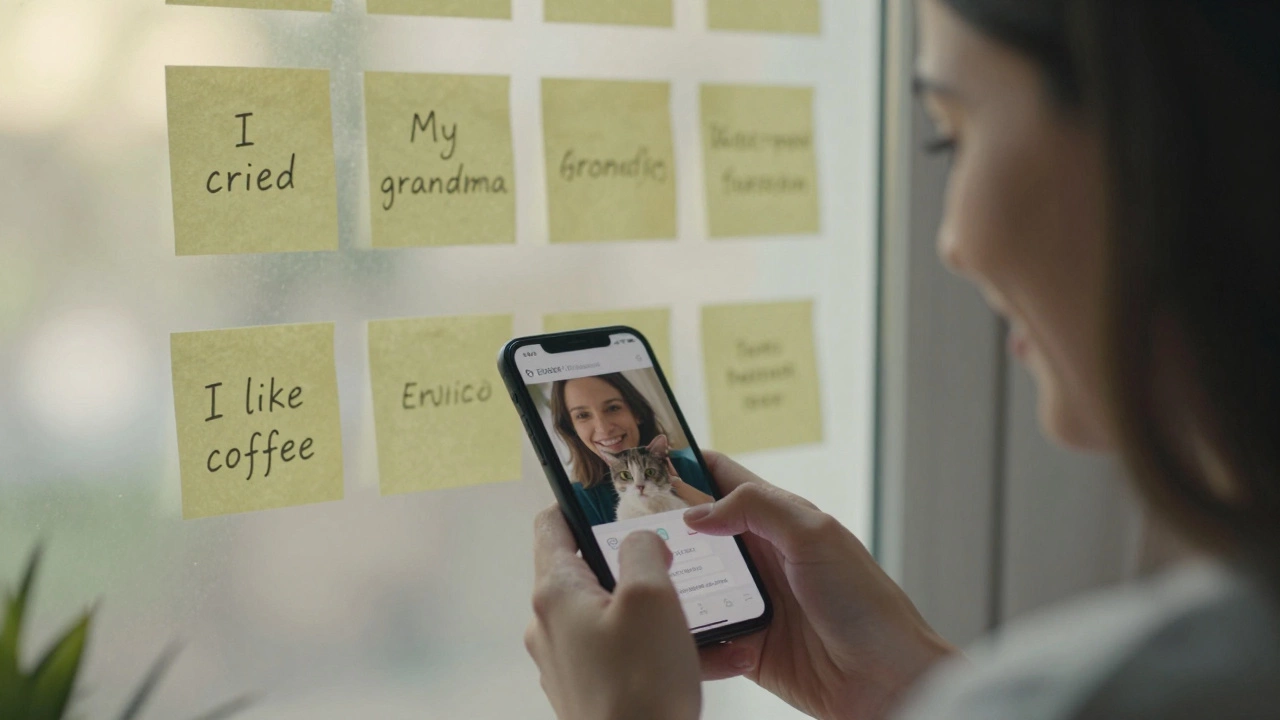
Try this: write down three personal memories. Then, describe them in your target language. Even if you use simple words. “I cried when my dog ran away.” “My grandma made soup on Sundays.” These aren’t language exercises. They’re emotional anchors.
Step 4: Sleep on it
You don’t learn while studying. You learn while sleeping. During deep sleep, your brain replays the day’s experiences. It strengthens the connections you made. That’s why people who study right before bed often remember more.
Try this: listen to a short audio lesson while falling asleep. Not to understand. Just to let the sounds sink in. Your brain will process it while you rest. Studies from the University of Chicago showed that people who listened to vocabulary during sleep improved recall by 30% compared to those who didn’t.
Step 5: Make it part of your identity
People don’t learn languages because they want to. They learn because they become someone who speaks them.
Start small. Change your phone’s language. Follow social media accounts in your target language. Watch a movie without subtitles. Say “good morning” to your barista in the new language. These aren’t tricks. They’re identity shifts. Each one tells your brain: “This is who I am now.”
One woman in Melbourne started speaking Portuguese to her cat. Every morning. “Bom dia, gatinho.” She didn’t know if the cat understood. But her brain did. Within six months, she was having full conversations with strangers in Rio.
What doesn’t work
You’ve probably tried apps that promise 10-minute lessons and “fluency in 30 days.” They don’t rewire your brain. They give you surface-level recognition. You’ll know how to say “I want coffee,” but freeze when someone asks, “Do you want sugar?”
Grammar drills? They help - but only after you’ve built a foundation of real language. Learning “past tense” before you can say “I went” is like learning to drive before you’ve sat in a car.
Translation? It’s the enemy of fluency. Your brain doesn’t think in English and then convert. It thinks in the new language. The moment you start translating, you slow yourself down. And your brain notices. It learns to avoid the language because it’s too hard.
Real progress, not perfect progress
Language isn’t a race. It’s a relationship. You don’t become fluent by cramming. You become fluent by showing up - day after day - with curiosity, not pressure.
Some days you’ll understand everything. Other days, you’ll feel like you’re back at square one. That’s normal. Your brain is building connections beneath the surface. You won’t feel the change until one day, you realize you didn’t think in English at all.
That’s rewiring. Not magic. Not talent. Just consistent, low-pressure, emotionally connected exposure.
What to do tomorrow
- Listen to one 5-minute audio clip in your target language - no translation, no notes.
- Say one sentence out loud - even if it’s just “I’m learning.”
- Change one thing on your phone to the target language.
- Write down one personal memory and describe it in three simple words.
Don’t aim for fluency. Aim for connection. The rest follows.
Can adults really rewire their brains to learn a language?
Yes. The myth that children learn languages better because their brains are “more plastic” is outdated. Adults have just as much neuroplasticity - but they use it differently. Kids learn through immersion without self-consciousness. Adults learn through meaning and emotion. Studies from the Max Planck Institute show adults who use emotional associations and real-life context learn faster than children who only memorize vocabulary. Your brain doesn’t care how old you are. It cares if you’re engaged.
How long does it take to rewire your brain for a new language?
You’ll start noticing changes in about 2-4 weeks. You’ll recognize familiar sounds, feel less anxious speaking, and catch words in media without translating. Real fluency - where you think in the language - takes 6-12 months with daily, low-pressure practice. The key isn’t hours spent. It’s consistency. One focused 15-minute session every day beats three hours once a week. Your brain builds connections through repetition, not marathons.
Do I need to travel to learn a language effectively?
No. Travel helps, but it’s not required. What matters is immersion - not geography. You can create immersion at home: change your devices, follow native speakers on social media, watch shows without subtitles, join online conversation groups. People in Sydney, Tokyo, and Berlin have learned languages without leaving their cities. The difference isn’t location. It’s whether you’re exposing yourself to real language, not textbook versions.
Is grammar important when rewiring your brain?
Grammar is like the skeleton of a language - it holds everything together. But you don’t need to study it upfront. Learn grammar through use. When you hear “She went to the store,” your brain absorbs the structure. Later, you’ll notice patterns: “I went,” “He ate,” “They played.” That’s grammar internalized. Only after you’ve built a foundation of listening and speaking should you look at rules to clarify what you already feel. Otherwise, grammar becomes a barrier, not a tool.
What if I forget words I learned?
Forgetting is part of learning. Your brain prunes unused connections. That’s normal. The fix isn’t to memorize harder. It’s to reuse. Every time you hear or use a forgotten word, you strengthen it again. Keep a small list of 5-10 words you keep forgetting. Use them in sentences every day for a week. Write them in a note on your phone. Say them aloud before bed. Repetition with context brings them back - faster than flashcards ever could.