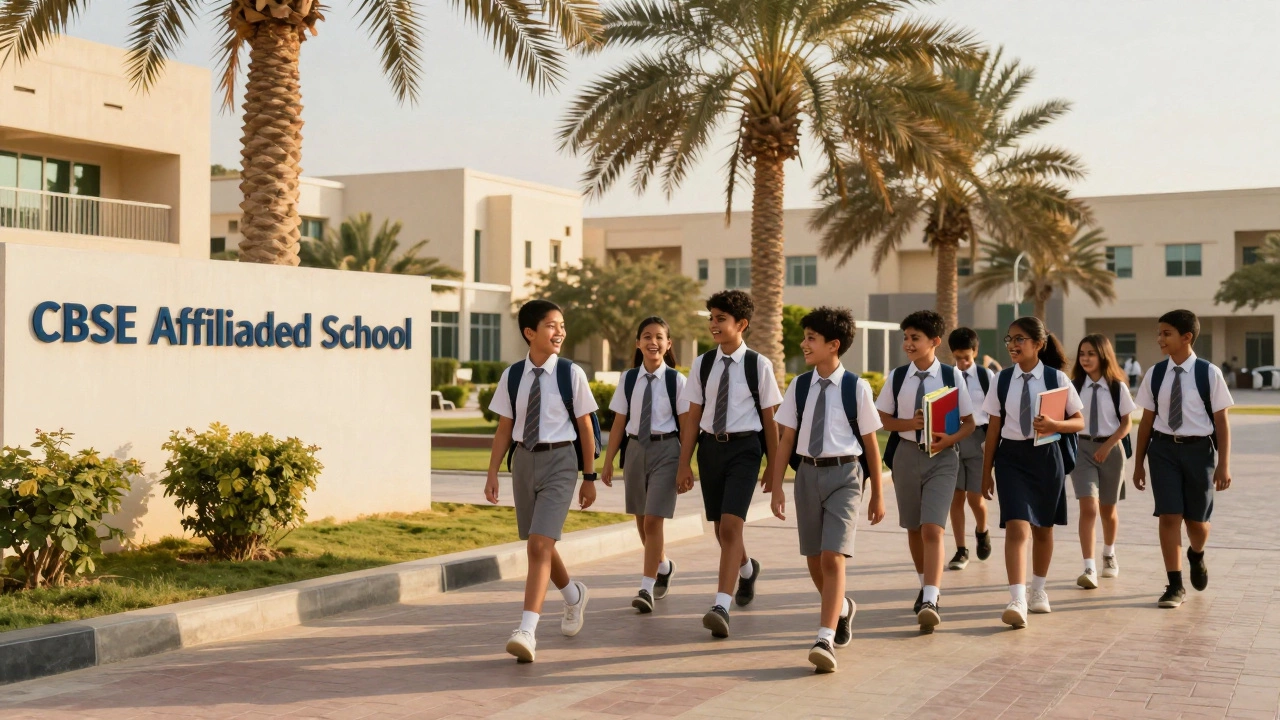
Many people assume CBSE - the Central Board of Secondary Education - only exists in India. After all, it’s the board that handles Class 10 and Class 12 exams for millions of Indian students every year. But if you’ve ever seen a CBSE school sign in Dubai, Singapore, or even Nairobi, you might wonder: is CBSE really only in India?
CBSE Isn’t Just an Indian Board - It’s a Global Curriculum
CBSE is run by the Indian government, but its curriculum isn’t locked inside India’s borders. The board has been allowing schools outside India to affiliate with it since the 1980s. Today, over 200 CBSE-affiliated schools operate in more than 25 countries. These schools follow the exact same syllabus, textbooks, and exam patterns as schools in Delhi or Chennai. A student in Kuwait taking the CBSE Class 10 exam is answering the same questions as a student in Mumbai.
The reason? Indian families living abroad want their children to stay connected to the Indian education system. Whether they plan to return to India for college or want their kids to take competitive exams like JEE or NEET, CBSE gives them a consistent academic path. It’s not about nationality - it’s about continuity.
Where Can You Find CBSE Schools Outside India?
CBSE schools aren’t scattered randomly. They cluster where large Indian diaspora communities live. The top countries with CBSE schools include:
- United Arab Emirates - Over 50 schools, especially in Dubai and Abu Dhabi
- Saudi Arabia - Major cities like Jeddah and Riyadh have multiple CBSE campuses
- Qatar, Oman, Kuwait - All have well-established CBSE networks
- Singapore - Popular among expat families seeking a structured curriculum
- USA, Canada, UK - Smaller but growing presence, often in metro areas with high Indian populations
- Kenya, Nigeria, South Africa - CBSE schools serve Indian communities across Africa
In the UAE alone, CBSE schools educate more than 150,000 students annually. That’s more than the entire student population of some Indian states. These schools aren’t just for Indian nationals - many non-Indian families choose CBSE because of its clear structure, focus on science and math, and strong exam results.
How Is the CBSE Curriculum Different Abroad?
Some people think CBSE schools overseas are watered-down versions of the Indian system. That’s not true. The syllabus, textbooks, and exam papers are identical. The only differences are practical:
- Language options: While Hindi and English are core, some international schools offer additional language support for non-native speakers.
- Exam centers: CBSE exams are held in designated centers abroad, often coordinated with Indian embassies or partner institutions.
- Calendar adjustments: Schools may shift the academic year slightly to align with local holidays or weather patterns - but the exam dates still follow CBSE’s official schedule.
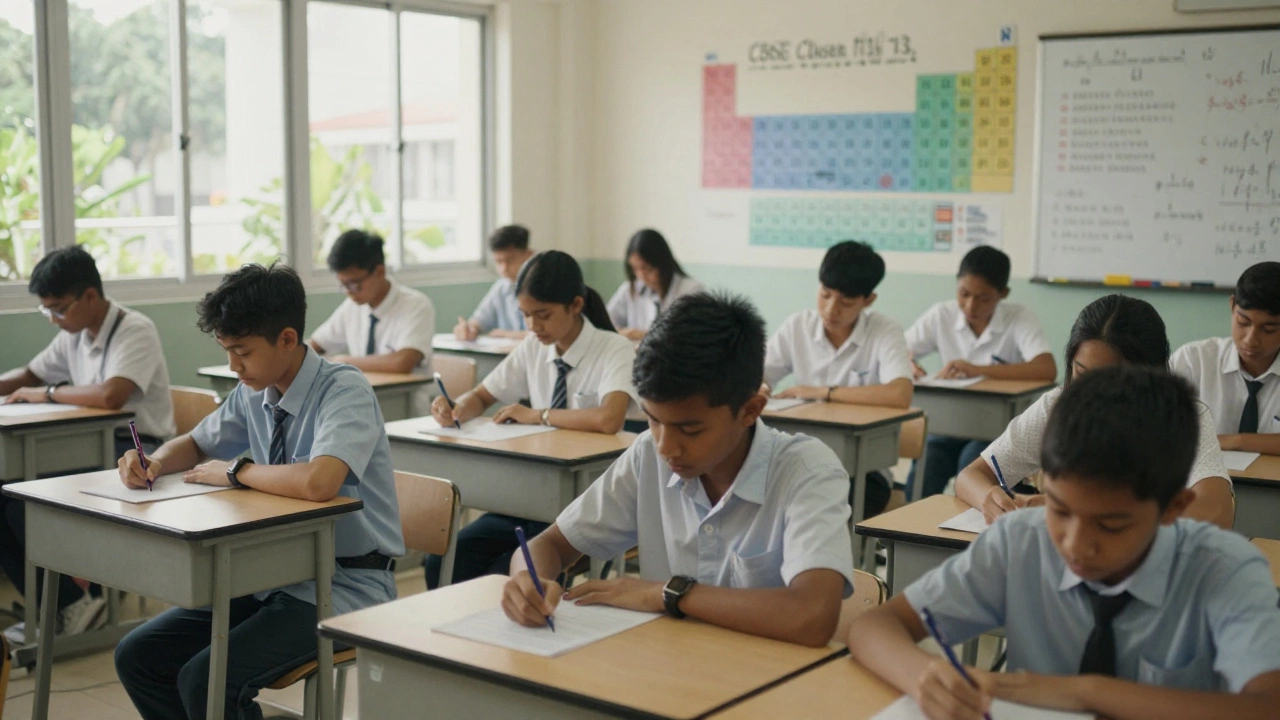
For example, a student in Dubai takes the same Class 12 Physics paper as a student in Bangalore. The marking scheme, weightage of chapters, and even the format of long-answer questions are identical. The only thing that changes is the location.
Why Do Families Choose CBSE Over Local Systems?
Why not just send kids to a local school in the U.S. or UK? For many Indian families, the answer is simple: CBSE prepares students for Indian higher education.
India’s top engineering and medical colleges - IITs, NITs, AIIMS - base their entrance exams on CBSE syllabus. JEE Main and NEET are designed around NCERT textbooks, which are the same ones used in CBSE schools worldwide. If a student in London wants to apply to IIT Bombay, studying under CBSE gives them a direct advantage. They’re not learning a different version of physics or chemistry - they’re learning exactly what’s tested.
Plus, CBSE is known for its clear, structured approach. Unlike some international curricula that emphasize open-ended projects, CBSE focuses on mastery of core concepts. That’s why many parents - even non-Indian ones - prefer it for its predictability and rigor.
CBSE vs IB vs Cambridge: What’s the Difference?
It’s common to see CBSE schools next to IB (International Baccalaureate) or Cambridge schools. So how do they compare?
| Feature | CBSE | IB Diploma | Cambridge (IGCSE/A-Level) |
|---|---|---|---|
| Focus | Core subjects, exam-based | Holistic, interdisciplinary | Subject specialization |
| Assessment | Final written exams (80-90%) | Exams + internal assessments + extended essay | Exams + coursework (varies by subject) |
| Best for | Students targeting Indian universities | Students aiming for global liberal arts colleges | Students targeting UK or Commonwealth universities |
| Difficulty | High volume of content, memorization-heavy | High workload, critical thinking focus | Depth over breadth, flexible subject choices |
| Global Recognition | Strong in India, growing abroad | Widely accepted worldwide | Widely accepted, especially in UK |
CBSE isn’t designed to compete with IB or Cambridge globally. It’s built to serve a specific need: preparing Indian students - wherever they live - for India’s higher education system. That’s why it’s not going away. It’s thriving.
Is CBSE Accepted by Universities Outside India?
Yes - but with conditions. Universities in the U.S., Canada, Australia, and the UK recognize CBSE qualifications, but they don’t treat them the same as local diplomas. For example:
- In the U.S., CBSE Class 12 results are often evaluated alongside SAT or ACT scores. Some universities require additional documentation or credential evaluation services like WES.
- In Canada, CBSE is accepted for undergraduate admissions, especially for STEM programs.
- In the UK, CBSE Class 12 is generally considered equivalent to A-Levels, but top universities may ask for higher scores or additional qualifications.
It’s not automatic. But it’s valid. Many CBSE students from abroad get into universities like University of Toronto, University of Melbourne, and even Ivy League schools. The key is strong grades and supporting documents.

What About CBSE Online and Distance Learning?
CBSE doesn’t run its own online school, but it does allow schools to offer blended or distance learning options - especially after the pandemic. Some international CBSE schools now offer hybrid models, where students attend online classes but take final exams in person at approved centers.
This flexibility has made CBSE even more accessible. A child in rural Kenya can now follow the same syllabus as a child in New Jersey, as long as they’re enrolled in an affiliated school and can access study materials.
How to Verify a CBSE School Outside India
Not every school that says "CBSE" is legitimate. The board only recognizes schools that go through a formal affiliation process. To check if a school is genuine:
- Visit the official CBSE website: cbse.gov.in
- Go to the "Affiliated Schools" section
- Select "Outside India" from the location filter
- Search by country or school name
If the school doesn’t appear on this list, it’s not officially affiliated. Beware of fake schools using the CBSE name to attract students. Only schools on the official list can issue CBSE certificates recognized by Indian universities and embassies.
Final Answer: Is CBSE Only in India?
No. CBSE is an Indian board, but its curriculum is used by schools around the world. It’s not a local system - it’s a global standard for Indian-origin students. Whether you’re in Riyadh, Singapore, or Los Angeles, if you’re studying under CBSE, you’re learning the same material as students in India. The difference isn’t in the syllabus - it’s in the context.
For families who want their children to keep the Indian education path alive - no matter where they live - CBSE isn’t just an option. It’s the most reliable one.
Can a student from a CBSE school abroad take JEE or NEET?
Yes. Students from CBSE schools outside India are eligible to take JEE Main, JEE Advanced, and NEET. They must register through the official portals and provide proof of their CBSE Class 12 equivalent qualification. The exam syllabus and pattern are the same for all candidates, regardless of location.
Is CBSE easier than IB or Cambridge?
It’s not about ease - it’s about style. CBSE is more content-heavy and exam-focused, with a strong emphasis on memorization and accuracy. IB and Cambridge require more critical thinking, research, and project work. Many students find CBSE challenging because of the volume of material, not because the concepts are simple.
Do CBSE schools abroad teach Hindi?
It depends on the school. Most international CBSE schools offer Hindi as a second or third language option, but it’s not mandatory. Some schools replace Hindi with the local language or another foreign language based on student demographics. The core subjects - Math, Science, English - remain unchanged.
Can I transfer from IB to CBSE or vice versa?
Yes, but it requires planning. CBSE and IB have different structures, so students switching systems may need to repeat a grade or take additional subjects to meet requirements. For example, moving from IB to CBSE Class 11 means catching up on NCERT syllabus content. Schools often provide bridging programs to help with the transition.
Is CBSE recognized by the U.S. college admissions system?
Yes, but not automatically. U.S. colleges accept CBSE Class 12 results as equivalent to a U.S. high school diploma, but they usually require standardized test scores (SAT/ACT), transcripts evaluated by services like WES, and sometimes additional documentation. Strong CBSE scores combined with good test results can make a student competitive for top U.S. universities.