
Online Learning Platform Finder
Answer these three questions to find your ideal learning environment.
Walk into any conversation about digital education, and you’ll hear the term online platforms thrown around like it’s a single thing. It isn’t. If you are trying to figure out where to learn a new skill or how your company should train its staff, getting lost in the jargon is easy. You might see ads for massive open courses, corporate training portals, live virtual classrooms, and self-paced study apps. They all look similar on the surface-videos, quizzes, certificates-but they work very differently under the hood.
The confusion usually stems from mixing up the delivery method with the business model. To make sense of the landscape, we need to break down the ecosystem into four distinct categories. These aren't just random buckets; they represent four different ways humans interact with information online. Understanding which type fits your goal is the difference between wasting money on a course you never finish and finding a tool that actually changes your career trajectory.
1. Massive Open Online Courses (MOOCs)
When people talk about "taking an online course," they are almost always thinking of MOOCs. This model exploded in popularity around 2012 with the launch of platforms like Coursera, a global leader in MOOCs partnering with top universities and edX, a non-profit platform offering university-level courses. The core idea here is scale. These platforms take content from prestigious institutions-Harvard, MIT, Stanford-and package it for anyone with an internet connection.
The structure is rigid but familiar. You get pre-recorded video lectures, automated quizzes, and peer-graded assignments. The barrier to entry is low; many courses are free to audit, though you pay for the certificate. The catch? Completion rates are notoriously low, often hovering below 15%. Why? Because there is no accountability. No one is checking if you logged in today. It relies entirely on your personal discipline.
This model works best for learners who want credentialing without the time commitment of a degree. You are buying access to high-quality curriculum and a brand name on your resume. It is less about community and more about content consumption. If you need a structured syllabus taught by experts, this is your lane. But don’t expect hand-holding.
2. Learning Management Systems (LMS)
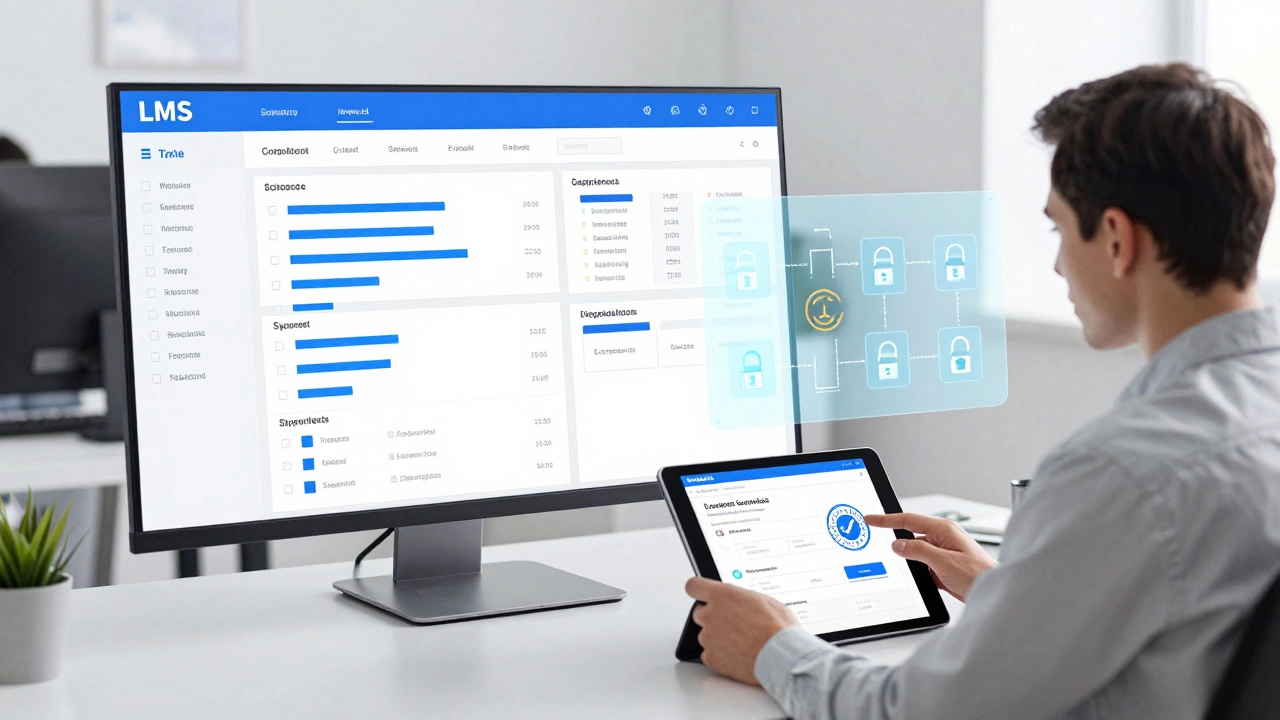
Now, shift gears. Imagine you start a new job. Your boss sends you a link to complete compliance training. That link leads to an LMS. Unlike MOOCs, which are consumer-facing marketplaces, Learning Management Systems are internal tools used by organizations. Companies like Absorb LMS and TalentLMS dominate this space.
The primary user here isn’t the learner; it’s the administrator. An LMS is designed to track progress, enforce deadlines, and generate reports. Did Sarah in Accounting finish her cybersecurity module? The system knows. Can she access the next level until she scores 80% on the quiz? The system decides. This creates a closed loop of accountability that MOOCs lack.
For individuals, an LMS feels restrictive. You can’t browse for interesting topics; you only see what your organization assigns. However, for businesses, this control is the product. It ensures uniformity in training and provides legal proof of compliance. If you are looking to build a private academy for your coaching clients or manage employee onboarding, you need an LMS, not a public marketplace.
3. Live Virtual Classrooms (Synchronous Learning)
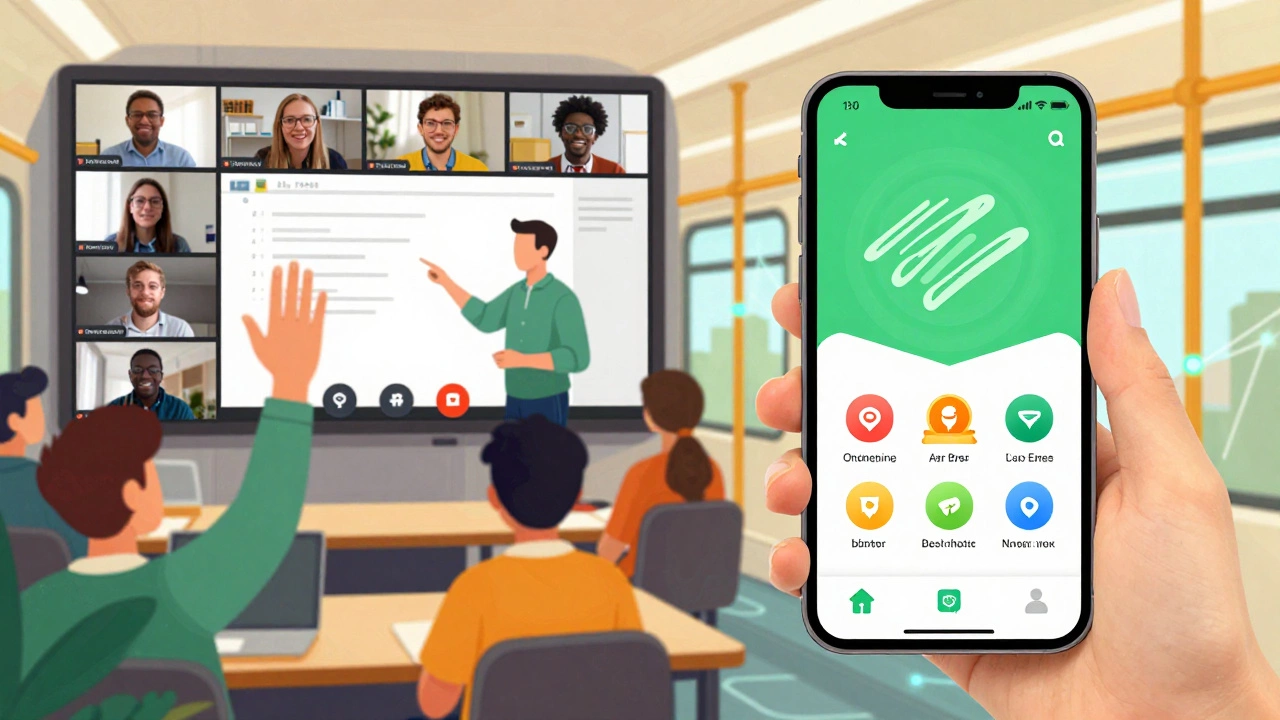
Recorded videos have limits. You can’t ask a video a question and get an answer. This gap is filled by live virtual classrooms. Platforms like Zoom adapted for education, or specialized tools like Gather.town for immersive experiences, bring the interaction back into the mix. This is synchronous learning: everyone logs in at the same time.
The dynamic here shifts from content delivery to social presence. Teachers use breakout rooms, live polls, and whiteboards to mimic a physical classroom. The value proposition is immediate feedback. If you’re confused about a coding concept, you raise your hand (digitally), and the instructor clarifies it right then. This human connection drastically improves retention compared to passive watching.
However, this model suffers from scheduling conflicts. It requires coordination across time zones and demands real-time attention. It is also harder to scale. A teacher can handle fifty students in a recorded lecture, but managing fifty active participants in a live session is exhausting. This type is ideal for complex subjects that require debate, practice, or mentorship, such as language acquisition or leadership training.
4. Microlearning and Skill-Based Apps
The fourth category breaks the traditional "course" format entirely. Think of Duolingo for languages or Udemy's shorter skill-focused titles. This is microlearning. Instead of a three-hour lecture, you get five-minute bursts of information designed to fit into a commute or a coffee break.
The psychology behind this is gamification. Streaks, points, badges, and leaderboards keep users engaged through dopamine hits rather than academic curiosity. The content is highly specific: "How to pivot a table in Excel" or "Spanish verbs for travel." There is no deep theoretical background, just actionable skills.
This approach addresses the modern attention deficit. People don’t have hours to spare, but they have minutes. The trade-off is depth. You won’t become a data scientist through five-minute videos, but you will learn enough to fix your spreadsheet. It is perfect for quick fixes, habit building, and reinforcing knowledge rather than acquiring foundational expertise.
| Platform Type | Primary Goal | Interaction Level | Best For |
|---|---|---|---|
| MOOCs | Credentialing & Access | Low (Asynchronous) | University-style learning, Certificates |
| LMS | Tracking & Compliance | Medium (Structured) | Corporate Training, Private Academies |
| Live Virtual | Engagement & Feedback | High (Synchronous) | Complex Skills, Mentorship |
| Microlearning | Habit & Quick Skills | Variable (Gamified) | Language Basics, Quick Fixes |
Choosing the Right Platform for Your Needs
So, which one do you pick? It depends on your endgame. If you need a piece of paper to show your employer, go for a MOOC. If you are a business owner needing to ensure your team follows safety protocols, buy an LMS. If you are struggling with a difficult concept that requires discussion, book a live session. If you just want to learn some Spanish while waiting for the bus, download a microlearning app.
Most successful learners don’t stick to just one. They might use a MOOC for the theory, a live workshop for practice, and a microlearning app to maintain their streak. The key is recognizing that these platforms are tools, not solutions. They enable learning, but they don’t force it. The strategy belongs to you.
What is the difference between an LMS and a MOOC?
A MOOC (Massive Open Online Course) is a public marketplace for individual learners to access university-level content, often for certification. An LMS (Learning Management System) is a private software tool used by organizations to assign, track, and report on employee or student progress. MOOCs are for consumers; LMSs are for administrators.
Are online certificates from MOOCs worth it?
Yes, if they come from recognized institutions or platforms like Coursera or edX. They signal initiative and specific knowledge to employers. However, they rarely replace degrees. Their value lies in demonstrating continuous learning and filling specific skill gaps.
Which platform is best for beginners?
Microlearning apps are often the easiest entry point because they are gamified and low-commitment. For more serious study, MOOCs offer structured paths. Beginners should avoid complex LMS interfaces unless required by a school or job, as they can be overwhelming without guidance.
Can I use an LMS for my own personal learning?
Technically yes, but it’s overkill. LMS platforms are designed for managing groups. For personal tracking, simple note-taking apps or habit trackers are more efficient. LMSs shine when you need to organize content for others or require strict progress reporting.
Why do so many people drop out of MOOCs?
Lack of accountability is the main reason. Without a teacher checking in or peers to collaborate with, motivation fades quickly. Additionally, the volume of content can be intimidating. Successful learners treat MOOCs like a part-time job, setting regular schedules to complete modules.