Virtual Learning vs. eLearning Decision Tool
Select the factors most relevant to your training needs to determine whether an eLearning or Virtual Learning approach is best suited for your organization.
Key Reasons:
Have you ever scrolled through a job posting or a course catalog and felt confused by the terms "virtual" and "eLearning"? You aren't alone. In the rush to digitize education after 2020, these words got tossed around like they meant the same thing. But if you are trying to choose the right platform for your team or your own upskilling, treating them as synonyms could cost you time, money, and engagement.
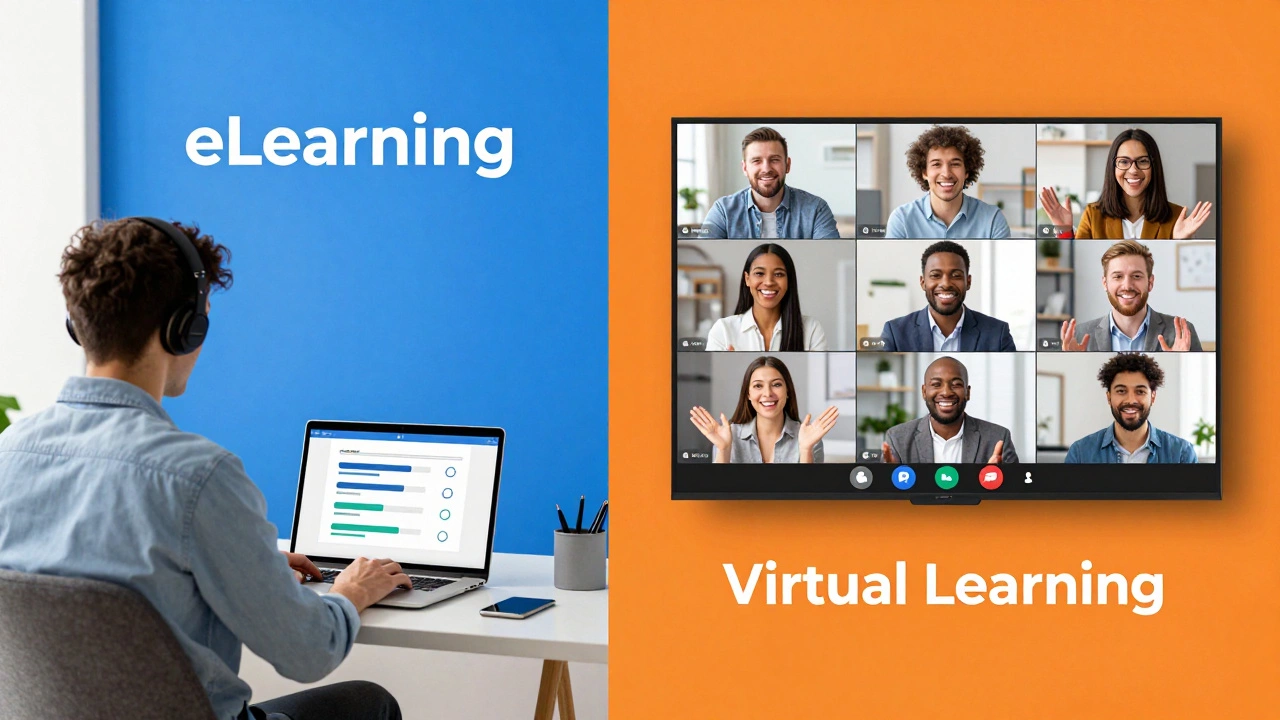
The short answer is no, they are not the same. While both happen on screens, eLearning is about the content itself-static lessons, videos, quizzes. Virtual learning, on the other hand, is about the experience-the live interaction, the classroom feel, the human connection in real-time. Understanding this distinction helps you pick the right tool for the job.
Defining eLearning: The Content-First Approach
Let's start with eLearning, which is education delivered via electronic devices, typically the internet. Think of it as a digital library that talks back to you. It is asynchronous, meaning you don't have to be online at the same time as anyone else. You log in, watch a pre-recorded video, read a PDF, take a quiz, and log out.
The core entity here is the Learning Management System (LMS). Platforms like Moodle, Canvas, or even LinkedIn Learning rely heavily on eLearning principles. The focus is on scalability. One instructor records a module once, and ten thousand people can consume it without the instructor lifting a finger again. This makes eLearning incredibly efficient for compliance training, onboarding basics, or standardized knowledge transfer where the goal is simply information retention.
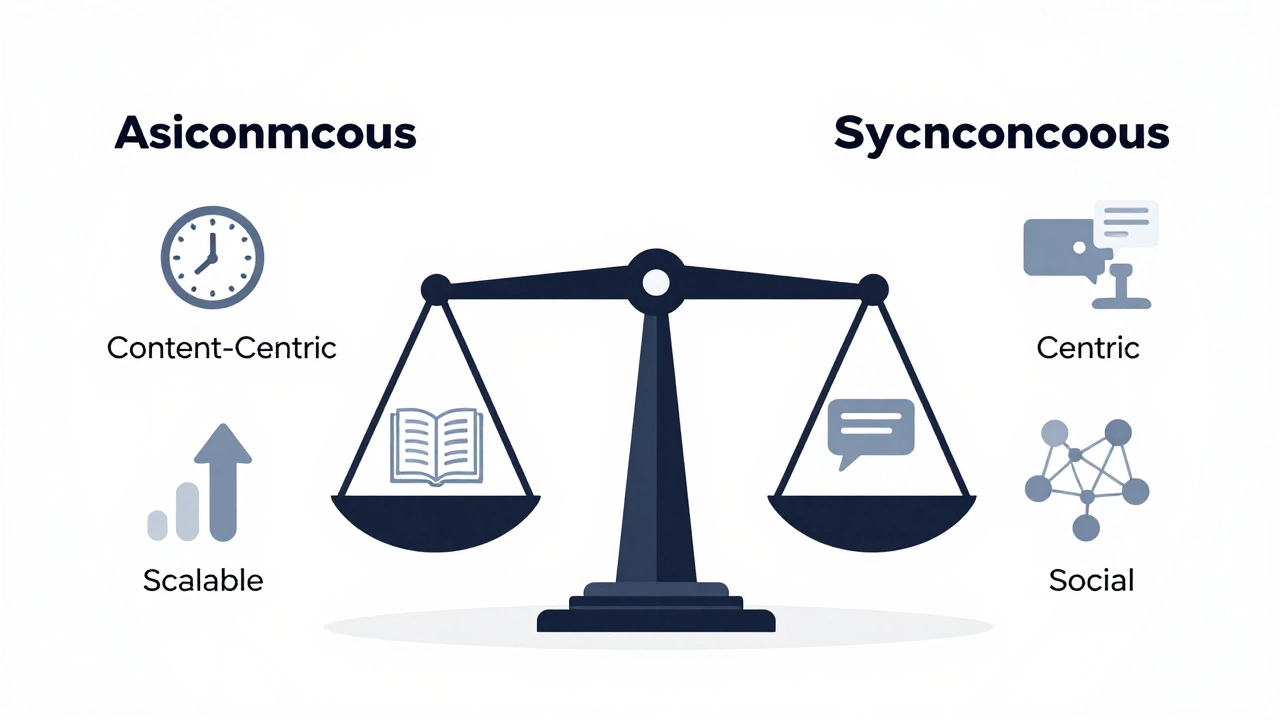
- Asynchronous: Learners control the pace.
- Content-Centric: Videos, text, interactive modules.
- Scalable: Low marginal cost per additional user.
- Self-Paced: No fixed schedule required.
However, eLearning lacks immediate feedback. If you get stuck on a concept, you can't raise your hand. You have to rely on forums or email, which delays resolution. This is where the limitation of pure eLearning becomes clear: it informs, but it doesn't always engage deeply.
Understanding Virtual Learning: The Experience-First Approach
Now, look at Virtual learning, which refers to a simulated classroom environment conducted over the internet. This is synchronous. When you join a virtual class, you are expected to be there at 2 PM on Tuesday. You see your instructor's face. You see your peers' faces. You might use breakout rooms to solve problems together.
The central technology here isn't just an LMS; it's video conferencing tools like Zoom, Microsoft Teams, or specialized platforms like Adobe Connect. The goal shifts from content delivery to interaction. Virtual learning mimics the traditional physical classroom but removes the geographical barrier. It relies on social presence-the feeling that you are learning *with* others, not just *alongside* them.
- Synchronous: Real-time interaction with instructor and peers.
- Interaction-Centric: Live Q&A, discussions, group work.
- Social: Builds community and accountability.
- Structured: Fixed schedules mimic school hours.
Virtual learning is harder to scale because it requires an instructor's live time. But it solves the isolation problem of eLearning. You get instant clarification. You build relationships. For complex soft skills like negotiation, leadership, or public speaking, this live dynamic is often irreplaceable.
Key Differences: A Side-by-Side Comparison
To make the choice easier, let's break down the attributes. These two methods serve different purposes in the educational ecosystem. One is a repository; the other is a stage.
| Attribute | eLearning | Virtual Learning |
|---|---|---|
| Timing | Asynchronous (Anytime) | Synchronous (Scheduled) |
| Instructor Role | Content Creator / Facilitator | Live Presenter / Mentor |
| Primary Tech | LMS, Video Hosting | Video Conferencing, Webinars |
| Interaction Level | Low to Medium (Forums/Quizzes) | High (Chat, Voice, Breakouts) |
| Best For | Factual Knowledge, Compliance | Skill Application, Discussion |
| Cost Structure | High upfront, low recurring | Lower upfront, high recurring (labor) |
Notice the cost structure difference. eLearning requires heavy investment in production-scripting, filming, editing-but once done, it runs cheaply. Virtual learning has lower production costs (just a good camera and mic) but high operational costs because you pay the instructor every hour they teach. This economic reality dictates how organizations deploy each method.
When to Use Which Method?
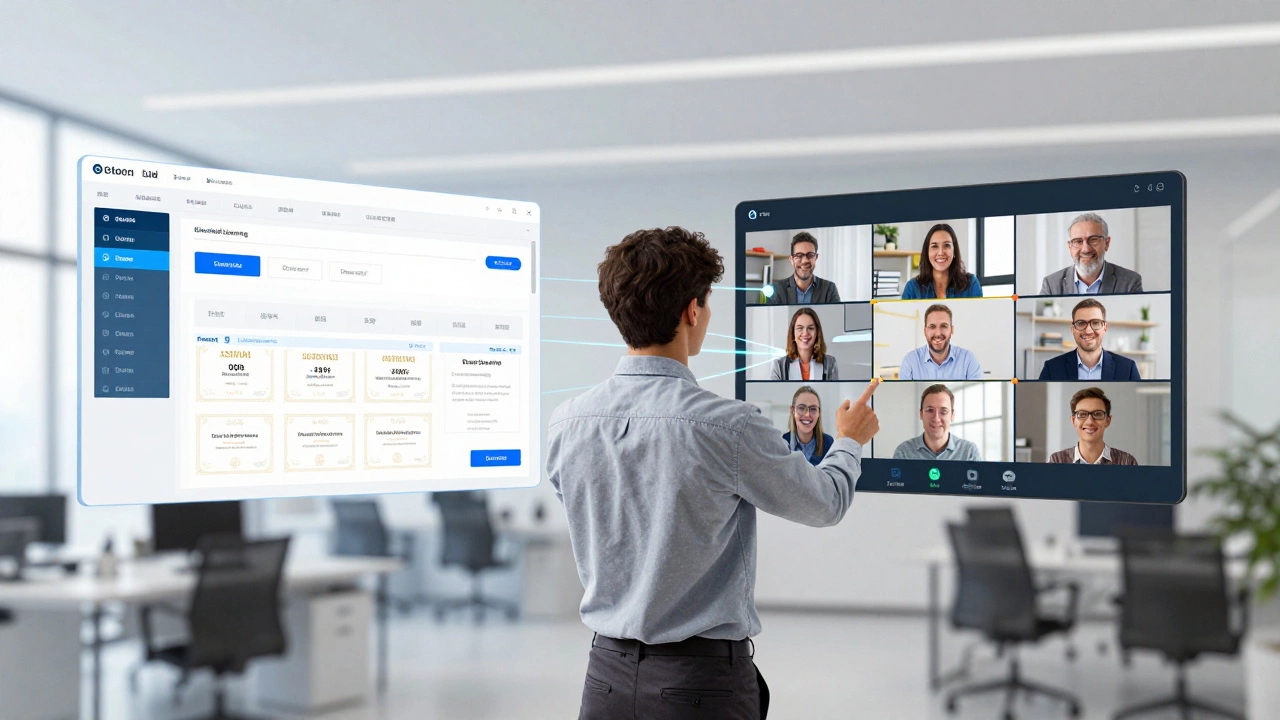
You shouldn't view this as an either/or decision. The most effective modern education strategies blend both. This hybrid approach is often called the "flipped classroom" model in academia or "blended learning" in corporate training. Here is how to decide which element leads the way.
Choose eLearning When:
- Standardization is key: You need everyone to learn the exact same safety protocols or software shortcuts without variation.
- Geography is diverse: Your learners are across multiple time zones, making live sessions impossible.
- Content changes slowly: The material is stable enough that recording it once remains relevant for months or years.
- Budget is tight for labor: You can afford production but not hourly instructor fees for large groups.
Choose Virtual Learning When:
- Feedback is critical: Learners need to practice a skill and get immediate correction, like coding debug sessions or language pronunciation.
- Engagement drops quickly: The topic is dry or complex, requiring a charismatic instructor to keep attention.
- Networking matters: The value includes meeting peers, such as in MBA programs or professional certification cohorts.
- Content evolves rapidly: You need to update information weekly based on current events or market shifts.

The Blended Reality: Why Most Programs Use Both
In 2026, few serious courses rely on just one mode. Consider a typical professional certification. The foundation-definitions, history, basic concepts-is delivered via eLearning modules. This allows students to digest facts at their own speed. Then, once a week, they join a virtual learning session to debate case studies, present projects, and ask nuanced questions.
This combination leverages the efficiency of eLearning and the depth of virtual learning. It respects the learner's time while maintaining the human touch necessary for mastery. Platforms now integrate these seamlessly. An LMS might host the videos but automatically schedule Zoom links for live sessions. The data flows between them: your quiz scores in the eLearning module determine which topics the instructor focuses on during the virtual session.
Common Pitfalls to Avoid
Mixing these up leads to frustration. Don't put a lecture-style video in a virtual learning slot expecting high engagement. People will multitask. Conversely, don't dump complex, controversial topics into static eLearning without discussion channels. Misunderstandings will fester.
Also, beware of "zombie virtual learning." This happens when organizations try to replicate a boring in-person lecture virtually. Without active participation elements-polls, chat, breakout rooms-virtual learning fails. It must be designed differently than face-to-face teaching. Similarly, eLearning fails if it's just a PowerPoint with a voiceover. It needs interactivity to qualify as true learning rather than passive watching.
Is virtual learning better than eLearning?
Neither is inherently better; they serve different goals. Virtual learning excels in engagement, real-time feedback, and social learning, making it superior for complex skills and soft skills. eLearning wins in scalability, flexibility, and cost-efficiency for delivering standardized factual content. The best results usually come from blending both.
Can I do virtual learning asynchronously?
By definition, virtual learning implies a live, synchronous component. If you remove the real-time interaction, it becomes eLearning. However, some platforms offer "asynchronous virtual" experiences using recorded webinars with interactive polls, but this is technically a hybrid form of rich media eLearning.
What technology do I need for virtual learning?
You need a reliable internet connection, a webcam, a microphone, and a video conferencing platform like Zoom, Microsoft Teams, or Google Meet. Unlike eLearning, which only needs a browser, virtual learning requires hardware capable of transmitting audio and video smoothly.
Which is more cost-effective for companies?
For large audiences, eLearning is significantly more cost-effective in the long run due to its scalability. Virtual learning has higher recurring costs because it requires instructor time for every session. However, for small groups or high-stakes training where failure is expensive, the investment in virtual learning pays off through better outcomes.
Do employers prefer certificates from virtual or eLearning courses?
Employers generally care more about the accrediting body and the relevance of the skills than the delivery method. However, virtual learning certificates may carry slightly more weight for roles requiring communication or teamwork, as they demonstrate the ability to engage in collaborative environments. eLearning certificates are perfectly valid for technical or compliance-based roles.