Distance Education Myths Quiz
Test Your Knowledge
How much do you know about distance education? Take this quiz to find out!
Question 1: Is distance education easier than traditional classroom learning?
Question 2: Do employers value online degrees as much as traditional degrees?
Question 3: Are distance education students typically isolated and alone?
Question 4: Can you get hands-on training in distance education programs?
Question 5: Is a tech background required for distance education?
Distance education isn't just watching videos from home anymore. It’s a fully structured way to learn that’s been around for decades but has changed dramatically in the last five years. If you’re wondering what distance education really means today, you’re not alone. Millions of students worldwide are choosing it over traditional classrooms - not because they have to, but because it works better for their lives.
What Exactly Is Distance Education?
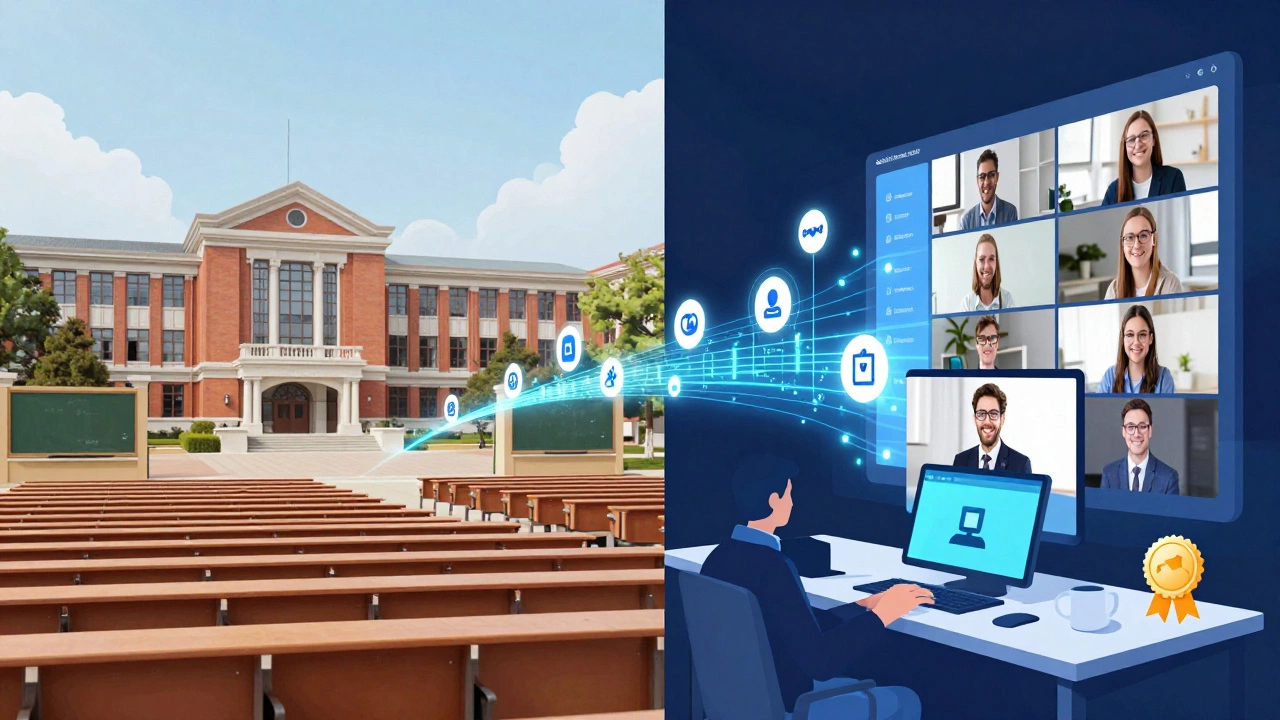
Distance education is a formal learning system where students and instructors are physically separated, and communication happens through digital platforms, mailed materials, or broadcast media. It’s not just online classes - it’s a complete educational model built around flexibility, access, and self-paced progress.
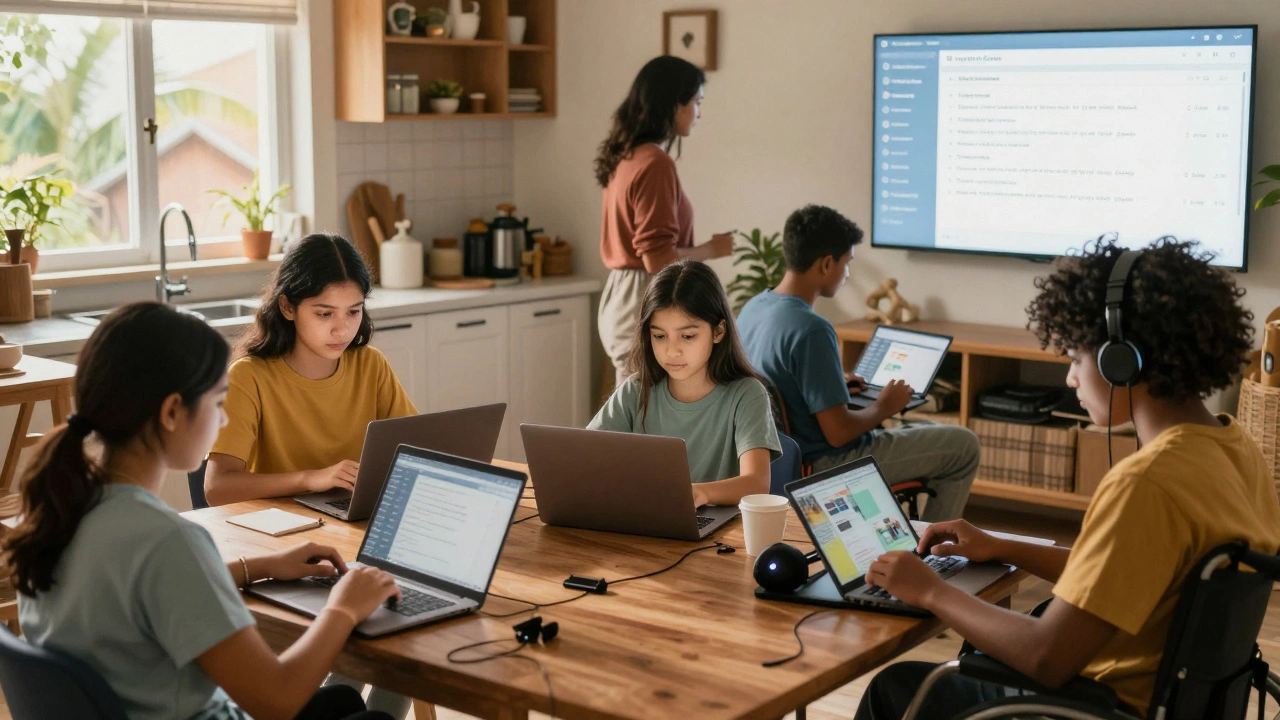
Think of it like this: you’re enrolled in a course, get assignments, take exams, earn credits, and receive a certificate - just like in a regular school. But you don’t show up on campus. You log in from your kitchen table, a library, or even a bus. The structure is the same. The location? That’s up to you.
Today’s distance education programs are offered by accredited universities, government bodies, and private training providers. In Australia, institutions like the University of Southern Queensland and Open Universities Australia deliver full degrees remotely. In India, IGNOU serves over 3 million students. In the U.S., Arizona State University’s online programs rival its on-campus enrollment.
How Did Distance Education Evolve?
It started with letters. In the 1840s, people in rural England studied shorthand through postal lessons. By the 1920s, radio broadcasts brought lessons into homes. Television in the 1960s and 70s made it possible for entire nations to learn from centralized studios.
The real shift came in the 2000s with broadband internet. Suddenly, video lectures, discussion forums, and digital submissions became standard. Then came the pandemic. In 2020, nearly every school and university went remote overnight. What was meant to be temporary became permanent for millions.
By 2025, the global distance education market was worth over $250 billion. Over 120 million students were enrolled in fully online programs. And here’s the key change: distance education is no longer seen as a second choice. It’s a legitimate, respected, and often preferred path.
How Does It Work in Practice?
Most distance education programs follow a similar pattern:
- You enroll through an online portal - often with just an ID and payment.
- You get access to a learning management system (LMS) like Moodle, Canvas, or Blackboard.
- Each week, you log in to watch recorded lectures, read PDFs, download readings, or join live Zoom sessions.
- You submit assignments online. Some are auto-graded; others are reviewed by instructors.
- You take proctored exams - sometimes at local testing centers, sometimes using AI monitoring software.
- You earn credits, and at the end, you receive a degree, diploma, or certificate.
Some programs are self-paced. Others follow a strict weekly schedule. Some include live group projects. Others are entirely independent. The structure depends on the course - but the goal is always the same: deliver quality education without requiring physical presence.
Who Uses Distance Education?
It’s not just for students who can’t get to campus. Here are the main groups:
- Working adults - Want to earn a degree without quitting your job? Distance education lets you study after work.
- Parents - Raising kids and going to class? Many use distance learning to fit education around childcare.
- Rural learners - In places without universities, distance education is the only way to access higher education.
- People with disabilities - Mobility issues, chronic illness, or anxiety? Online learning removes physical barriers.
- International students - Can’t afford to move? Many enroll in foreign universities remotely.
In Australia, over 40% of university students in 2025 were enrolled in fully online programs. In India, 68% of adult learners chose distance education over traditional colleges. The numbers don’t lie - this isn’t a niche anymore.
What Are the Biggest Myths?
People still believe a lot of things about distance education that aren’t true.
- Myth: It’s easier than regular school. Truth: It’s often harder. You need discipline. No one is watching you. You have to manage your time. Drop-out rates are higher because of this.
- Myth: Employers don’t value it. Truth: A 2024 survey by LinkedIn found that 82% of hiring managers said they viewed online degrees the same as on-campus ones - if they were from accredited institutions.
- Myth: You’re alone. Truth: Most programs have active forums, group chats, virtual study groups, and even in-person meetups. You’re not isolated - you’re just not in a classroom.
- Myth: You can’t get hands-on training. Truth: Nursing students do clinical rotations locally. Engineering students use virtual labs. Culinary students receive kits with ingredients and tools.
What Do You Need to Succeed?
Distance education doesn’t require fancy gear - just a few basics:
- A reliable internet connection (even 10 Mbps is enough for video lectures).
- A laptop or tablet (phones work, but they’re hard for long reading or writing).
- A quiet space to focus - even if it’s just a corner of your room.
- A calendar or planner. Time management is everything.
- Self-discipline. No one will remind you to study. You have to remind yourself.
Many successful learners use the Pomodoro Technique: 25 minutes of focused work, 5-minute break. Others join accountability groups. Some set weekly goals like: “Finish Module 3 by Friday.”
It’s not about how smart you are. It’s about consistency.
What’s Next for Distance Education?
By 2026, the biggest changes are happening in three areas:
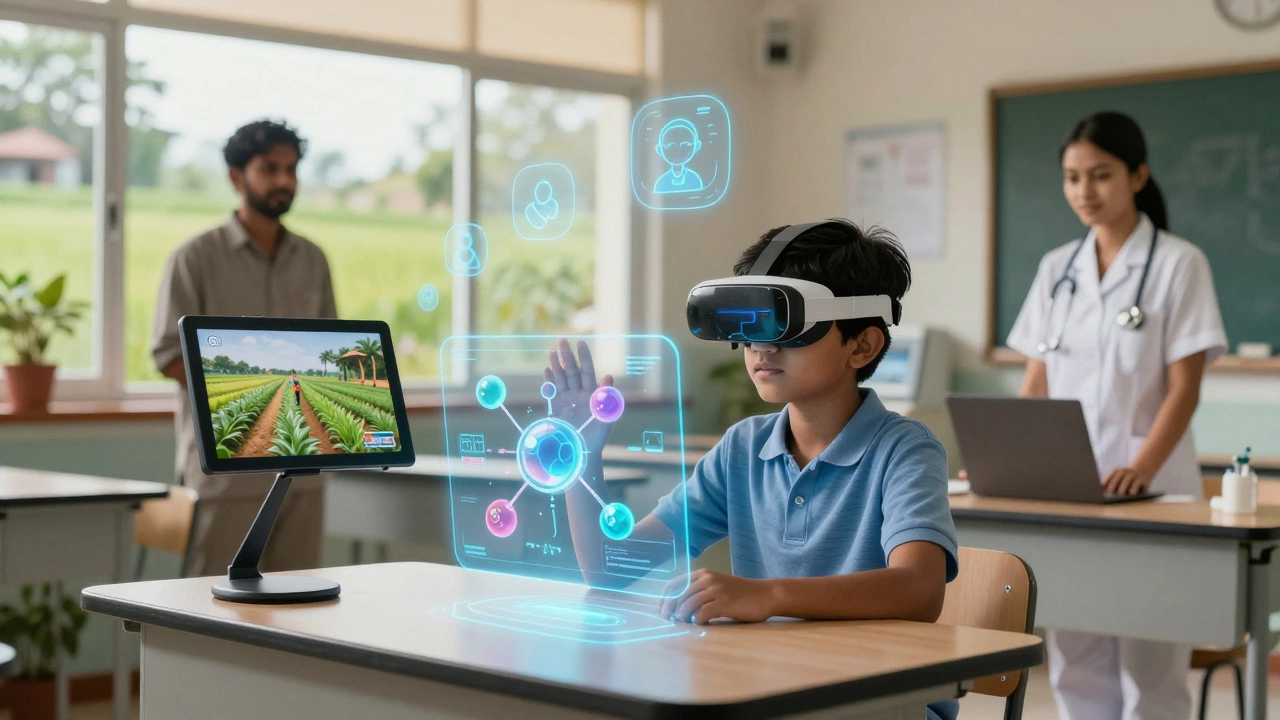
- AI tutors - Personalized feedback systems that adapt to your learning pace. Some platforms now offer AI that reviews your essays and gives real-time suggestions.
- Hybrid models - You take most courses online, but attend 1-2 intensive on-campus sessions per year. This blends flexibility with hands-on experience.
- Micro-credentials - Instead of full degrees, you earn badges for specific skills. A certificate in data analysis, a micro-degree in project management - these are now accepted by major employers.
Some universities are even letting students earn credits through work experience. If you’ve been managing a team for three years, you might get academic credit for it. That’s the future: learning tied to real life, not just textbooks.
Final Thoughts
Distance education isn’t about replacing traditional schools. It’s about expanding access. It’s for the single parent in Perth who wants to become a nurse. The farmer in Rajasthan who wants to learn sustainable agriculture. The software developer in Lagos who needs a business degree to advance.
If you’ve been thinking about going back to school, but the timing never worked - distance education is your answer. It’s not perfect. It takes effort. But it’s real, respected, and available to anyone with an internet connection.
Is distance education recognized by employers?
Yes, if it’s from an accredited institution. Major employers like Google, Amazon, and IBM now accept online degrees from universities like Arizona State, the University of London, and IGNOU. A 2024 LinkedIn survey found that 82% of hiring managers view online degrees as equal to traditional ones. The key is accreditation - always check if the school is officially recognized.
Can I get a degree entirely online?
Absolutely. Thousands of accredited universities offer full bachelor’s, master’s, and even PhD programs online. In Australia, institutions like Open Universities Australia and the University of Southern Queensland offer degrees with no campus attendance required. In the U.S., Arizona State and Penn State have over 100 fully online degree programs. You’ll take exams, submit assignments, and interact with professors - all remotely.
Do I need to be tech-savvy to join distance education?
Not at all. Most platforms are designed for beginners. You just need to know how to open an email, download a file, and join a Zoom call. Many programs offer orientation modules that walk you through every tool. If you can use a smartphone, you can handle distance education. Support teams are always available to help with technical issues.
Are online exams fair and secure?
Yes. Most online exams use AI proctoring software that monitors your screen, webcam, and microphone for suspicious behavior. Some require you to take exams at approved testing centers. Others use timed, open-book formats that test understanding instead of memorization. Many universities now design assessments around projects, essays, and discussions - not multiple-choice tests.
How do I know if a distance education program is legitimate?
Check if the institution is accredited by a recognized body. In Australia, look for TEQSA (Tertiary Education Quality and Standards Agency). In the U.S., check with the Department of Education’s database. In India, verify with UGC or AICTE. Avoid programs that promise degrees in days, don’t require assignments, or charge huge fees upfront. If it sounds too easy, it’s probably a scam.