Python Project Finder
Find Your First Python Project
Discover personalized Python project suggestions based on your interests and experience level. Start building something useful today!
Python isn’t just another programming language. It’s the quiet powerhouse behind websites, apps, science projects, and even the recommendations you see on Netflix. If you’re asking what is Python used for, you’re not just curious-you’re standing at the edge of something practical, powerful, and surprisingly simple to start with.
Web Development
Think of websites like Instagram, Pinterest, or Dropbox. They don’t run on magic. They run on Python. Frameworks like Django and Flask make it easy to build secure, fast websites without getting lost in complex code. You don’t need to be a genius to create a blog, an online store, or a dashboard for your business. With Python, you write fewer lines of code and get more done. A beginner can build a working website in a weekend using Django’s built-in tools for user logins, databases, and admin panels. No need to juggle ten different tools. Python handles the heavy lifting so you can focus on what your site actually does.
Data Analysis and Visualization
Every company collects data. The question is: what do they do with it? Python turns numbers into stories. Libraries like Pandas and NumPy let you clean messy spreadsheets, find patterns, and calculate trends in seconds. Want to know which product sells best in Sydney during winter? Python can sort through thousands of sales records and show you the answer. Then, with Matplotlib or Seaborn, you turn those numbers into charts that anyone can understand-even your boss who says they ‘don’t get tech.’ Schools, hospitals, and small businesses use Python to track performance, forecast demand, and make smarter decisions. You don’t need a PhD in statistics. Just a basic understanding of Python and a dataset.
Automation and Scripting
How many times have you done the same task over and over? Renaming 50 files? Copying data from one spreadsheet to another? Sending the same email every Monday? Python can do all of that for you-while you’re having coffee. A simple script can rename files, fill out forms, scrape weather data, or even auto-reply to emails. One teacher in Melbourne automated grading multiple-choice quizzes by uploading scanned answer sheets. What took her three hours now takes 12 minutes. And it’s 100% accurate. Automation isn’t for coders only. It’s for anyone tired of repetitive work. You can start with just five lines of code and grow from there.
Artificial Intelligence and Machine Learning
When your phone recognizes your face, or Spotify suggests a song you love, that’s machine learning. And Python is the go-to language for building these systems. Libraries like TensorFlow and Scikit-learn give you the tools to train models without needing to build them from scratch. Want to predict house prices in Brisbane based on size, location, and age? Python can do it. Want to detect spam in emails? Python can learn that too. You don’t need to be a math expert. There are ready-made models you can tweak, and tons of free tutorials that walk you through each step. Many high school students in Australia have built simple AI projects-like identifying plant diseases from photos-using just Python and a laptop.
Scientific Computing and Research
From climate scientists studying rising sea levels to biologists mapping DNA sequences, Python is everywhere in research. It’s not just for tech companies. Universities, labs, and even government agencies use Python to process massive datasets, run simulations, and visualize results. Libraries like SciPy and AstroPy help researchers analyze everything from telescope images to earthquake patterns. One team in Sydney used Python to track migration patterns of sea turtles by processing satellite data. They didn’t hire a team of programmers-they trained two biologists to write Python scripts. The result? Faster insights, lower costs, and more accurate findings.
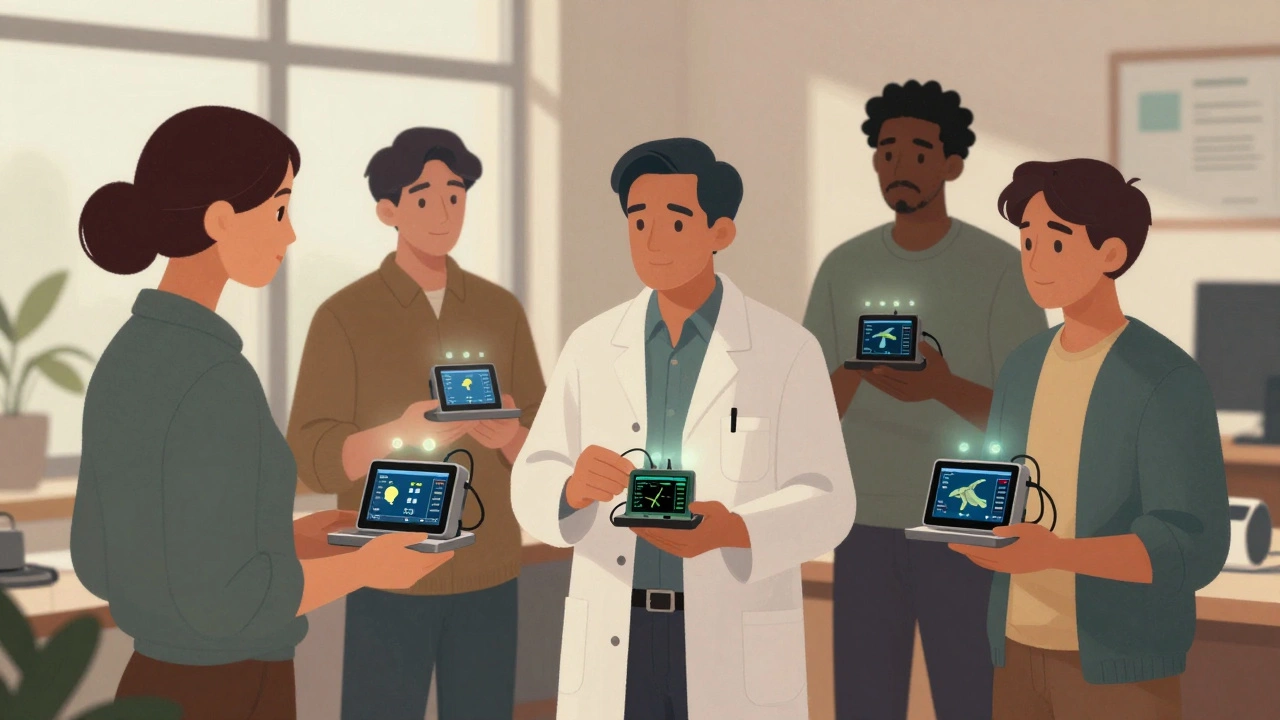
Game Development
Yes, Python can make games. Not the kind you play on your console, but plenty of 2D games, educational apps, and prototypes. Pygame is a simple library that lets you create games with graphics, sound, and controls. Students use it to build arcade-style games like Pong or Snake as part of coding classes. Teachers use it to teach logic, loops, and problem-solving in a fun way. You won’t make the next Call of Duty with Python-but you can make something you’re proud of, and learn how games work under the hood.
Networking and Cybersecurity
Python helps secure networks and find vulnerabilities. Security teams use Python to scan for open ports, detect malware patterns, or automate security checks across hundreds of devices. Tools like Scapy let you analyze network traffic, while libraries like Paramiko help manage remote servers securely. A small business owner in Perth used a Python script to check if their website was down every 10 minutes-and got an alert if it was. No need to pay for expensive monitoring software. Just a script and a free cloud server.
Education and Learning Tools
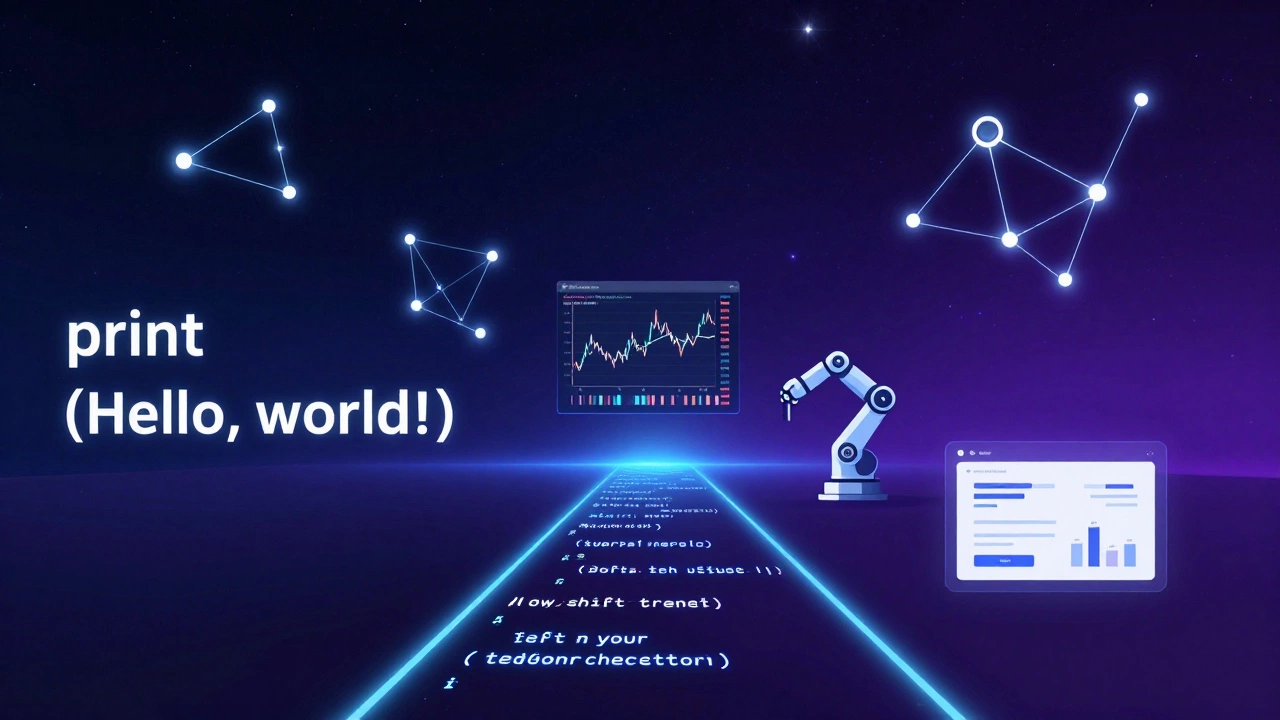
Python is the most popular language taught in schools and coding bootcamps around the world. Why? Because it reads like plain English. You write print("Hello, world!") instead of complex syntax. That makes it perfect for beginners. In Australian classrooms, kids as young as 10 are learning to build calculators, quizzes, and simple animations. Online platforms use Python to teach problem-solving, logic, and computational thinking. It’s not about becoming a software engineer-it’s about learning how to think in a structured way. That skill helps in any career, whether you’re a doctor, teacher, or artist.
Finance and Trading
Stock traders, banks, and fintech startups rely on Python to analyze markets, backtest strategies, and automate trades. Libraries like Pandas and NumPy handle financial data, while libraries like Alpha Vantage connect to live market feeds. A student in Adelaide built a Python tool that tracked cryptocurrency prices and sent alerts when they dropped below a certain level. It didn’t make them rich-but it taught them how financial systems work. You don’t need to be a Wall Street analyst. Even small investors use Python to track portfolios, calculate returns, or spot trends.
Desktop Applications
Think of tools like Dropbox, BitTorrent, or even parts of YouTube’s desktop app. They were built with Python. Libraries like Tkinter and PyQt let you create windows, buttons, sliders, and menus-just like any desktop program. You can build a note-taking app, a file organizer, or a calculator that works offline. These aren’t just learning projects. Real people use them every day. One librarian in Brisbane created a Python app to track book checkouts and overdue notices. It replaced a paper system that was losing records. Now, everything’s digital, searchable, and automated.
Robotics and IoT
Want to build a robot that follows a line, or a smart garden that waters itself? Python runs on Raspberry Pi and Arduino boards. You can connect sensors, motors, and lights-and control them with simple Python code. Schools and hobbyists use this to teach electronics and programming together. A group of teens in Canberra built a weather station that tweeted daily temperature readings using Python and a tiny sensor. No engineering degree needed. Just curiosity and a $35 Raspberry Pi.
Why Start With Python?
It’s not about being the fastest or the most powerful language. It’s about being the most approachable. Python has a gentle learning curve. You can go from typing your first line to building something useful in days, not months. It’s free. It works on Windows, Mac, and Linux. There are millions of tutorials, forums, and open-source projects to help you. And once you learn Python, you can move into almost any tech field-data, AI, web dev, automation, or cybersecurity.
| Field | Common Python Tools | Real-World Example |
|---|---|---|
| Web Development | Django, Flask | Instagram’s backend |
| Data Analysis | Pandas, NumPy, Matplotlib | Tracking sales trends in retail |
| Automation | os, shutil, schedule | Auto-renaming 1000+ files daily |
| AI & Machine Learning | Scikit-learn, TensorFlow | Spam detection in email systems |
| Scientific Research | SciPy, AstroPy | Mapping sea turtle migration |
| Game Development | Pygame | Student-built Snake game |
| Cybersecurity | Scapy, Paramiko | Automated server health checks |
| Education | Basic syntax, Jupyter Notebooks | Teaching coding to 10-year-olds |
| Finance | Pandas, Alpha Vantage | Tracking cryptocurrency prices |
| Desktop Apps | Tkinter, PyQt | Librarian’s book tracking app |
| Robotics | Raspberry Pi, GPIO | Smart garden with soil sensors |
What You Can Build in Your First Month
Start small. Don’t try to build an app like Uber. Build something that solves a tiny problem you have.
- Day 1-5: Write a script that renames all your photo files with dates.
- Day 6-10: Build a to-do list app that saves tasks to a file.
- Day 11-15: Create a weather checker that pulls data from a free API.
- Day 16-20: Make a quiz game that asks you random math questions.
- Day 21-30: Automate sending a weekly summary email of your expenses.
Each of these takes less than 100 lines of code. And each one gives you confidence. You’re not learning to code-you’re learning to fix things.
Is Python good for beginners?
Yes. Python’s syntax is clean and close to plain English. You don’t need to memorize complex symbols or brackets. A beginner can write a working program on day one. Most coding bootcamps start with Python because it reduces frustration and builds confidence quickly.
Do I need a computer science degree to use Python?
No. Thousands of people use Python without formal training-teachers, marketers, scientists, artists, and small business owners. What matters is your curiosity and willingness to try. Online resources like freeCodeCamp, Codecademy, and YouTube tutorials give you everything you need.
Can Python help me get a job?
Absolutely. Python skills are in high demand across industries. Jobs range from data analyst and web developer to automation engineer and AI researcher. Even non-tech roles value Python for automating reports, analyzing data, or improving workflows. You don’t need to be a senior developer to land an entry-level role with Python.
How long does it take to learn Python?
You can learn the basics in 2-4 weeks with consistent practice. That means variables, loops, functions, and working with files. To become job-ready, most people spend 3-6 months building real projects. The key isn’t time-it’s doing. Build something every week, even if it’s small.
Is Python better than JavaScript or Java?
It’s not about better-it’s about better for you. JavaScript is best for websites you interact with in your browser. Java is common in big enterprise apps. Python is best for learning, data, automation, and AI. If you’re starting out and want to see results fast, Python wins. Once you know Python, learning other languages gets easier.
What’s the next step after learning Python?
Pick a direction. Want to work with data? Learn Pandas and SQL. Interested in websites? Try Django. Into AI? Dive into Scikit-learn. Build one project in that area. Then share it online. That’s how you grow-from learner to builder.
Final Thought
Python isn’t magic. It’s a tool. And like any tool, it’s only as powerful as the person using it. You don’t need to be the smartest person in the room. You just need to start. Open your laptop. Type your first line. And see what happens.