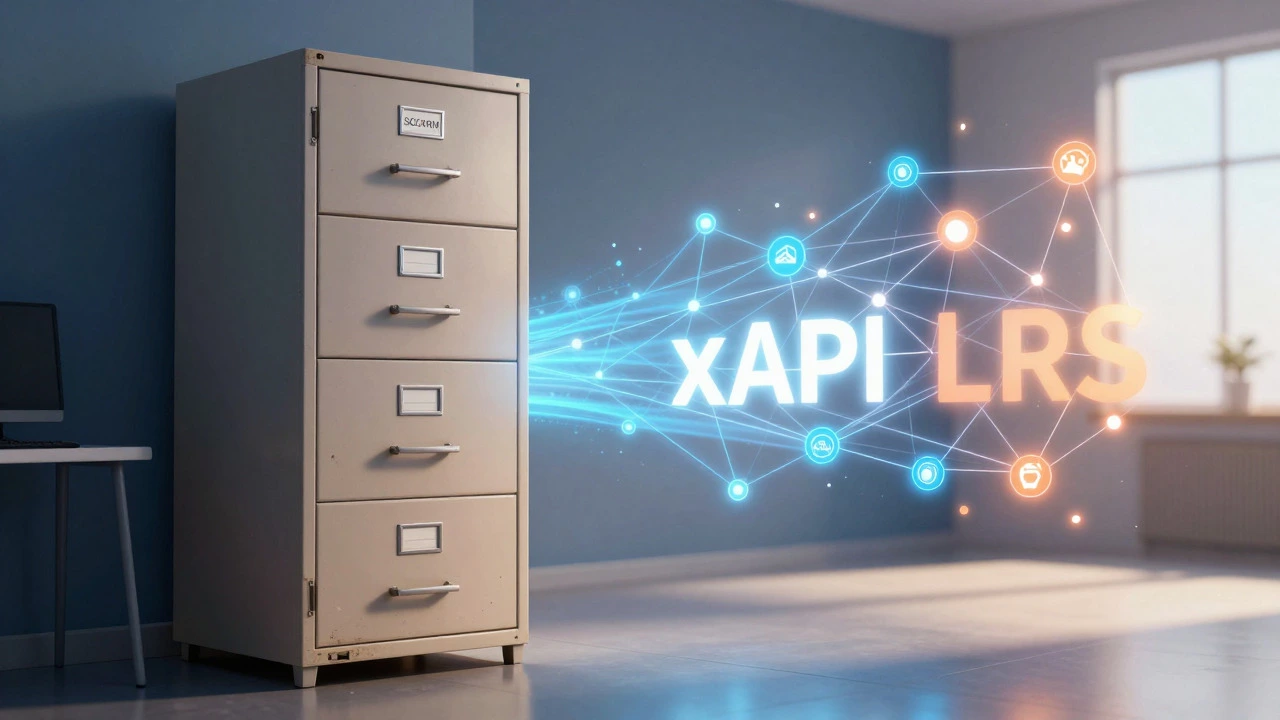
E-Learning Standards Comparison Tool
| Feature | SCORM | xAPI | AICC | LTI Advantage |
|---|---|---|---|---|
| Data Granularity | Low (Completion/Score) | High (Detailed Activities) | Low | Medium (Tool Integration) |
| Platform Independence | Limited | High | Very Limited | High |
| Mobile Support | Poor | Excellent | Poor | Good |
| Real-Time Tracking | No | Yes | No | Partial |
| Legacy Compatibility | High | Medium (via wrappers) | Niche | High |
Key Takeaway
xAPI stands out as the most comprehensive modern standard, offering superior data granularity, platform independence, mobile support, and real-time tracking capabilities. While SCORM remains relevant for legacy systems, organizations planning new learning initiatives should prioritize xAPI for its flexibility and detailed analytics potential.
The End of an Era for SCORM
If you have been working in corporate training or educational technology for more than a decade, you know SCORM is the Sharable Content Object Reference Model, a set of technical standards for web-based e-learning that has dominated the industry since the early 2000s. For years, it was the only game in town. It allowed your course content to talk to your Learning Management System (LMS). It tracked whether a user finished a module, passed a quiz, or spent time on a specific slide. But if you are asking what is replacing SCORM in 2026, you are likely noticing its cracks. The standard feels clunky, outdated, and frankly, limited.
SCORM was built for a different internet. It assumed users sat at a desktop computer, clicked through linear PowerPoint-style slides, and stayed in one place until they hit 'Finish.' Today’s learners jump between mobile apps, virtual reality simulations, offline field work, and social learning platforms. SCORM cannot see what happens outside its walled garden. It doesn’t know if someone practiced a skill in real life, watched a YouTube tutorial, or collaborated with a peer on Slack. This limitation is why the industry is shifting toward more granular, data-rich standards.
xAPI: The Data Revolution
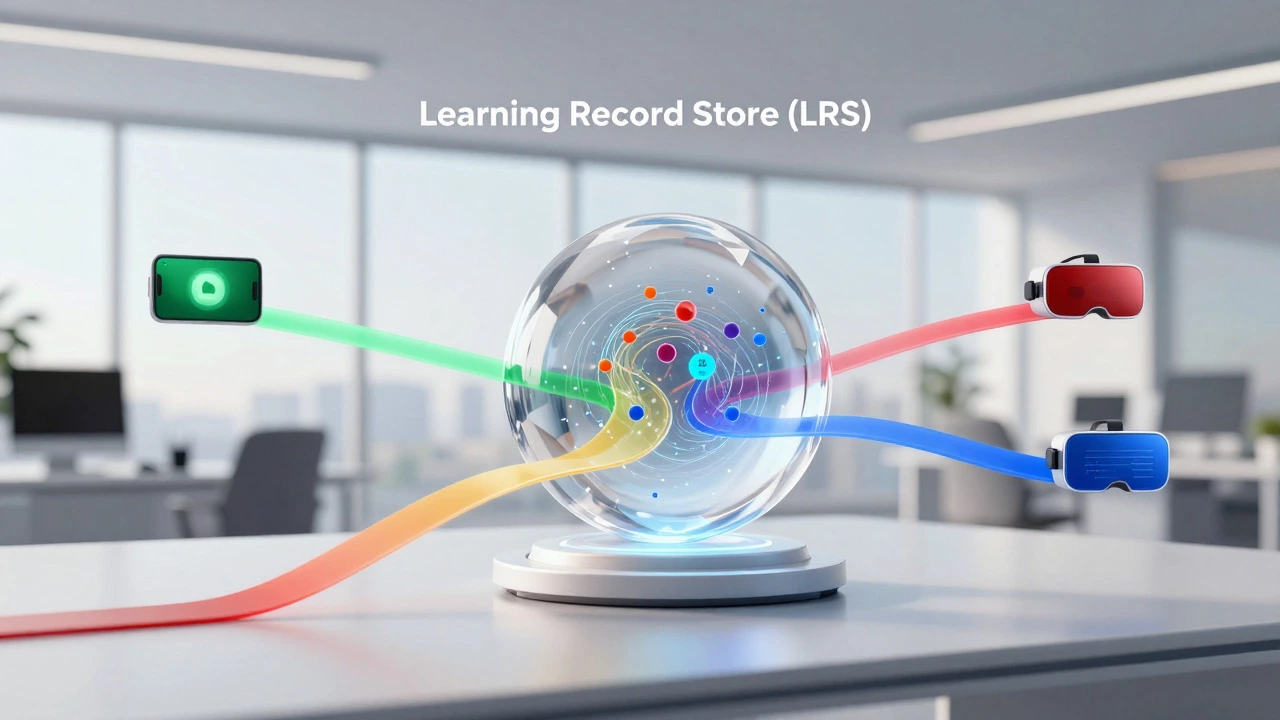
The primary answer to "what replaces SCORM" is xAPI is also known as the Experience API, a specification that allows learning experiences to communicate with a central repository called a Learning Record Store (LRS). While SCORM tracks completion, xAPI tracks experience. It records detailed statements about learner activity in a simple format: Actor + Verb + Object. For example, instead of just saying "John completed Module 1," xAPI can say "John [watched] [Video Tutorial on Safety Protocols] [on Mobile App] [for 5 minutes]."
This shift from completion-based tracking to behavior-based tracking is massive. It enables organizations to build comprehensive learning analytics. You can now connect disparate learning activities into a single narrative. If an employee takes an online safety course, then uses a VR simulator to practice emergency response, and finally completes a physical inspection checklist on their tablet, xAPI captures all three events. This holistic view helps trainers understand not just what employees learned, but how they apply knowledge in real-world scenarios.
Learning Record Stores: The New Brain
To make xAPI work, you need a Learning Record Store (LRS) is a database designed specifically to store and retrieve xAPI statements, acting as the central hub for all learning data regardless of where it originated. Unlike traditional LMS platforms that tightly couple content delivery with data storage, an LRS decouples these functions. Any system that supports xAPI can send data to the LRS. This means your LMS, your mobile app, your simulation software, and even external tools like LinkedIn Learning can all feed into the same data pool.
This architecture offers unprecedented flexibility. Organizations no longer need to migrate all their content into a single vendor’s platform to get unified reporting. They can use best-of-breed tools for different purposes while maintaining a single source of truth for learner progress. Many modern LMS providers now include built-in LRS capabilities, making the transition smoother for enterprises already invested in existing systems.

Why SCORM Still Hangs Around
Despite the clear advantages of xAPI, SCORM hasn’t disappeared overnight. In 2026, it remains widely used, particularly in legacy systems and industries with rigid compliance requirements. Government agencies, healthcare providers, and large corporations often have thousands of SCORM-compliant courses already developed. Rebuilding this library in xAPI would be costly and time-consuming. Additionally, some older LMS platforms still rely heavily on SCORM for basic functionality.
However, the trend is undeniable. New developments increasingly prioritize xAPI compatibility. When building new courses, forward-thinking instructional designers choose xAPI from the start. Existing SCORM content can often coexist with xAPI-enabled systems through wrapper technologies or hybrid approaches. The key is recognizing that SCORM serves a narrow purpose-basic course tracking-while xAPI unlocks deeper insights into learner behavior and performance.
Other Emerging Standards
While xAPI leads the charge, other standards also contribute to the evolving landscape. AICC is Aviation Industry CBT Committee, an older standard primarily used in aviation and defense sectors for computer-based training, largely superseded by SCORM and now xAPI. Though declining, AICC persists in niche markets due to entrenched infrastructure. Meanwhile, Tin Can API is the original name for xAPI before it was standardized under the ADL initiative, reflecting its origins in military training needs. Understanding this lineage helps clarify why xAPI emphasizes robustness and interoperability.
Another emerging player is LTI Advantage is Learning Tools Interoperability, a standard focused on integrating third-party educational tools seamlessly into LMS environments, enhancing connectivity beyond just content tracking. While not a direct replacement for SCORM, LTI complements xAPI by enabling richer interactions between platforms. Together, these standards form a cohesive ecosystem supporting modern, flexible learning experiences.
| Feature | SCORM | xAPI | AICC | LTI Advantage |
|---|---|---|---|---|
| Data Granularity | Low (Completion/Score) | High (Detailed Activities) | Low | Medium (Tool Integration) |
| Platform Independence | Limited | High | Very Limited | High |
| Mobile Support | Poor | Excellent | Poor | Good |
| Real-Time Tracking | No | Yes | No | Partial |
| Legacy Compatibility | High | Medium (via wrappers) | Niche | High |
Migrating from SCORM to xAPI
Transitioning from SCORM to xAPI requires careful planning. Start by auditing your current content library. Identify which courses deliver critical value and which can be rebuilt using xAPI principles. Prioritize high-impact modules first. Next, ensure your LMS supports xAPI natively or integrate a standalone LRS. Test thoroughly to verify data flows correctly from various sources into the LRS.
Consider using authoring tools that support both SCORM and xAPI outputs during the transition period. This allows gradual migration without disrupting ongoing training programs. Train your instructional design team on xAPI concepts, emphasizing the importance of defining meaningful verbs and objects. Finally, develop dashboards and reports that leverage the rich data available through xAPI to demonstrate ROI and improve learning outcomes.
Future Trends in Learning Standards
Looking ahead, we expect continued evolution toward open, interoperable standards. Artificial intelligence will play a bigger role in analyzing xAPI data to personalize learning paths dynamically. Blockchain technology may emerge for secure credential verification across platforms. As remote work and hybrid models become permanent fixtures, the demand for seamless cross-device learning experiences will drive further innovation. Staying informed about these trends ensures your organization remains competitive in delivering effective, engaging training solutions.
Is xAPI completely replacing SCORM?
Not entirely yet. While xAPI is becoming the preferred standard for new developments due to its superior data capabilities, SCORM remains prevalent in legacy systems. Many organizations operate hybrid environments where both standards coexist during transition phases.
Do I need a separate LRS if my LMS supports xAPI?
Most modern LMS platforms include integrated LRS functionality, eliminating the need for a separate solution. However, if you require advanced analytics or plan to aggregate data from multiple diverse sources, a dedicated enterprise-grade LRS might offer greater scalability and customization options.
Can I convert existing SCORM courses to xAPI automatically?
Automatic conversion tools exist but often produce suboptimal results because xAPI requires thoughtful definition of activities. Manual redesign yields better long-term benefits by allowing you to capture richer behavioral data rather than simply translating old structures.
What industries benefit most from switching to xAPI?
Industries relying on complex skill development such as healthcare, manufacturing, aviation, and sales benefit significantly. These fields involve multi-modal training combining classroom instruction, simulations, and on-the-job practice-all easily tracked via xAPI.
How does xAPI handle offline learning activities?
xAPI excels here. Statements generated offline can be queued locally and synced once connectivity resumes. This makes it ideal for field workers, travelers, or anyone accessing training intermittently without constant internet access.