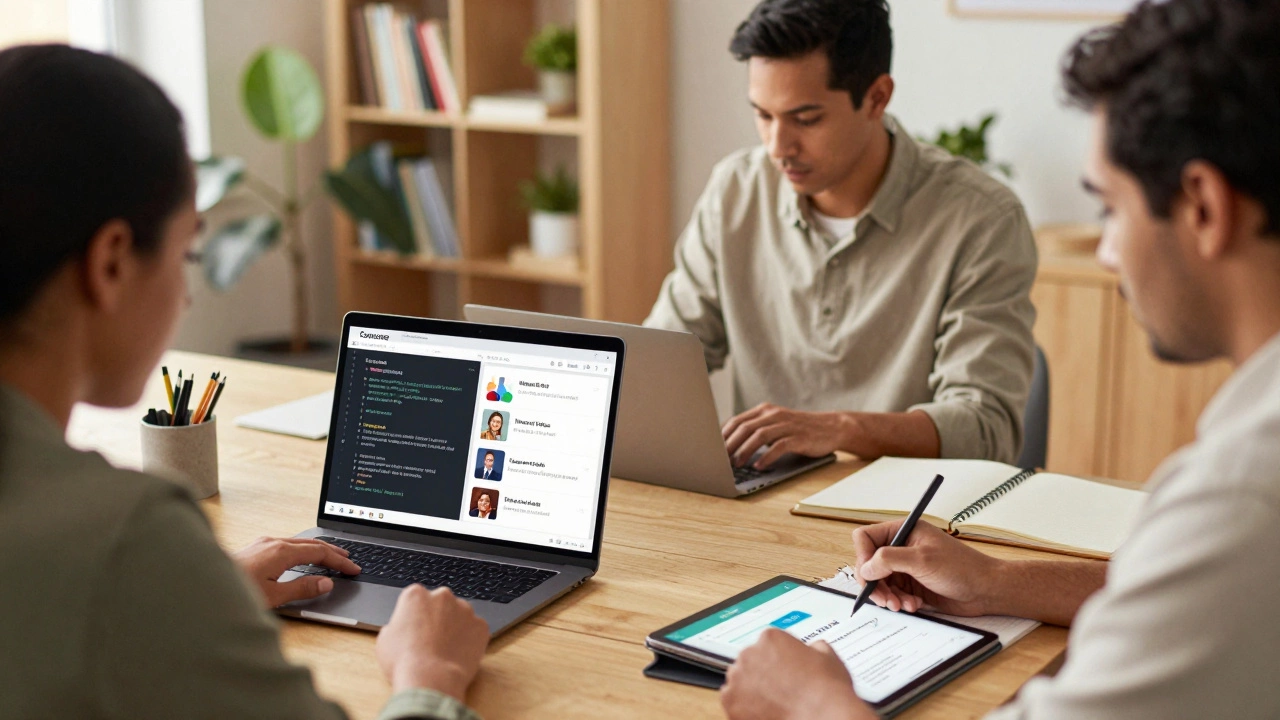
Learning Platform Matchmaker
Find your perfect learning platform
Select your goals and preferences to get personalized recommendations
Select your preferences and click "Find My Platform" to see recommendations
If you’ve ever scrolled through dozens of online course platforms and felt overwhelmed, you’re not alone. With so many options claiming to be the "best," how do you pick one that actually fits your goals, budget, and learning style? The truth is, there’s no single winner - but there are clear favorites depending on what you’re trying to achieve. In 2025, the top platforms have evolved beyond just video lectures. They now offer hands-on projects, industry-recognized certifications, AI-powered feedback, and even job placement support.
What makes a learning platform truly "best"?
Before comparing platforms, ask yourself: What do you want to get out of this? Are you looking to switch careers? Learn a new skill for your current job? Just explore something out of curiosity? Each goal points to a different platform.
Some platforms focus on academic credibility - think degrees and university-backed certificates. Others prioritize practical skills - think coding, design, or digital marketing. Then there are those built for affordability and flexibility, where you can learn on your own schedule without breaking the bank.
The best platform for you isn’t the one with the most courses. It’s the one that delivers results you can use - whether that’s a promotion, a new job, or just the confidence to build something yourself.
Coursera: For career changers and degree seekers
Coursera stands out because it partners directly with universities like Stanford, Yale, and the University of London. If you want a certificate that employers recognize - especially for roles in data science, business, or IT - Coursera is often the go-to.
Its Professional Certificates are designed with companies like Google, IBM, and Meta. These programs take 3-6 months to complete and include real-world projects. Many learners have used them to land jobs without a traditional degree. In 2024, Coursera reported that 75% of certificate holders saw career benefits within six months.
It’s not cheap - most certificates cost $39-$99 per month. But if you’re serious about career growth, the ROI is clear. You also get access to full bachelor’s and master’s degrees from accredited schools, all online.
Udemy: For learners who want variety and low cost
Udemy is the Amazon of online courses. With over 215,000 courses in every topic imaginable - from Python to pottery - it’s impossible to run out of things to learn.
The big advantage? Price. Courses regularly drop to $10-$15 during sales. You pay once and own the course forever. No subscriptions. No time limits. That makes it perfect for casual learners or people who want to test a skill before committing.
But there’s a catch: quality varies wildly. Some courses are made by industry experts. Others? By someone who just bought a microphone. Look for courses with at least 10,000 students and a rating above 4.5. Check the instructor’s bio. Look for real work experience, not just "teacher" titles.
Udemy doesn’t offer accredited degrees. But for practical, hands-on skills like Excel, photography, or Shopify store setup, it’s hard to beat.
edX: For the academically minded
Founded by Harvard and MIT, edX leans into the university model. If you like the structure of a real college class - with deadlines, graded assignments, and discussion boards - edX feels familiar.
Its MicroMasters programs are graduate-level and stackable toward full degrees. For example, MIT’s MicroMasters in Supply Chain Management can count as one-third of a master’s degree if you later enroll on campus.
Most courses are free to audit. But if you want a verified certificate (which employers respect), expect to pay $50-$300. It’s pricier than Udemy but more credible than most. edX also partners with top global universities like ANU and Tsinghua, making it popular among international learners.
LinkedIn Learning: For professionals already on the job
If you’re working full-time and want to level up without leaving your job, LinkedIn Learning is quietly powerful. It’s built into the LinkedIn ecosystem, so every course you complete shows up on your profile.
The content is focused on soft skills and workplace tools: project management, communication, Excel, leadership, and even AI tools for marketers. Instructors are practicing professionals - not academics.
It’s included with a LinkedIn Premium subscription ($25/month). But if you already have Premium, it’s essentially free. Many HR departments now encourage employees to use it for internal upskilling.
It won’t get you a degree. But if you want to stand out in your current role, it’s one of the most efficient platforms out there.
FutureLearn: For global learners and social learning
Based in the UK, FutureLearn stands out because of its community-driven approach. Courses are designed around discussion - you learn by talking to other students from over 200 countries.
It partners with universities like King’s College London and the British Council. Many courses focus on healthcare, education, and social sciences - areas where discussion adds real value.
Most courses are free to join. Certificates cost $50-$100. It’s not as big as Coursera or Udemy, but if you value interaction and cultural exchange, it’s a refreshing change from solo video watching.
Comparison: Which platform fits your needs?
| Platform | Best For | Cost | Certification | Learning Style |
|---|---|---|---|---|
| Coursera | Career changes, degrees, corporate certs | $39-$99/month | Industry-recognized, university-backed | Structured, project-based |
| Udemy | Practical skills, one-time learning | $10-$200 (one-time) | Course-specific, no accreditation | Self-paced, video-heavy |
| edX | Academic rigor, MicroMasters | $50-$300 | University-verified | College-like, graded |
| LinkedIn Learning | Professional growth, soft skills | Free with Premium ($25/month) | Shows on LinkedIn profile | Quick, job-focused |
| FutureLearn | Global discussion, humanities | $50-$100 | University-backed | Community-driven, discussion-based |
What most people get wrong
Many think the best platform is the one with the most courses. But that’s like saying the best grocery store is the biggest one. You don’t need 200 types of pasta if you only eat spaghetti.
Another mistake? Waiting for the "perfect" time to start. You don’t need to quit your job or wait for a promotion. Start with one 30-minute lesson a day. Consistency beats intensity.
And don’t fall for free trials that auto-renew. Set a calendar reminder. Cancel before the trial ends if you’re not getting value.
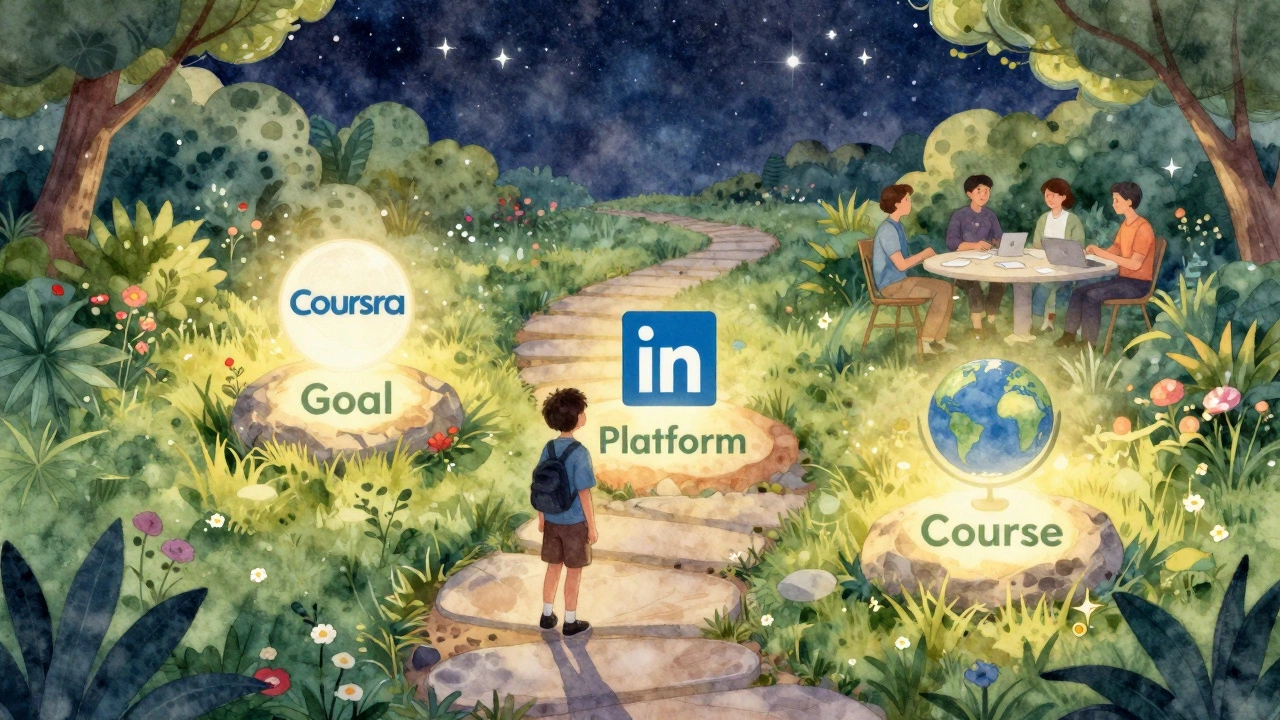
How to choose in 3 steps
- Define your goal: Are you learning to get a job? Improve at your current job? Or just curious? Write it down.
- Match it to the platform: Career change? Go Coursera. Quick skill? Udemy. Academic cred? edX. Workplace edge? LinkedIn Learning.
- Start small: Pick one course. Finish it. Then decide if you want to go deeper.
There’s no magic platform. But there is a right one - for you, right now.
Is Coursera worth the money?
Yes, if you’re aiming for a career shift or need a credential employers recognize. Coursera’s professional certificates are designed with companies like Google and IBM, and many learners report promotions or new jobs after completing them. But if you’re just exploring a hobby, Udemy or free resources might be better.
Can I get a degree online for free?
You can audit degree-level courses for free on edX and Coursera, but you won’t get a degree without paying. Full online degrees (bachelor’s or master’s) still cost thousands. However, some platforms offer financial aid - Coursera has a need-based aid program that approves most applicants.
Are Udemy certificates respected by employers?
Generally, no - unless the course is from a well-known instructor or industry leader. Employers care more about what you can do than the certificate itself. Use Udemy to build a portfolio: complete projects, put them on GitHub or Behance, and talk about them in interviews. That’s what gets you hired.
Which platform is best for learning to code?
For beginners, Udemy has affordable, project-based courses. For structured, career-focused paths, Coursera’s Python for Everybody or IBM’s Data Science Professional Certificate are strong. For hands-on practice, platforms like freeCodeCamp or Codecademy (not listed here) are also excellent - but they’re not degree-granting.
Do I need to pay for all platforms?
No. You can audit most courses on Coursera, edX, and FutureLearn for free. You just won’t get graded feedback or a certificate. If you’re learning for fun, free access is enough. Pay only when you need proof of completion - like for a job application or promotion.
What to do next
Don’t overthink it. Pick one platform based on your goal. Pick one course that excites you. Set a timer for 20 minutes. Watch the first lesson. That’s it. Progress doesn’t come from comparing platforms - it comes from starting.
And if you don’t like it after a week? Try another. The best learning platform is the one you actually use.