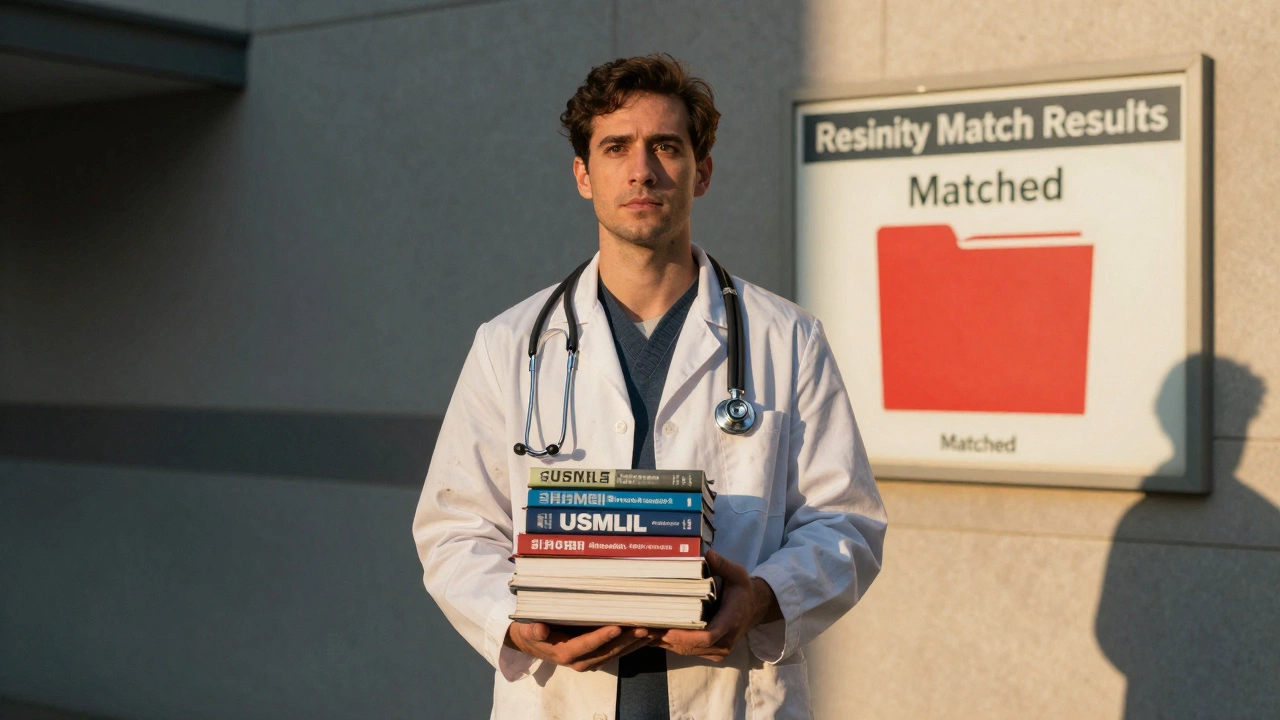
An MBBS doctor in the USA doesn’t earn the same as an MBBS graduate in India or the UK. The title "MBBS" is used in countries like India, the UK, and Australia, but in the United States, medical graduates earn an MD (Doctor of Medicine) degree. If you’re asking about the salary of someone who completed an MBBS abroad and is now working in the U.S., the answer depends on their licensing status, specialty, and experience. There’s no such thing as an "MBBS doctor" practicing independently in the U.S. without going through the full U.S. medical licensing process.
How MBBS Graduates Become Doctors in the USA
If you have an MBBS degree from another country and want to work as a doctor in the U.S., you must pass the United States Medical Licensing Examination (USMLE) and complete a residency program. The USMLE has three steps: Step 1 tests basic science knowledge, Step 2 tests clinical skills, and Step 3 tests patient management. After passing all steps, you apply for a residency through the National Resident Matching Program (NRMP). Residency lasts 3 to 7 years, depending on your specialty.
Without completing this process, you cannot legally practice medicine in the U.S. Even if you’ve worked as a doctor for 10 years in India or Nigeria, you start over as a resident in America. This means your first salary as a doctor in the U.S. will be that of a resident, not a senior consultant.
Resident Doctor Salaries in the USA
First-year residents, also called interns, earn between $60,000 and $70,000 per year. By the third or fourth year of residency, that number climbs to $70,000-$85,000. These salaries are set by the hospital and vary slightly by location. A resident in New York City might earn $72,000, while one in rural Iowa might earn $65,000. The pay doesn’t jump much between years, but the workload does.
Residents often work 80-hour weeks, sometimes 36 hours straight. They’re on call every third night. The pay reflects training, not experience. Even if you were a senior doctor back home, you’re still learning the U.S. system. You’re not yet licensed to make independent decisions in most cases.
Attending Physician Salaries After Residency
Once you finish residency and pass your board exams, you become an attending physician. That’s when your salary jumps dramatically. The average salary for a U.S. physician is around $350,000 per year, according to the Medscape Physician Compensation Report 2024. But that number varies wildly by specialty.
Here’s a breakdown of average annual salaries for common specialties:
- Neurosurgeon: $790,000
- Orthopedic Surgeon: $605,000
- Cardiologist: $470,000
- Radiologist: $450,000
- Anesthesiologist: $430,000
- Psychiatrist: $290,000
- Family Medicine: $270,000
- Pediatrics: $260,000
Primary care doctors earn less than specialists, but they often have more predictable hours and less student debt pressure. A family physician working in a clinic in Ohio might make $250,000, while one in a high-cost city like San Francisco might make $310,000 after taxes and overhead.

Why MBBS Graduates Earn Less Than Expected at First
Many international medical graduates (IMGs) expect to jump straight into high-paying jobs after passing the USMLE. But the reality is harsh. The U.S. healthcare system requires local training. Even if you scored 260+ on Step 1 and have publications, you still need to prove you can handle U.S. patient care under supervision.
Residency positions are competitive. In 2024, only 55% of non-U.S. citizen IMGs matched into a residency spot. The rest had to reapply the next year. Many spend 1-2 years doing research or extra clinical work to improve their chances. During that time, they might work as research assistants or clinical coordinators, earning $40,000-$55,000-far below what they made back home.
It’s not uncommon for someone to spend 8-10 years after their MBBS before earning a full attending salary. That includes 3-4 years of residency, 1-2 years of fellowship (if they choose a subspecialty), and time spent preparing for exams.
Debt and Cost of Becoming a Doctor in the USA
Medical school in the U.S. costs $200,000-$300,000 for international students. Even if you already have an MBBS, you’re still paying for U.S. clinical rotations, USMLE prep courses, visa fees, and licensing applications. Many IMGs take out loans just to cover the cost of applying to residency programs. Each application costs $100-$200, and most apply to 50-100 programs.
Some end up with $300,000-$500,000 in debt before they even start earning as attendings. That means even when they finally hit $300,000 a year, a big chunk goes to loan payments. A typical repayment plan for $400,000 in debt at 6% interest takes 10-15 years.

How Location Affects Pay
Where you work matters more than you think. A dermatologist in Miami might earn $400,000, while one in rural Montana earns $280,000. But the cost of living is also lower in Montana. After taxes and housing, the Montana doctor might have more take-home pay.
Hospitals in high-demand areas offer signing bonuses. A hospital in Alaska or North Dakota might pay $100,000 just to get you to move there. These incentives are common for primary care doctors and psychiatrists, where shortages are worst.
Urban hospitals pay more but also charge more for housing. A resident in Boston might pay $2,500 a month for a one-bedroom apartment. In Cleveland, the same apartment costs $1,100.
Work-Life Balance and Burnout
High pay doesn’t mean high satisfaction. Nearly 50% of U.S. physicians report burnout, according to the Mayo Clinic. Surgeons work 60-80 hours a week. Emergency room doctors are on call every other night. Primary care doctors spend half their day on electronic health records instead of patients.
Some doctors switch to locum tenens work-temporary assignments across the country-to earn more and control their schedule. Locums can make $1,000-$1,500 per day, sometimes $300,000-$400,000 a year with fewer hours and no administrative duties.
Is It Worth It for an MBBS Graduate?
It’s a long road. You’re giving up 8-12 years of your life, starting from scratch, taking on debt, and living on a resident’s salary while your peers back home are buying homes and raising families. But for those who make it, the payoff is real.
After 10-12 years, you’re earning more than 99% of the world’s population. You have job security, respect, and the ability to work anywhere in the U.S. or even abroad. Many IMGs who complete the process say it was the hardest thing they’ve ever done-but they wouldn’t trade it.
If you’re considering this path, be realistic. It’s not a shortcut to wealth. It’s a long-term commitment to a system that demands everything before giving back.
Can an MBBS doctor work in the USA without taking the USMLE?
No. The USMLE is mandatory for all doctors, regardless of where they trained. Without passing all three steps and completing a U.S. residency, you cannot get a medical license to practice in any state. You can work in research or as a medical consultant, but you cannot see patients or prescribe medication.
How long does it take for an MBBS graduate to become a doctor in the USA?
It typically takes 8 to 12 years after completing MBBS. This includes 1-2 years to prepare for and pass the USMLE, 3-7 years of residency, and possibly 1-3 years of fellowship for a subspecialty. Some take longer if they don’t match on their first try.
Do MBBS doctors earn more in the USA than in India?
Yes, significantly. A senior doctor in India earns ₹20-40 lakhs per year (about $24,000-$48,000). A U.S. attending physician earns $260,000-$790,000 per year. Even after taxes and living costs, the difference is massive. But remember: the path to get there is long, expensive, and uncertain.
What’s the easiest specialty to match into for MBBS graduates?
Family medicine, psychiatry, and pathology are the easiest for international graduates to match into. These fields have more residency slots and less competition than surgery or dermatology. However, "easiest" doesn’t mean easy-only that the match rate is higher. A 55% match rate for IMGs in family medicine still means nearly half don’t get in.
Can I work as a doctor in the USA with just an MBBS and no residency?
No. You cannot practice clinical medicine without completing a U.S. residency. Some may find jobs as medical advisors, clinical research associates, or in pharmaceutical companies, but these roles don’t involve direct patient care or prescribing. They pay less than $80,000 per year on average.