English Learning App Matcher
Not sure which app fits your needs? Answer these quick questions to get a personalized recommendation stack.
Recommended App Stack
Why this choice?
You have downloaded three different English learning apps this week. You have streaks going on one, a subscription burning a hole in your pocket on another, and you still hesitate when ordering coffee in Sydney. It is frustrating, right? We tend to think there is one magical app that will download fluency directly into our brains like a file transfer. But here is the truth: no single app teaches you to speak. They teach you to recognize patterns. The "best" app depends entirely on whether you need to pass an IELTS exam, survive a job interview, or just chat with friends without freezing up.
I have spent years watching students struggle with this exact decision. Some spend six months on gamified lessons and can read Shakespeare but cannot ask for directions. Others jump straight into conversation partners and get crushed by grammar gaps before they even start. To help you cut through the noise, we need to look at what these tools actually do under the hood. Are they building muscle memory? Are they correcting your pronunciation? Or are they just pretty flashcards?
The Gamification Trap: When Fun Doesn't Equal Fluency
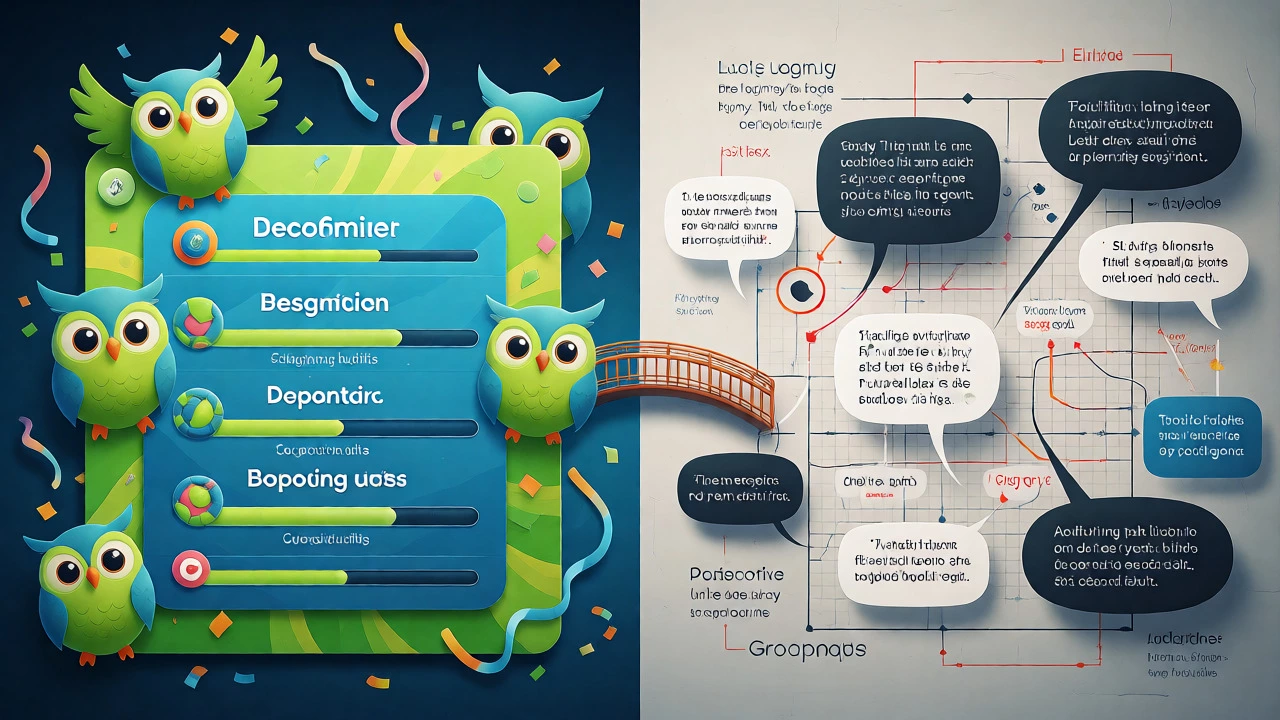
Let’s address the elephant in the room: Duolingo. It is everywhere. It has the owl, the leagues, and the dopamine hits. For absolute beginners, it is fantastic. It lowers the barrier to entry. You don’t need to study; you just play. But if your goal is professional fluency, relying solely on Duolingo is like trying to learn to swim by watching videos of swimming competitions. You understand the mechanics, but you haven’t touched the water.
The issue isn’t that Duolingo is bad; it’s that its primary metric is engagement, not communication efficiency. It rewards you for clicking the right word, not for forming a complex sentence naturally. If you are already at an intermediate level (B1/B2), staying on Duolingo might actually slow you down because you are practicing passive recognition rather than active production. Use it as a warm-up, not the main workout.
Structured Grammar and Logic: The Case for Babbel
If you hate ambiguity and want clear rules, Babbel often feels more satisfying. Unlike the algorithmic randomness of some free apps, Babbel uses linguists to craft lessons that build logically. You learn why a verb changes form, not just that it does. This approach appeals to analytical learners-engineers, accountants, anyone who likes systems.
Babbel shines in short, practical dialogues. Instead of teaching you words for "apple" and "banana" in isolation, it puts them in context: "I would like an apple, please." This contextual learning helps bridge the gap between knowing vocabulary and using it. However, be warned: it can feel dry. There are fewer bells and whistles. If you lose motivation easily, the lack of gamification might cause you to quit by week three.
Speaking First: Why HelloTalk and Tandem Beat Textbooks
Here is where things get real. You cannot learn to drive by reading about steering wheels. You need to talk. Apps like HelloTalk and Tandem connect you with native speakers who want to learn your language. It is a mutual exchange. You correct their Chinese; they correct your English.
The magic here is immediate feedback. You send a voice note saying, "I am boring," and your partner replies, "Did you mean 'bored'?" That correction sticks because it happened in a social interaction, not a quiz. But there is a catch: quality control. Not every native speaker is a good teacher. You might find people who only want to date, or who give vague corrections. Treat these apps as supplements to formal study, not replacements. They are excellent for breaking the fear of making mistakes, which is the biggest hurdle for most learners.
Pronunciation Perfection: ELSA Speak and Speechify
Many learners understand perfectly but get misunderstood because of accent issues. Traditional apps rarely analyze sound waves. Enter AI-powered pronunciation coaches like ELSA Speak. These tools use speech recognition technology to break down your phonemes. They tell you exactly which tongue position caused the error.
If you have a specific goal-like sounding more American or British for a customer service role-this targeted practice is invaluable. It fixes the "th" sounds or the tricky "r" vowels that textbooks ignore. However, it doesn’t teach you what to say, just how to say it. Pair it with a content-heavy app to ensure you have something worth pronouncing correctly.
| App Name | Best For | Primary Method | Cost Model | Weakness |
|---|---|---|---|---|
| Duolingo | Absolute Beginners & Habit Building | Gamified Drills | Free / Subscription | Lacks deep grammar explanation |
| Babbel | Structured Learners & Professionals | Curated Dialogues | Subscription Only | Can feel repetitive/dry |
| HelloTalk | Intermediate Speakers & Social Practice | Peer-to-Peer Exchange | Freemium | Inconsistent partner quality |
| ELSA Speak | Pronunciation Correction | AI Speech Analysis | Subscription | No conversational flow training |
| Cambly | Rapid Fluency & Interview Prep | Live Tutoring | Per Minute Cost | Expensive for casual learners |
The Human Element: Cambly and iTalki
Software has limits. Eventually, you need a human brain to handle nuance, humor, and sarcasm. Platforms like Cambly or iTalki offer live video calls with tutors. In 2026, this remains the fastest way to improve. You cannot hide behind a screen when someone is looking at you expecting an answer.
Cambly is great for casual conversation practice-you press a button and are connected instantly. iTalki allows you to choose specific teachers based on reviews and price. If you are preparing for a high-stakes event, like a job interview or university admission, hire a specialized tutor. Generic chat won’t cut it. But remember: tutors are expensive. Use them strategically. Don’t pay $15/hour to discuss the weather. Pay them to mock-interview you or critique your presentation skills.
How to Choose Your Stack
Stop looking for one perfect app. Build a stack. Here is a proven combination for different goals:
- The Busy Professional: Use Babbel for 15 minutes daily to maintain grammar structure. Add Cambly twice a week for real-world pressure testing.
- The Shy Beginner: Start with Duolingo to build confidence without judgment. Once you hit Level 3, switch to HelloTalk to start sending simple text messages.
- The Accent Polisher: Keep your current course but add ELSA Speak for 10 minutes a day. Focus specifically on the sounds you miss.
Consistency beats intensity. Ten minutes a day on the right tool will outperform two hours once a week on the wrong one. And always, always prioritize output over input. If you spend 80% of your time listening and reading, and only 20% speaking, you will remain stuck in the "understanding but unable to reply" trap.
Frequently Asked Questions
Is Duolingo enough to become fluent in English?
No, Duolingo alone is rarely enough for full fluency. It builds a strong foundation in vocabulary and basic sentence structure, which is great for beginners. However, it lacks the depth for complex conversations, nuanced grammar, and spontaneous speaking. Most users plateau at an intermediate level unless they supplement it with real-life practice or other resources.
Which app is best for improving English speaking skills quickly?
For speed, live tutoring platforms like Cambly or iTalki are superior. Nothing replaces real-time interaction with a human. If you prefer self-study, HelloTalk provides peer feedback, while ELSA Speak helps refine pronunciation. Combining a structured app like Babbel with weekly speaking sessions yields the fastest results.
Are free English learning apps effective?
Yes, but with limitations. Free versions usually include ads and limit lesson access, which can disrupt focus. However, apps like BBC Learning English or the free tiers of Duolingo and HelloTalk are highly effective for motivated learners. The key is consistency; a free app used daily beats a paid app used sporadically.
How much time should I spend on an app daily?
Research suggests that 15-30 minutes of focused practice daily is optimal for retention. Longer sessions often lead to burnout or diminishing returns. It is better to have short, frequent bursts of engagement than one long weekend session. Micro-learning fits well into busy schedules and keeps the language fresh in your mind.
Can AI replace human tutors for English learning?
AI is excellent for drilling, pronunciation analysis, and instant feedback on objective errors. However, it struggles with cultural nuance, empathy, and complex creative writing critique. Humans provide motivation, accountability, and personalized guidance that algorithms currently cannot match fully. A hybrid approach using both is ideal.