
Teacher Training Pathway Advisor
Walk into any school staff room today, and you will hear the same complaint: "I learned how to teach in university, but they didn't tell me how to handle this." The gap between theory and reality is where many new educators stumble. You might have your degree and your initial certification, but that is just the starting line. The real question isn't whether you need more training-it's which specific type of training will actually help you survive and thrive in the classroom.
Finding the best teacher training depends entirely on where you are in your career and what problems you are trying to solve. Are you a fresh graduate needing confidence? Or an experienced veteran trying to adapt to AI tools? There is no single "best" program for everyone. However, by understanding the different types of professional development available, you can choose the path that delivers immediate, practical results rather than just adding another certificate to your wall.
The Foundation: Initial Teacher Education (ITE)
If you are just starting out, your primary focus should be on solidifying your foundational skills through Initial Teacher Education (ITE). This is the formal academic route, typically involving a Bachelor of Education or a Postgraduate Certificate in Education. These programs are designed to give you the theoretical backbone of pedagogy-the science of teaching.
While university lectures cover child psychology and curriculum design, the most critical component of ITE is the practicum or student teaching placement. This is where you stand in front of a real class under the supervision of a mentor. Research consistently shows that the quality of this mentorship matters more than the prestige of the university. Look for programs that offer extended placements of at least eight to twelve weeks. Short stints rarely allow you to see the full cycle of lesson planning, delivery, assessment, and reflection.
For early-career teachers, the goal here is not just survival but establishing a personal teaching philosophy. You need to understand how to manage a classroom before you worry about advanced instructional strategies. Without this base, everything else becomes chaotic.
Bridging the Gap: Induction and Mentoring Programs
Once you land your first job, the shock of the real world hits hard. This is where New Teacher Induction programs come into play. Unlike general workshops, these are structured support systems designed specifically for teachers in their first three years. The best induction programs pair you with a certified mentor who observes your classes, provides feedback, and helps you navigate school politics.
Why is this crucial? Because isolation kills retention. Many new teachers leave the profession within five years due to burnout and lack of support. A strong mentoring relationship changes that trajectory. It gives you a safe space to ask "stupid" questions without fear of judgment. When looking for schools or districts, ask about their induction structure. Do they provide release time for mentoring? Is the mentor trained in coaching techniques? If the answer is no, you might be setting yourself up for unnecessary struggle.
Targeted Growth: Professional Development Workshops
As you gain experience, broad-based training loses its value. You start encountering specific challenges: maybe your students struggle with reading comprehension, or perhaps you need to integrate technology more effectively. This is when targeted Professional Development (PD) workshops become essential. These are short-term, focused sessions that address immediate needs.
The key to effective PD is relevance. Avoid generic one-day conferences that feel like marketing pitches. Instead, look for workshops led by practicing teachers who have solved the exact problem you are facing. For example, if you want to improve classroom management, seek out training based on evidence-based frameworks like Positive Behavioral Interventions and Supports (PBIS). If you are struggling with differentiation, look for sessions on Universal Design for Learning (UDL).
Effective PD also includes follow-up. A workshop without implementation support is just entertainment. The best programs include peer collaboration time where you can plan lessons with colleagues using the new strategies. This turns passive learning into active practice.
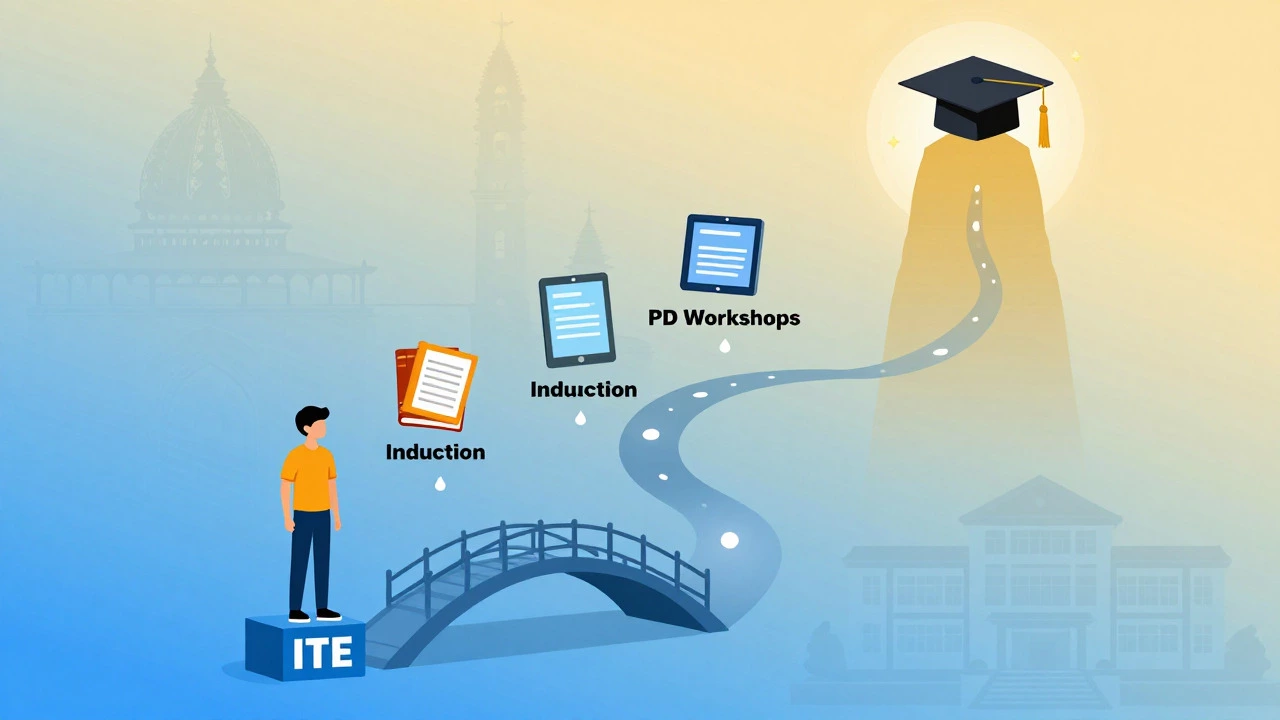
Advanced Specialization: Master’s Degrees and Certifications
For those looking to deepen their expertise or move into leadership roles, advanced degrees offer significant benefits. A Master of Education (M.Ed.) allows you to specialize in areas like curriculum development, educational psychology, or special education. While not always required for classroom teaching, it signals a commitment to the craft and often comes with salary increments in many public school systems.
However, don't pursue a master's degree just for the title. Choose a specialization that aligns with your career goals. If you want to work with students with disabilities, a certification in Special Education is far more valuable than a general administration degree. Similarly, if you are interested in leading other teachers, consider a credential in Instructional Leadership. These specialized certifications open doors to roles such as department head, instructional coach, or district administrator.
Modern Skills: Technology Integration and AI
In 2026, ignoring technology is no longer an option. The landscape of education has shifted dramatically with the integration of Artificial Intelligence (AI) and digital learning platforms. Teachers now need training in EdTech Integration to remain effective. This isn't just about knowing how to use PowerPoint; it's about leveraging tools to personalize learning and automate administrative tasks.
Look for training that focuses on pedagogical application rather than just tool mechanics. How can AI help you generate differentiated reading materials? How can data analytics from learning management systems inform your instruction? Programs that teach you to evaluate and select appropriate technologies for your specific context are invaluable. Avoid vendors selling their own software; seek neutral, research-backed guidance on integrating technology meaningfully.

Collaborative Learning: Professional Learning Communities
Sometimes the best training doesn't come from an external expert but from your peers. Professional Learning Communities (PLCs) are groups of teachers who meet regularly to analyze student data, share strategies, and refine their practice. PLCs shift the culture from individual competition to collective responsibility.
In a well-functioning PLC, teachers observe each other's classrooms, co-plan lessons, and troubleshoot problems together. This continuous cycle of inquiry and improvement leads to better student outcomes. If your school doesn't have established PLCs, consider initiating one. Start small with a few trusted colleagues who share your interests. The insights gained from collaborating with someone who teaches the same subject or grade level are often more practical and immediately applicable than any external workshop.
| Training Type | Best For | Duration | Key Benefit |
|---|---|---|---|
| Initial Teacher Education | New graduates | 1-4 years | Foundational pedagogy & certification |
| Induction/Mentoring | First 3 years | Ongoing | Retention & practical support |
| PD Workshops | All levels | Hours to days | Specific skill acquisition |
| Master’s Degree | Career advancement | 1-2 years | Specialization & salary increase |
| PLCs | Collaborative growth | Continuous | Peer support & shared strategy |
How to Choose the Right Path for You
Selecting the right training requires honest self-assessment. Ask yourself: What is my biggest challenge right now? Is it classroom management, content knowledge, or technological adaptation? Once you identify the pain point, match it with the appropriate training type. Don't chase credentials that look good on paper but don't address your daily realities.
Also, consider the cost-benefit ratio. Some trainings are expensive and time-consuming. Evaluate whether the return on investment-whether in terms of student engagement, your own job satisfaction, or career progression-is worth the effort. Sometimes, a free online course from a reputable organization or a book study group with colleagues offers more value than a pricey conference.
Finally, remember that learning never stops. The best teachers are lifelong learners. Stay curious, seek feedback, and be willing to experiment with new approaches. Your commitment to your own growth directly impacts the lives of your students.
Is a Master’s degree necessary for becoming a better teacher?
Not necessarily. While a Master’s degree can deepen your theoretical knowledge and may lead to higher pay scales in some districts, practical experience and targeted professional development often have a more immediate impact on classroom effectiveness. Focus on training that addresses your specific teaching challenges first.
How do I find high-quality professional development workshops?
Look for workshops led by practitioners rather than salespeople. Check reviews from other teachers, ensure the content is evidence-based, and verify that there is a plan for implementation support after the session. National organizations related to your subject area often list accredited providers.
What is the role of mentoring in new teacher training?
Mentoring provides personalized, ongoing support that helps new teachers navigate the complexities of classroom management and school culture. It reduces isolation, improves retention rates, and accelerates professional growth by offering real-time feedback and guidance from experienced educators.
Can online courses replace face-to-face teacher training?
Online courses are excellent for theoretical knowledge and flexible scheduling, but they cannot fully replace the hands-on practice and interpersonal dynamics of face-to-face training. The best approach often combines online modules with practical application and peer collaboration in person.
How often should teachers engage in professional development?
Ideally, professional development should be continuous. Engage in daily reflective practice, weekly collaboration with peers, and annual intensive training sessions. Regular, spaced-out learning is more effective than cramming all development into a few days at the start of the school year.