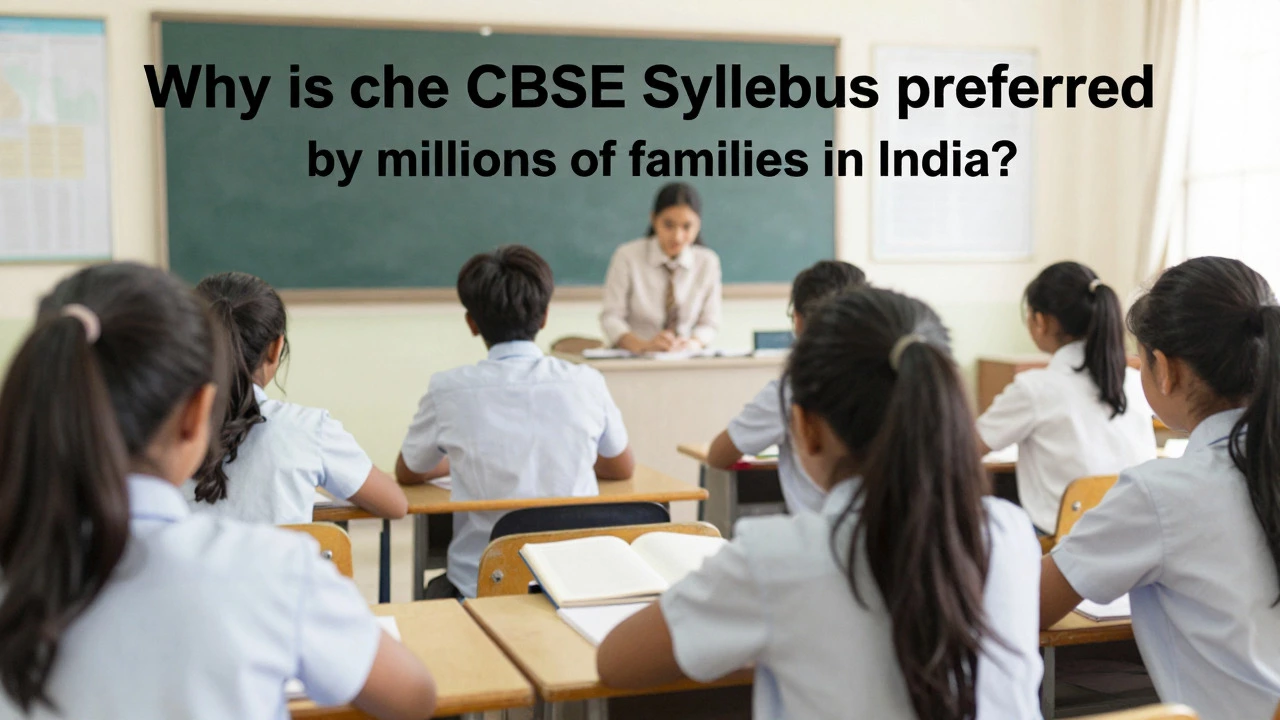
Imagine you are standing at a crossroads with your child’s education. On one path lies a curriculum known for its rigid structure and national uniformity. On the other, options that offer more flexibility but perhaps less recognition in certain sectors. For millions of families across India, the choice often leans heavily toward the Central Board of Secondary Education (CBSE), which is a government-affiliated board headquartered in New Delhi that governs school education across India and several international locations. But why? Is it just hype, or is there a solid structural reason behind this preference?
The short answer is alignment. The CBSE syllabus aligns almost perfectly with the demands of India’s most prestigious competitive exams. If your goal is to get into an IIT or an AIIMS, the CBSE framework isn’t just a school curriculum; it’s a training ground.
The Competitive Exam Advantage
The primary driver behind the popularity of the Central Board of Secondary Education is its direct correlation with entrance tests like the Joint Entrance Examination (JEE) and the National Eligibility cum Entrance Test (NEET). These exams determine entry into top engineering and medical colleges in India.
Unlike some state boards or even the Indian Certificate of Secondary Education (ICSE), which might delve deeper into literature or creative writing, the CBSE syllabus focuses intensely on science and mathematics. This focus mirrors the pattern of these high-stakes exams. When a student studies physics under the CBSE framework, they are not just learning concepts for a school test; they are practicing the exact type of problem-solving required for JEE Main and Advanced.
- Curriculum Overlap: Approximately 80-90% of the questions in JEE and NEET are derived directly from the NCERT textbooks, which serve as the standard reference for the CBSE syllabus.
- Conceptual Clarity: The board emphasizes logical reasoning and application over rote memorization, a skill set critical for cracking competitive exams.
- Time Efficiency: Because the syllabus is streamlined, students can complete their school coursework faster, leaving more time for dedicated coaching and practice.
This synergy means that parents don’t have to choose between school performance and exam preparation. In the CBSE ecosystem, doing well in school essentially means you are already preparing for your future career gateway.
National Uniformity and Mobility
India is a vast country with diverse cultures and languages. For many families, especially those in the armed forces, civil services, or multinational corporations, relocation is a frequent reality. This is where the CBSE shines brightest due to its nationwide standardized curriculum.
If your family moves from Mumbai to Chandigarh, or from Bangalore to Imphal, a child studying under the CBSE board faces minimal disruption. The syllabus remains identical. The textbooks are the same. The examination pattern is consistent. This uniformity eliminates the stress of adapting to new regional curricula, different language requirements, or varying grading systems.
Consider the alternative: A student moving from a Maharashtra state board to a Kerala state board might face significant gaps in content coverage and language barriers. With CBSE, the transition is seamless. This portability makes it the default choice for expatriates and mobile professionals who value stability in their children’s education regardless of geography.
Affordability and Accessibility
Education is an investment, and for many middle-class families, cost is a deciding factor. While private schools affiliated with the CBSE can vary widely in fees, the board itself does not impose excessive financial burdens compared to international boards like the International Baccalaureate (IB) or Cambridge IGCSE.
The infrastructure required for CBSE schools is generally less expensive to maintain than those offering international curricula. There is no need for specialized native-language teachers for every subject or expensive imported materials. The reliance on National Council of Educational Research and Training (NCERT) books, which are affordable and widely available, further reduces costs.
Moreover, the widespread presence of CBSE-affiliated schools ensures that there is fierce competition among institutions. This competition often drives down tuition fees and improves quality, giving parents more choices within their budget. You can find a decent CBSE school in a small town at a fraction of the cost of an international school in a metro city.
Digital Integration and Modern Pedagogy
In recent years, the CBSE has made significant strides in modernizing its approach. It is no longer the rigid, chalk-and-talk system of the past. The board has actively integrated digital learning tools and competency-based education into its framework.
Initiatives like the Digital Academic Infrastructure (DAI) and partnerships with ed-tech platforms have brought online resources to millions of students. The introduction of continuous and comprehensive evaluation (CCE) in earlier years, though modified, shifted the focus from single-day exams to holistic assessment. Today, the emphasis is on critical thinking, creativity, and communication skills alongside traditional academic knowledge.
The board also frequently updates its syllabus to reflect current trends. For instance, the inclusion of coding and artificial intelligence basics in the curriculum prepares students for a tech-driven future. This adaptability ensures that CBSE graduates are not just academically sound but also technologically literate.
Comparison: CBSE vs. Other Boards
To truly understand why CBSE is preferred, it helps to compare it with its main competitors. Here is a breakdown of how it stacks up against ICSE and State Boards.
| Feature | CBSE | ICSE | State Boards |
|---|---|---|---|
| Focus Area | Science & Math, Competitive Exams | Literature, English, Holistic | Regional Language, Local Context |
| Exam Pattern | Standardized, Objective-heavy | Descriptive, Detailed Answers | Varies by State |
| Portability | High (Nationwide) | Medium (Limited Affiliates) | Low (State-specific) |
| Difficulty Level | Moderate to High | High (Detailed Syllabus) | Variable |
| Best For | IIT/JEE/NEET Aspirants | Arts/Humanities/Law Students | Students Staying in Home State |
As the table shows, if your child’s dream is engineering or medicine, CBSE offers the most direct path. If they are inclined towards arts, law, or commerce, ICSE might provide a richer foundational experience in language and literature. However, for the majority of Indian parents who prioritize higher education opportunities in STEM fields, CBSE remains the pragmatic choice.
Potential Drawbacks to Consider
No system is perfect. While the CBSE is preferred for many reasons, it is essential to acknowledge its limitations. The intense focus on science and math can sometimes lead to the neglect of humanities, arts, and vocational skills. Students may feel pressured to conform to a specific academic mold, potentially stifling creativity in non-core subjects.
Additionally, the pressure to perform well in board exams can be immense. The stakes are high because these marks often influence college admissions and scholarship opportunities. This can lead to stress and anxiety among students. Parents must ensure a balanced environment, encouraging extracurricular activities and mental well-being alongside academic rigor.
Conclusion: Making the Right Choice
The preference for CBSE is not accidental. It is a result of decades of refinement, alignment with national goals, and responsiveness to parental needs. Its strength lies in its ability to prepare students for the rigorous demands of higher education and professional careers in India. Whether it is the best choice for your child depends on their individual strengths, interests, and future aspirations.
If you value consistency, affordability, and a clear pathway to competitive exams, CBSE is likely the right fit. However, always consider your child’s unique personality. Education is personal, and the best board is the one that nurtures your child’s potential while keeping them engaged and motivated.
Is CBSE better than ICSE for engineering?
Yes, CBSE is generally considered better for engineering aspirants. Its syllabus closely aligns with the JEE Main and Advanced exams, focusing heavily on physics, chemistry, and mathematics. ICSE, while excellent for language and literature, has a broader and more detailed syllabus that may not match the specific patterns of engineering entrance tests.
Can CBSE students apply for foreign universities?
Absolutely. CBSE certificates are recognized globally by universities in the US, UK, Canada, Australia, and Europe. Many top-tier institutions accept CBSE Class 12 results for undergraduate admissions. However, students may still need to take standardized tests like SAT or ACT depending on the university's requirements.
How difficult is the CBSE syllabus?
The difficulty level is moderate to high, particularly in science and mathematics. The board emphasizes conceptual understanding and application rather than rote learning. While the syllabus is manageable, the pressure comes from the competitive nature of the exams and the expectation to score high for college admissions.
Does CBSE offer vocational courses?
Yes, CBSE offers various vocational courses in areas like computer science, hospitality management, fashion design, and multimedia. These courses allow students to gain practical skills alongside their academic studies, providing alternative career paths or supplementary qualifications.
What is the medium of instruction in CBSE schools?
The primary medium of instruction in CBSE schools is English. However, Hindi is also widely used, especially in northern states. Some schools may offer other regional languages as optional subjects. The board aims to promote multilingualism while ensuring proficiency in English for global competitiveness.