School Board Selector
Answer three simple questions to find the board that fits your family's future plans.
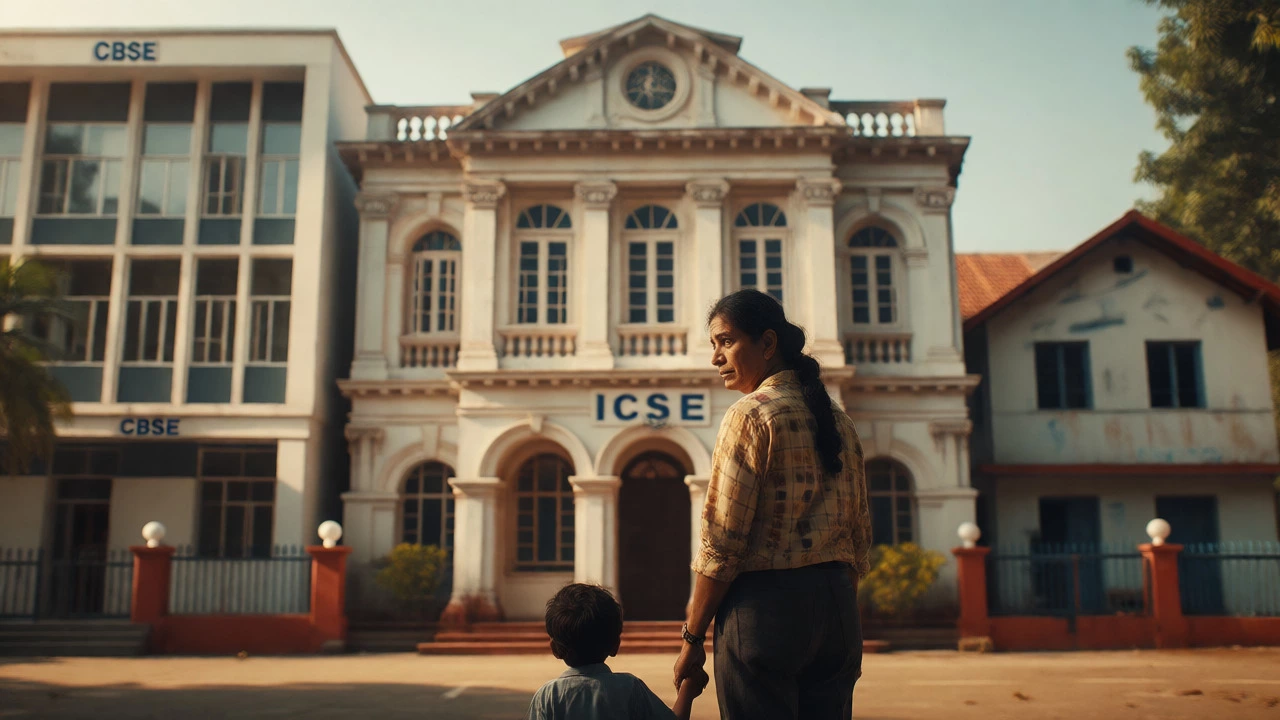
Every parent feels that knot in their stomach when choosing a school. You’re not just picking a building; you’re picking a school board that will shape how your child thinks, learns, and eventually gets into college. It’s a big deal. But here’s the truth nobody tells you upfront: there is no single "best" board. The right choice depends entirely on where you plan to live, what career path seems likely, and how much stress you want to manage at home.
If you are in India, or planning to move there, you are likely looking at three main contenders: CBSE, the Central Board of Secondary Education, which is the most popular national curriculum, ICSE, the Indian Certificate of Secondary Education, known for its rigorous English and comprehensive syllabus, and your local State Board, which follows state-specific guidelines and often focuses heavily on regional language and culture. Let’s break down which one actually fits your family’s future plans.
The Case for CBSE: Flexibility and Competitive Exams
CBSE is the default choice for many families, especially those with transferable jobs. Why? Because it is standardized across the country. If your job moves you from Mumbai to Delhi, your child can switch schools without missing a beat on the syllabus. This consistency is huge for military families, government employees, and corporate expats.
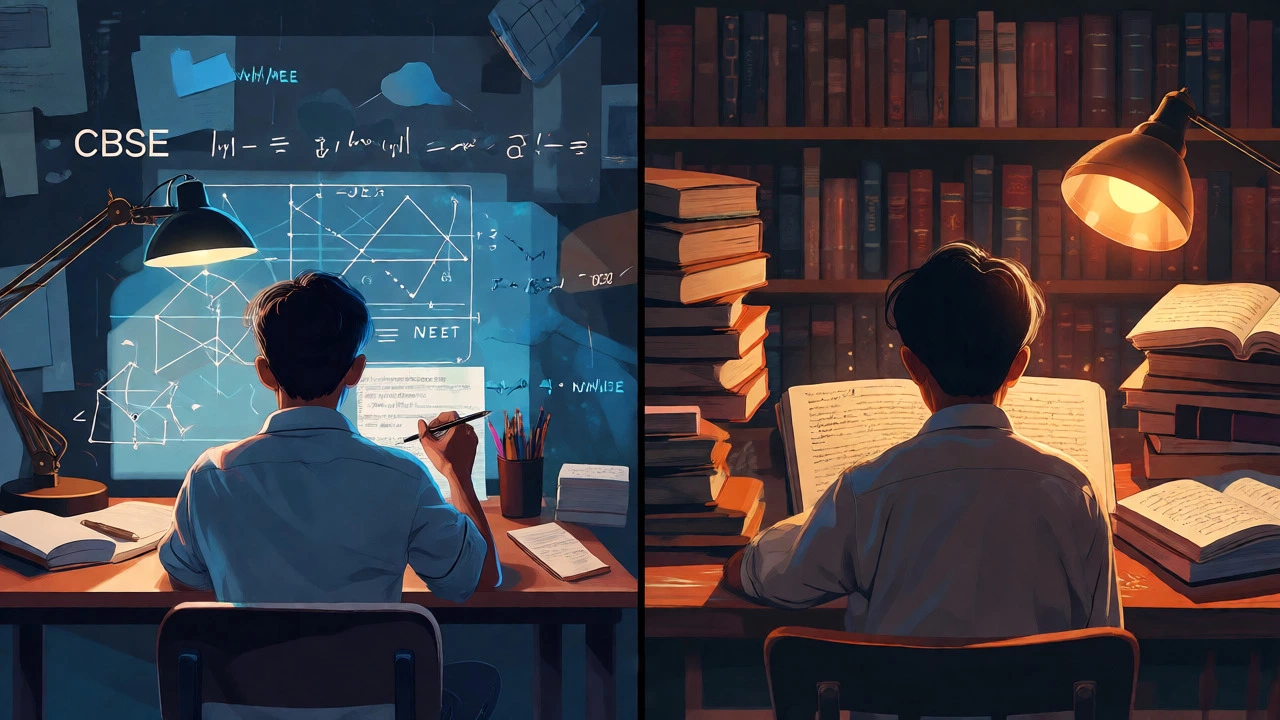
But the real draw for most parents is the alignment with competitive exams like JEE (for engineering) and NEET (for medicine). These entrance tests are primarily based on the CBSE curriculum. While smart students crack these exams from any board, the overlap between CBSE textbooks and exam questions is significant. If you suspect your child might pursue STEM fields, CBSE gives them a head start by removing the need to study an entirely different set of concepts alongside their school work.
- National Mobility: Seamless transition between cities.
- Exam Alignment: Direct prep for JEE/NEET reduces extra coaching burden.
- Resource Availability: Easier to find tutors, online courses, and past papers because it’s the largest board.
The Case for ICSE: Strong Language Skills and Global Recognition
On the other hand, ICSE is often seen as the more academically rigorous option, particularly in English proficiency. The syllabus is vast. Unlike CBSE, which is more conceptual and streamlined, ICSE requires deep reading and detailed answers. Students write long essays, analyze literature critically, and engage with subjects like History and Geography in great depth.
This rigor pays off if you are considering studying abroad. Universities in the US, UK, and Australia often view ICSE certificates favorably because they demonstrate strong writing skills and critical thinking-traits that are hard to teach but essential for higher education. However, this comes at a cost. The workload is heavy. A typical ICSE student spends more time on homework than a CBSE peer. If your child struggles with organization or hates reading, ICSE can become a source of burnout rather than growth.
| Feature | CBSE | ICSE | State Board |
|---|---|---|---|
| Primary Focus | Conceptual clarity, Science/Maths | Language proficiency, Comprehensive knowledge | Regional relevance, Cost-effective |
| Syllabus Volume | Moderate | High | Variable (often lower) |
| Best For | JEE/NEET aspirants, Mobile families | Abroad studies, Humanities/Law interests | Local employment, Budget-conscious families |
| English Level | Functional | Advanced/Native-like | Basic to Intermediate |
Don’t Sleep on State Boards
There is a lingering stigma around State Boards, but that reputation is outdated. In states like Kerala, Tamil Nadu, and Maharashtra, the state boards offer high-quality education at a fraction of the cost of private CBSE/ICSE schools. The key advantage here is cultural grounding. If you want your child to be fluent in their mother tongue and deeply connected to local history and politics, State Boards excel.
Moreover, admission to state-level professional colleges (like state nursing or agriculture universities) often gives preference to local board students. If you know you aren’t moving out of your home state, and you don’t have the budget for expensive private schooling, a good State Board school is a pragmatic, smart choice. Just ensure the specific school has a track record of producing top rankers.

International Boards: The Expensive Elite
You might also see options like IB (International Baccalaureate) or Cambridge IGCSE. These are fantastic for developing soft skills, creativity, and independent research abilities. They avoid rote learning almost entirely. But they are expensive. Annual fees can run into lakhs of rupees, excluding books and activities.
Also, transitioning from IB to Indian competitive exams (like JEE) is tough. The teaching style is so different that students often need two years of intense coaching to bridge the gap. Choose IB only if you are 100% sure your child will go abroad for undergrad, or if you value holistic development over ranking-based metrics.
How to Decide: A Simple Framework
Still stuck? Ask yourself these three questions. Your answers will point to the right board.
- Where do we see ourselves in 5 years? If the answer is "moving to another city," choose CBSE. If it's "staying put," consider State Board or ICSE depending on budget.
- What is our primary goal? Engineering/Medicine in India? Go CBSE. Liberal Arts/Law in London or New York? Go ICSE or IB.
- What is my child’s temperament? Does they thrive on structure and clear-cut answers? CBSE suits them. Do they love debating, writing, and exploring gray areas? ICSE or IB will keep them engaged.
Remember, the board doesn’t determine success. A motivated student from a State Board can outperform a disengaged student from an elite IB school. The best board is the one that matches your lifestyle constraints and your child’s learning style, not necessarily the one with the fanciest brand name.
Is CBSE easier than ICSE?
Generally, yes. CBSE focuses more on understanding core concepts in Science and Math, while ICSE covers a wider range of topics in greater detail, particularly in English, Social Studies, and Literature. ICSE students typically have a heavier workload regarding reading and writing tasks.
Can I switch from ICSE to CBSE after Class 10?
Yes, many students do this. Since CBSE aligns better with national entrance exams like JEE and NEET, students often switch to CBSE for Classes 11 and 12 to streamline their preparation. Schools usually provide bridging support, but self-study may be required to adjust to the new pattern.
Which board is better for studying abroad?
ICSE and International Boards (IB/Cambridge) are generally preferred by foreign universities due to their emphasis on critical thinking, essay writing, and practical projects. However, CBSE students are also widely accepted, provided they perform well in standardized tests like SAT or IELTS and highlight their extracurricular achievements.
Do State Board students struggle in competitive exams?
Not necessarily. Many top rankers in JEE and NEET come from State Boards. The challenge lies in the difference in question patterns and terminology. With dedicated coaching and access to CBSE-aligned reference materials, State Board students compete effectively.
Is the CBSE syllabus reduced every year?
The CBSE occasionally rationalizes its syllabus, removing redundant topics to focus on core competencies. These changes are announced officially before the academic session begins. Parents should check the latest CBSE circulars or the official website for current-year updates.