
Career Readiness & Course ROI Calculator
Step 1: Select Your Target Skill
Select the primary skill you are considering learning based on 2026 market trends.
AI Literacy
Very High DemandData Analysis
High DemandCybersecurity
Critical GapDigital Marketing
Steady GrowthSoft Skills
UniversalHybrid Stack
Premium PayStep 2: Your Current Situation
Projected Outcome
Financial Forecast (Year 1)
Job postings have changed. If you scroll through LinkedIn or Indeed right now, you won't just see "Java Developer" or "Marketing Manager." You'll see hybrid roles like "AI Operations Specialist" or "Data-Driven Content Strategist." The question isn't just about what job title is hot; it's about which specific skills employers are desperate to find and willing to pay a premium for.
In 2026, the gap between what schools teach and what companies need has widened. Automation handles the routine. Humans handle the complex, the creative, and the strategic. This shift means the most valuable skills today are less about memorizing facts and more about applying technology to solve human problems. Whether you are looking to switch careers, get a promotion, or future-proof your income, understanding this landscape is critical.
The Dominance of Artificial Intelligence Literacy
Let’s address the elephant in the room: Artificial Intelligence. But not in the way you might think. You don’t need to be a machine learning engineer to benefit from AI. The most in-demand skill right now is AI Literacy, which is the ability to effectively use AI tools to enhance productivity and decision-making.
Companies are no longer asking, "Can you write code?" They are asking, "Can you prompt an AI model to generate code, debug it, and integrate it into our workflow?" This applies across industries. A marketer needs to know how to use generative AI for personalized campaigns. A HR manager uses AI to screen resumes fairly. A financial analyst uses it to predict market trends.
- Prompt Engineering: Crafting precise inputs to get high-quality outputs from Large Language Models (LLMs).
- AI Ethics & Governance: Understanding bias, privacy, and compliance when deploying AI tools.
- Workflow Automation: Connecting AI APIs with existing software stacks to automate repetitive tasks.
If you are considering an online course, look for ones that focus on practical application rather than theoretical computer science. Platforms like Coursera and Udacity offer specialized tracks in "AI for Business" that are far more relevant for the average professional than a generic CS degree.
Data Analysis and Interpretation
Data is the new oil, but only if you can refine it. Raw data is useless without context. The skill of turning raw numbers into actionable business insights remains one of the highest-paying capabilities in the market. However, the toolset has evolved.
In the past, knowing Excel was enough. Today, employers want proficiency in Python for data manipulation, SQL for database querying, and visualization tools like Tableau or Power BI. But here is the nuance: the technical part is secondary to the storytelling part. Can you look at a dataset, identify the anomaly, explain why it happened, and recommend a strategy to fix it?
| Skill | Primary Tool | Demand Level (2026) | Learning Curve |
|---|---|---|---|
| SQL Querying | PostgreSQL/MySQL | Very High | Low |
| Data Visualization | Tableau/Power BI | High | Medium |
| Predictive Modeling | Python/R | High | Steep |
| Excel Advanced | Microsoft Excel | Medium | Low |
The key takeaway is versatility. You don't need to be a mathematician, but you must be comfortable with logic and patterns. Many professionals start with short bootcamps focused on "Data Analytics for Beginners" before moving to advanced statistical modeling.
Cybersecurity and Privacy Management
As we move more of our lives and businesses online, the attack surface grows. Cybersecurity is not just an IT problem anymore; it is a boardroom issue. With regulations like GDPR in Europe and various state-level laws in the US, companies are scrambling for professionals who understand both the technical threats and the legal implications.
The most sought-after roles here involve Cloud Security. As organizations migrate to AWS, Azure, or Google Cloud, securing these environments requires specialized knowledge. Traditional firewall management is being replaced by identity and access management (IAM) and zero-trust architecture concepts.
You don't need to become a hacker to enter this field. Certifications like CompTIA Security+ or CISSP are standard entry points. However, the real value lies in understanding risk assessment. Can you evaluate a vendor's security posture? Can you design a disaster recovery plan? These are soft-hard skills that combine technical knowledge with strategic thinking.

Digital Marketing and Personalization
Marketing has shifted from broad broadcasting to hyper-personalization. Consumers expect brands to know them, anticipate their needs, and deliver relevant content instantly. This requires a blend of creativity and analytics.
The core skills here include Search Engine Optimization (SEO), which continues to evolve with AI-driven search algorithms, and Programmatic Advertising. But perhaps the most critical skill is Customer Relationship Management (CRM) optimization. Using platforms like Salesforce or HubSpot to track customer journeys and automate personalized touchpoints is essential.
Content creation is also changing. It’s not just about writing blog posts. It’s about creating multi-format assets-video, audio, interactive web elements-that engage users across different platforms. Short-form video editing, specifically for TikTok and Instagram Reels, has become a hard skill that many traditional marketers lack.
Soft Skills: The Human Advantage
It sounds cliché, but as machines take over technical tasks, uniquely human skills become more valuable. Employers are prioritizing candidates who demonstrate emotional intelligence, adaptability, and complex problem-solving abilities.
Adaptability Quotient (AQ): The ability to unlearn old methods and learn new ones quickly. In 2026, the half-life of a learned skill is estimated to be just five years. You must be comfortable with continuous learning.
Cross-Cultural Communication: With remote work becoming the norm, teams are globally distributed. Understanding cultural nuances, managing time zones, and communicating clearly across language barriers is a massive asset.
Critical Thinking: AI can provide answers, but it cannot always determine the right questions. The ability to analyze information, spot logical fallacies, and make ethical decisions is something algorithms struggle with.
How to Choose the Right Online Course
With thousands of options available, choosing the right path can be overwhelming. Here is a framework to help you decide:
- Identify Your Gap: Are you missing a technical skill (like Python) or a strategic skill (like project management)? Be honest about where you are stuck.
- Check for Project-Based Learning: Avoid courses that are purely lecture-based. Look for programs that require you to build a portfolio piece. A certificate proves you watched the videos; a project proves you can do the work.
- Verify Industry Recognition: Does the course provider partner with industry leaders? For example, a Google Career Certificate or a Microsoft Certified Trainer course carries more weight than an unknown entity.
- Consider Time Commitment: Be realistic. Can you dedicate 10 hours a week? Or do you need a self-paced option? Burnout is real, and finishing a course is better than starting ten.
Remember, the goal is not to collect certificates. The goal is to acquire competencies that allow you to solve problems better than you could yesterday. Focus on outcomes, not inputs.
Future-Proofing Your Career Strategy
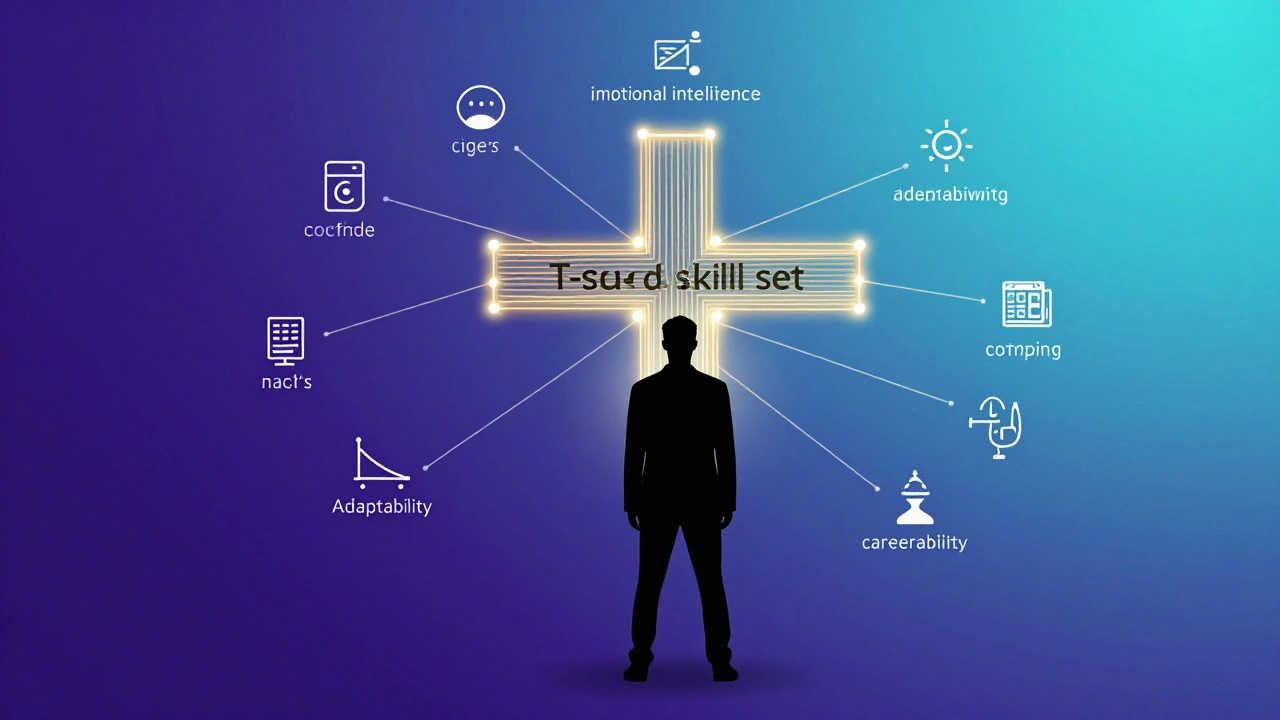
The job market is dynamic. What is in demand today might be automated tomorrow. The best strategy is to build a T-shaped skill set. Have deep expertise in one area (the vertical bar of the T) and broad competence in related areas (the horizontal bar).
For instance, if you are a designer (vertical), learn basic coding and user psychology (horizontal). If you are a writer, learn SEO and data analysis. This combination makes you indispensable because you can bridge gaps between departments.
Networking also plays a crucial role. Many opportunities come from referrals. Engage with communities related to your chosen skill. Attend virtual meetups, contribute to open-source projects, or share your learning journey on LinkedIn. Visibility matters.
What is the single most important skill to learn in 2026?
While technical skills vary by industry, AI Literacy is universally critical. It involves understanding how to leverage artificial intelligence tools to enhance productivity, make data-driven decisions, and automate routine tasks. This skill amplifies your effectiveness in any role, whether you are in marketing, finance, or healthcare.
Are online courses recognized by employers in 2026?
Yes, provided they are from reputable providers and result in tangible skills. Employers increasingly value demonstrable competence over traditional degrees. Certificates from major tech companies (Google, Microsoft, Amazon) and accredited universities carry significant weight. However, a portfolio of projects built during the course is even more persuasive than the certificate itself.
Is it too late to switch careers using online education?
Absolutely not. The barrier to entry for many high-demand fields has lowered due to accessible online education. Many successful professionals in tech and digital marketing switched careers in their 30s, 40s, or even 50s. The key is to leverage your existing experience while acquiring new technical skills. Your prior industry knowledge combined with new digital competencies can make you a unique candidate.
Which programming language should I learn first?
Python is generally the best starting point for beginners in 2026. It has a simple syntax, making it easy to learn, and it is widely used in data science, AI, web development, and automation. JavaScript is another strong contender if you are interested in web development and building interactive user interfaces. Choose based on your career goals: Python for data/AI, JavaScript for web/frontend.
How long does it take to become job-ready in a new skill?
It depends on the complexity of the skill and your prior experience. For foundational skills like digital marketing basics or Excel, you might be job-ready in 3-6 months of dedicated study. For technical skills like full-stack development or data engineering, it typically takes 6-12 months of intensive learning and project building. Consistency is more important than speed; aim for steady progress rather than burnout.