
Exam Success Probability Calculator
Calculate Your Chances
When people ask, "What degree is the hardest?" they’re usually not talking about a college major on paper. They’re asking about the exams that turn degrees into battles - the ones that demand 18-hour study days, break mental limits, and force students to sacrifice years of their life for a single shot at success. In countries like India, China, and South Korea, the hardest "degree" isn’t earned in a lecture hall - it’s won in exam halls, behind closed doors, with no second chances.
The Real Battle Isn’t the Degree - It’s the Entrance Exam
Most degrees are challenging, sure. A PhD in quantum physics or a medical residency will test your endurance. But none of them compare to the pressure of cracking IIT JEE a national-level engineering entrance exam in India that selects fewer than 2% of 1.5 million candidates each year, or NEET the medical entrance exam that determines who gets into 100,000 MBBS seats out of over 2 million applicants. These aren’t just tests - they’re life-altering filters.
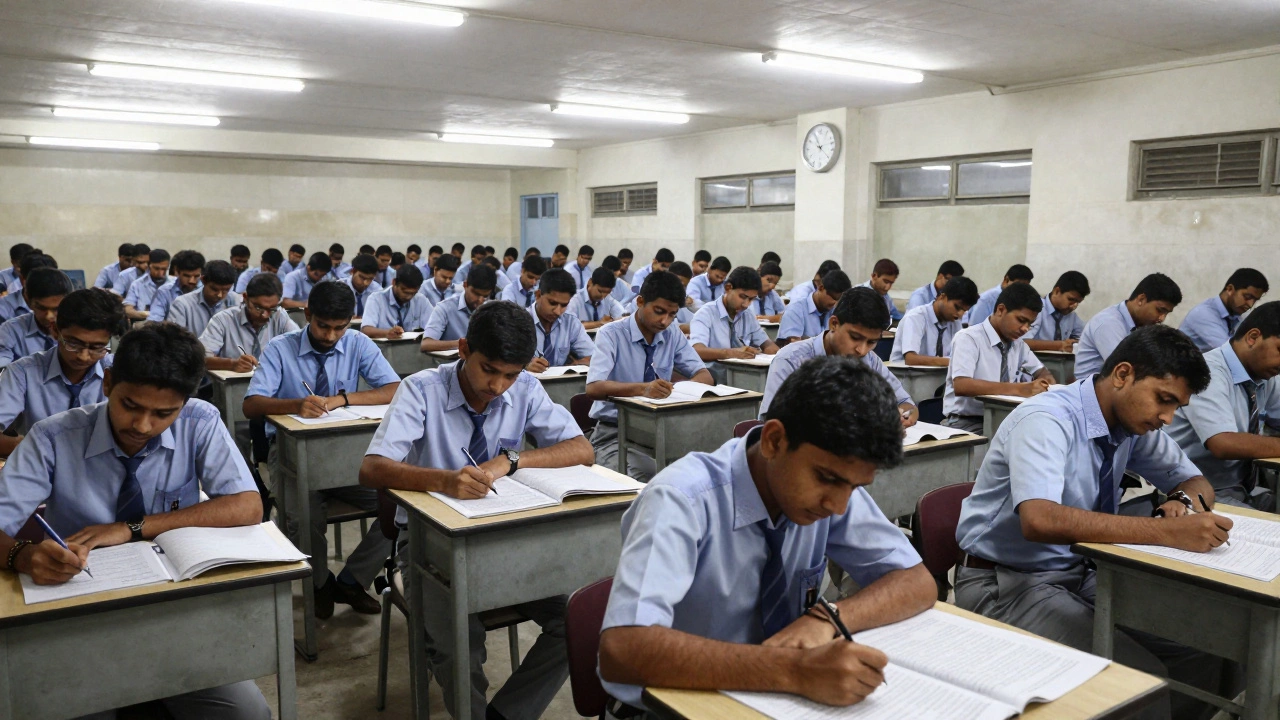
Think about it: a 17-year-old wakes up at 4 a.m., studies until midnight, attends coaching for six days a week, and spends two full years preparing for a 3-hour exam that decides whether they become an engineer, a doctor, or start over. The degree itself - B.Tech or MBBS - is just the reward. The real hardship? Getting there.
Top 3 Hardest Competitive Exams (And Why They’re Brutal)
- IIT JEE Advanced - This exam is famous for its unpredictable question patterns. It doesn’t test memorization. It tests how fast you can solve a problem you’ve never seen before. The syllabus covers physics, chemistry, and math at a level far beyond high school. In 2025, only 17,500 students out of 1.4 million qualified. That’s a 1.25% success rate. Students often repeat the exam for three years. Some drop out of school entirely to focus on coaching.
- NEET UG - With over 2.1 million candidates in 2025, NEET is the largest medical entrance exam in the world. The competition isn’t just about scoring high - it’s about scoring higher than everyone else. A single mark can change your rank by thousands. One candidate in 2024 scored 720/720 - perfect. Another scored 719 and dropped 3,000 ranks. The margin for error? Zero. The pressure? Unbearable.
- UPSC Civil Services Exam - This isn’t just an exam. It’s a three-stage gauntlet: preliminary, mains, and interview. The pass rate? Under 0.2%. Candidates spend 12-18 months studying full-time. They memorize 15+ books on public administration, international relations, ethics, and Indian history. The interview isn’t about what you know - it’s about how you think under pressure. One failed candidate told reporters: "I studied 14 hours a day for 18 months. I didn’t see my family for a year. I still didn’t make it."
Why These Exams Are Worse Than Any Degree
Compare these exams to university programs. In college, you get feedback. You have professors. You can retake tests. You can adjust your workload. You can even switch majors.
None of that exists in these exams.
There’s no second try. No partial credit. No flexibility. One exam. One day. One chance. Your entire future hinges on how you perform in a single sitting. And if you fail? You start over. Again. And again.
Psychologists call this "high-stakes testing." But for students, it feels like being handed a loaded gun and told, "If you don’t pull the trigger perfectly, you’re dead."
The Hidden Costs: Mental Health, Family Pressure, and Lost Years
The hardest part of these exams isn’t the syllabus - it’s what they do to people.
A 2024 study from the Indian Institute of Mental Health found that 68% of IIT JEE aspirants showed signs of clinical anxiety. 41% reported depression. 1 in 12 had suicidal thoughts. These aren’t statistics - these are real teenagers who lost sleep, friends, and joy because they were told, "Your worth is your rank."
Families invest everything. A middle-class family in Rajasthan might sell their scooter, take a second mortgage, or cut meals to pay for coaching. One father in Bihar told a journalist: "I sold my land so my daughter could afford coaching. If she doesn’t clear NEET, I don’t know how we’ll survive."
And the time lost? These students skip birthdays, holidays, first loves, college parties. They become adults at 17. They miss out on normal life because they’re told, "This is your only shot."
Is There a "Hardest" Degree? Yes - But It’s Not What You Think
Some say engineering is the hardest. Others say medicine. But those are degrees. The real "hardest degree" is the one you don’t earn in a classroom.
It’s the degree you earn after 1,000 practice papers. After 12-hour study days. After being told "you’re not good enough" for the 10th time. After your parents cry because you didn’t get into the top 100. After you’ve lost your youth, your peace, and your self-worth.
That’s the real degree. And it’s not awarded by any university. It’s awarded by survival.

What Makes These Exams So Difficult? The System
These exams aren’t hard because the content is complex. They’re hard because they’re designed to be unfair.
- One-shot rule - No retakes, no appeals, no partial credit.
- Massive scale - Millions compete for thousands of seats.
- High stakes - Your rank determines your job, income, social status.
- Coaching monopoly - Top ranks come from expensive coaching centers. Poor students are at a structural disadvantage.
- Zero tolerance for failure - Society doesn’t celebrate effort. Only results.
Compare this to the U.S. college system. There, you apply with grades, essays, extracurriculars, interviews. You can go to community college first. You can switch paths. There’s room to breathe.
In India, China, and similar systems? There’s no air. Just a race with no finish line.
What’s the Alternative? Is There Hope?
Some students are walking away. More are choosing private colleges, international degrees, or vocational paths. In 2025, over 1.2 million Indian students applied to universities abroad - a 35% jump from 2023. Countries like Germany and Canada offer free or low-cost engineering and medical programs. No entrance exam. No life-altering pressure.
But change is slow. Social pressure runs deep. Parents still say: "Only IIT or AIIMS will make you respected."
Still, a quiet revolution is happening. More students are choosing software engineering without IIT. More are becoming nurses, paramedics, or entrepreneurs. The definition of "success" is slowly expanding. But until the system changes, the hardest "degree" will still be the one you earn by surviving the exam.
Is IIT JEE harder than NEET?
It depends on the person. IIT JEE is tougher in problem-solving depth - questions are designed to stump even top students. NEET is tougher in scale - over 2 million take it for just 100,000 seats. IIT JEE has fewer applicants but higher difficulty. NEET has more applicants but slightly easier content. Both are brutal. One is about thinking under pressure. The other is about outperforming millions.
Why is UPSC considered harder than other exams?
UPSC isn’t just one exam - it’s three. The preliminary test filters 95% of candidates. The mains requires writing 9 detailed papers in 5 days. The interview is a psychological test. Only 0.2% make it. You need to know everything - from Indian agriculture to international law - and explain it clearly. No other exam demands this level of breadth, depth, and performance under scrutiny.
Can you pass these exams without coaching?
Yes, but it’s rare. About 15% of IIT JEE qualifiers and 12% of NEET toppers are self-studied. They usually have strong family support, access to quality study material, and exceptional discipline. Most coaching centers provide structured schedules, mock tests, and peer pressure - tools most self-studiers lack. Without coaching, you’re competing against students who’ve trained for 2+ years with expert guidance.
Are these exams fair?
No - not by design. The system favors students from urban areas, English-medium schools, and families who can afford coaching. Rural students, those with limited resources, or those from non-English backgrounds face structural disadvantages. The exam itself is objective, but the path to it isn’t. That’s why dropout rates are higher in low-income states. Fairness isn’t in the test - it’s in the access.
What happens if you fail these exams?
Most students try again. Some switch to private colleges. Others go abroad, join the armed forces, or start businesses. A growing number are entering fields like data science, cybersecurity, or digital marketing - careers that don’t require IIT or AIIMS. But stigma remains. Many feel like failures, even if they’re successful. The system doesn’t reward second chances - it only celebrates first.
Final Thought: The Degree That Changes You
The hardest degree isn’t the one with the most books. It’s the one that changes who you are. It’s the one that teaches you resilience, not just formulas. It’s the one that makes you question whether your worth is tied to a number on a screen.
Maybe the real question isn’t "What degree is the hardest?"
It’s: "What are you willing to sacrifice to earn it?"